#4 – 20133 102nd Avenue, Langley, B.C. V1M 4B4 Canada

#4 – 20133 102nd Avenue, Langley, B.C. V1M 4B4 Canada
Mechanical Flange suppliers support the connection points that keep refineries, power stations, water plants, and process lines operating safely. These components may look simple, yet a poorly machined face can create leakage, vibration, and costly shutdowns. This guide examines 10 leading suppliers worldwide through practical criteria, including material quality, dimensional control, pressure ratings, delivery performance, and technical support.
Industry data shows why this market deserves careful attention. Grand View Research and MarketsandMarkets reports describe steady growth across industrial valves, process equipment, and piping infrastructure, driven by energy, chemical processing, water treatment, and infrastructure investment. These reports do not measure every flange transaction directly, but they reveal the wider demand surrounding forged steel and engineered connection systems. Standards remain central. ASME B16.5 and ASME B16.47 define important flange dimensions and pressure classes, while EN 1092-1 guides many European applications. Reliable suppliers should provide traceable material certificates, controlled heat treatment, and inspection records.
The strongest companies combine manufacturing experience with responsive engineering support. They can explain why a raised-face flange suits one line, while a ring-type joint may suit another. They should also clarify corrosion allowances, bolt compatibility, gasket selection, and testing requirements. Traceability matters. So does consistency.
No ranking is permanent. A supplier with impressive catalogs may still struggle with urgent custom orders. Another may offer fewer products but better field support. This review therefore considers evidence, not marketing language alone, helping buyers compare Mechanical Flange suppliers with greater confidence and practical judgment.
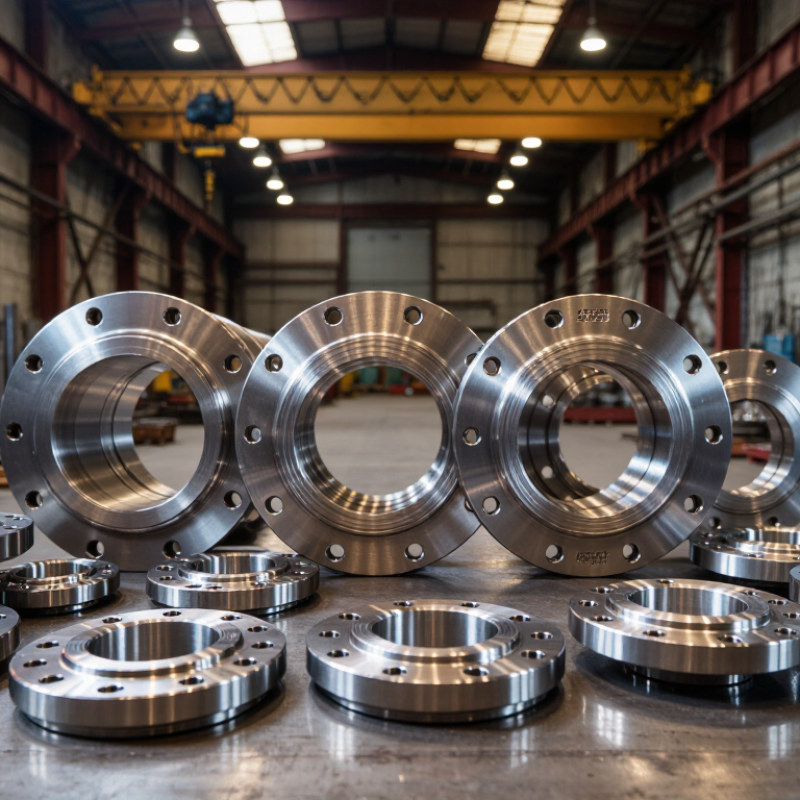
Mechanical flanges are engineered connection points used to join pipes, valves, pumps, and other equipment. They create a removable joint without welding every component together. A typical flange has a flat or raised face, bolt holes, and a central opening. The gasket sits between the facing surfaces and helps prevent fluid leakage.
Small details matter.
During assembly, bolts draw the two flanges together and compress the gasket. This pressure closes minor surface irregularities. Internal fluid pressure then pushes against the joint, so correct bolt tension is essential. Uneven tightening can crush one side of the gasket and leave another side loose. That mistake is common. Technicians should follow a cross-pattern sequence and use calibrated tools. The required torque should match the flange material, gasket type, bolt grade, and applicable engineering standard.
Flanges also make maintenance more practical. Workers can disconnect a pump or valve without cutting the pipe, which reduces repair time. Material choice depends on temperature, pressure, corrosion risk, and the transported medium. Carbon steel may suit many utility systems, while stainless alloys can perform better in corrosive service.
Yet material alone cannot guarantee reliability. Poor alignment, damaged faces, or reused gaskets can weaken a carefully designed joint. Inspection records should note scratches, bolt condition, gasket seating, and visible leakage.
A heavy flange can still fail. That point deserves more attention.
Choosing among the 10 best mechanical flange suppliers worldwide requires more than comparing prices. Technical compliance should come first. Check whether the supplier manufactures to ASME B16.5, ASME B16.47, EN 1092-1, or another clearly defined standard. Confirm pressure ratings, dimensions, material grades, heat treatment, and surface finish. Request mill test certificates and traceability records for every batch.
Quality systems matter, but certificates need careful reading. The ISO Survey 2023 reported more than 1.2 million ISO 9001 certificates worldwide. However, certification alone does not prove consistent flange performance. Ask for recent inspection reports, non-destructive testing procedures, calibration records, and corrective-action evidence. A useful supplier should explain how it handles warpage, sealing-face damage, and material deviations. Vague answers are warning signs.
Delivery capability also deserves measurable review. The World Bank Logistics Performance Index 2023 assessed customs, infrastructure, tracking, and delivery timeliness across global supply chains. Use similar criteria when comparing suppliers. Examine production capacity, export packaging, lead-time history, and contingency plans for steel shortages or port delays. Site audits can reveal practical details, such as protected storage and clearly labeled heat numbers. Still, audits are only snapshots. A supplier may perform well during inspection and struggle during peak demand. Require sample orders, documented service levels, and independent verification before approving large contracts.
| No. | Evaluation Criterion | Recommended Weight | What a Strong Global Supplier Should Demonstrate | Verification Documents or Evidence | Practical Rating Benchmark |
|---|---|---|---|---|---|
| 1 | Applicable Flange Standards | 15% | Ability to manufacture and inspect flanges according to the specification required for the project, such as ASME B16.5, ASME B16.47, EN 1092-1, JIS B 2220, or other contract-specified standards. | Current product data sheets, dimensional drawings, standard-compliance statements, and project-specific inspection plans. | Excellent: Multiple international standards supported with controlled drawings |
| 2 | Material Grade and Metallurgy | 14% | Clear control of carbon steel, stainless steel, duplex stainless steel, alloy steel, and other specified materials, including heat treatment and material condition. | Material test certificates, heat-treatment records, chemical analysis, mechanical test results, and applicable material standards such as ASTM or EN specifications. | Excellent: 100% heat-number traceability with third-party verification available |
| 3 | Pressure Class and Size Capability | 12% | Production capability covering the required nominal pipe size, outside diameter, wall interface, pressure class, and temperature conditions without relying on unapproved substitutions. | Dimensional range charts, pressure-class tables, manufacturing process limits, and sample inspection reports. | Excellent: Capability clearly matches the full project size and pressure range |
| 4 | Flange Face and Connection Options | 10% | Availability of the required face and connection types, including weld neck, slip-on, blind, threaded, socket-weld, lap-joint, raised-face, flat-face, and ring-type-joint configurations where applicable. | Approved drawings showing bore dimensions, facing details, drilling patterns, surface finish, and gasket-contact geometry. | Excellent: Complete configuration control with no dimensional ambiguity |
| 5 | Quality Management System | 12% | A documented quality system covering incoming materials, production controls, calibration, nonconformance handling, corrective action, final inspection, and record retention. | Valid quality-management certification, quality manual, internal audit records, calibration certificates, and nonconformance procedures. | Excellent: Certified system supported by recent audit evidence |
| 6 | Inspection and Testing Capability | 10% | Access to dimensional inspection, visual examination, hardness testing, positive material identification, and non-destructive testing when required by the purchase specification. | Inspection and test plans, equipment calibration records, NDT personnel qualifications, test reports, and inspector authorization records. | Excellent: In-house inspection with qualified external testing support |
| 7 | Traceability and Documentation | 10% | Traceable linkage between each finished flange, heat number, raw material certificate, manufacturing route, inspection result, and packing list. | Heat-number markings, traceability matrices, material certificates, final inspection reports, and controlled manufacturing records. | Excellent: Individual or batch-level traceability maintained through delivery |
| 8 | Manufacturing and Process Control | 7% | Controlled forging, casting where permitted, machining, heat treatment, surface finishing, marking, and preservation processes appropriate to the material and application. | Process flow charts, approved procedures, production inspection points, equipment lists, and sample process records. | Excellent: Stable process controls with documented critical parameters |
| 9 | Delivery Reliability and Capacity | 5% | Realistic production scheduling, confirmed capacity for repeat orders, transparent lead-time assumptions, and a documented approach to handling urgent or phased deliveries. | Capacity statements, production schedules, delivery performance records, escalation procedures, and written lead-time commitments. | Excellent: Capacity and delivery dates supported by measurable records |
| 10 | Export Packaging and Technical Support | 5% | Protection against corrosion, impact, moisture, and flange-face damage during international transport, together with responsive engineering and documentation support. | Packaging specifications, preservation procedures, export packing photographs, technical submittals, and documented communication process. | Excellent: Project-specific packaging and complete export documentation |
Suggested use: score each supplier from 1 to 5 for every criterion, multiply the score by the recommended weight, and compare the weighted totals. Final approval should always be based on the applicable project specification, governing standard, service conditions, inspection requirements, and contractual documentation.
North America remains a demanding market for mechanical flange suppliers.
ASME B16.5 governs many common dimensions, pressure classes, and material requirements. Buyers often expect traceable heat numbers, clear mill certificates, and machining accurate to tight tolerances. A 2024 industrial valve study by Grand View Research identified energy, water, and chemical projects as major demand drivers. Flanges support these systems, especially around pumps, vessels, and process lines. Field experience shows that documentation delays can disrupt delivery more than machining itself.
Europe applies a different purchasing rhythm.
EN 1092-1 compatibility, CE-related project documentation, and corrosion resistance often influence supplier selection. The European Commission’s industrial production data shows continued pressure on energy-intensive manufacturing, encouraging buyers to reduce leakage and maintenance costs. East Asia remains a major production center, supported by extensive shipbuilding, refining, and power infrastructure. Regional specifications, including JIS standards, may require different drilling patterns and face finishes. Small details matter.
The Middle East and South Asia are expanding through water, energy, and infrastructure projects.
Recent reports from MarketsandMarkets consistently place Asia-Pacific among the strongest growth regions for industrial components. That trend is credible, but not automatic. Freight distance, alloy availability, and local approval lists can change the practical ranking of suppliers. A flange may look correct on a drawing and still fail during installation. Buyers should compare inspection records, pressure-test evidence, stock depth, and response time—not only quoted price. Mistakes happen. Good suppliers make them visible early.
Choosing among the 10 best mechanical flange suppliers worldwide requires more than comparing prices. Product range matters because piping projects may need weld-neck, slip-on, blind, socket-weld, threaded, or lap-joint flanges. A reliable supplier should explain pressure classes, facing types, dimensions, and machining tolerances clearly. During procurement reviews, I check whether drawings match the quoted parts. Small errors can create costly alignment problems.
Material selection must follow temperature, pressure, corrosion, and fluid conditions. Common options include carbon steel, stainless steel, alloy steel, and duplex grades. Material certificates, heat numbers, and independent inspection reports support dependable traceability. Standards also deserve careful comparison. ASME B16.5, EN 1092-1, JIS B2220, and ISO 7005 may use different dimensions and drilling patterns. They are not automatically interchangeable. A supplier with practical engineering experience should identify these conflicts before production, not after delivery.
Custom service separates a catalog seller from a capable manufacturing partner. Useful services include CNC machining, special bore sizes, nonstandard bolt holes, surface treatments, marking, packaging, and prototype production. Ask for inspection plans and pressure-test records. Ask again when details seem vague. Our first shortlist once favored broad product catalogs, but it overlooked response time and drawing control. That was a mistake. A smaller supplier may offer better technical support, while a large factory may provide stronger capacity and more consistent batch records. Evaluate both.
Comparison Reference: Products, Materials, Standards, and Custom Services
This chart presents the nominal pressure class designations defined in ASME B16.5 for commonly supplied pipe flanges and flanged fittings. The available classes are 150, 300, 600, 900, 1500, and 2500. Actual allowable pressure depends on flange material group, design temperature, size, facing, bolting, and the applicable standard; the class numbers are not direct pressure conversions.
Selecting the right mechanical flange supplier starts with your project’s operating conditions, not a polished catalog. Define pressure, temperature, fluid type, flange dimensions, facing, and material grade. A supplier should explain why each specification fits your system.
Ask for material certificates, dimensional inspection records, and pressure-test documentation. Traceability matters when a flange arrives with a heat number stamped near the rim. Check whether the supplier follows recognized standards and can provide controlled drawings before production. Reliable manufacturers also clarify tolerances, surface finish, bolt-hole alignment, and corrosion protection.
Look beyond price. Request a sample or an inspection report from a comparable order. Review machining capacity, production lead times, packaging methods, and export experience. Clear answers usually indicate stronger process control. Vague promises do not.
Communication is a practical test. Send a detailed inquiry and note whether engineers ask useful questions. They should identify risks, such as galvanic corrosion or incorrect gasket seating. In my experience, rushed quotations often create expensive changes later. That lesson is easy to overlook.
Check after-sales support too. A dependable supplier should handle nonconformity claims with evidence, not excuses. However, no supplier is perfect. Even a qualified factory may miss a delivery date or misunderstand a drawing. Build inspection points into the purchase order, confirm approval samples, and keep written records of every revision. A supplier who welcomes verification is usually safer for critical mechanical work.