#4 – 20133 102nd Avenue, Langley, B.C. V1M 4B4 Canada

#4 – 20133 102nd Avenue, Langley, B.C. V1M 4B4 Canada
Selecting a 2026 Air Separation Unit(ASU)manufacturer is not just a matter of comparing capacity or price. An ASU separates atmospheric gases, commonly producing oxygen, nitrogen, or argon for industrial use. The right supplier depends on the required purity, production volume, operating pattern, and site conditions. The details matter.
This guide examines manufacturers through practical, checkable considerations: process technology, energy use, equipment reliability, project delivery, commissioning support, and after-sales service. Buyers should also look for relevant project references and clear performance guarantees. A supplier’s experience with a similar plant can be more useful than a long list of capabilities. Still, references do not guarantee the same results at every site.
“Best” has no universal definition. A compact facility may value flexible output, while a large plant may focus on efficiency and continuous operation. Maintenance access matters too: a difficult-to-reach valve or compressor can turn a routine task into lost production time. Numbers can mislead. Quoted energy figures, for example, may rely on different operating assumptions, so ask how they were measured. This comparison is intended to help readers frame better questions, not replace engineering review or a site-specific assessment. No shortlist is perfect. Real project needs can change during planning, and that deserves a second look.
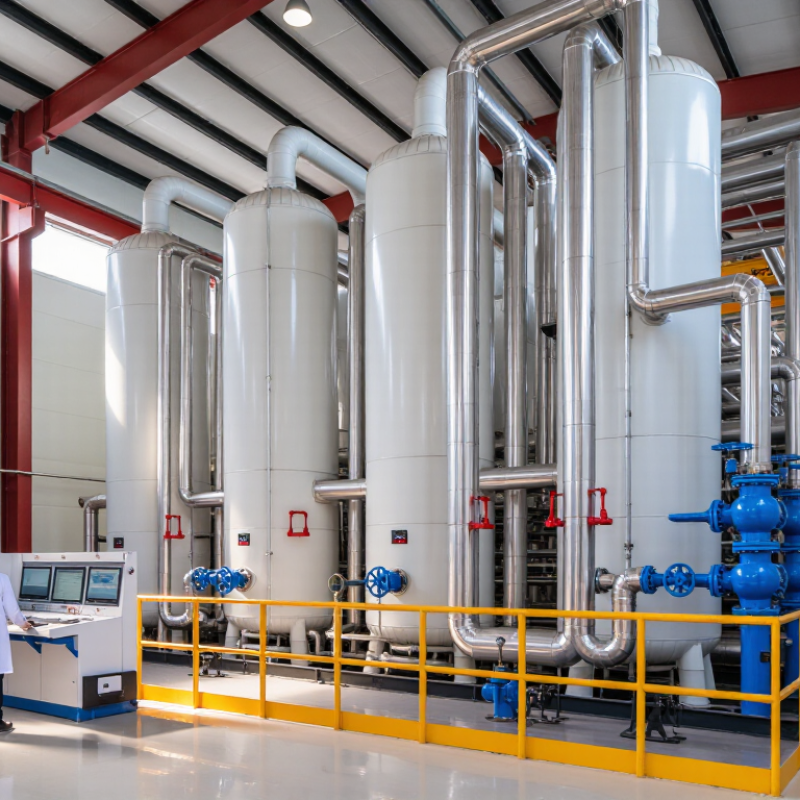
An air separation unit, or ASU, separates the gases in ordinary air, mainly nitrogen and oxygen. Large plants often use cryogenic distillation, which relies on very low temperatures rather than a simple filter. The process begins with incoming air passing through filters that remove dust. Compressors raise its pressure, and pretreatment systems remove water vapor and carbon dioxide. These impurities must be controlled because they can freeze inside cold equipment.
The cleaned air travels through heat exchangers, where it cools against returning product streams. Expansion turbines help produce refrigeration. Cold does the work. In distillation columns, air separates as its components condense and boil at different temperatures. Nitrogen collects near the top, while oxygen-rich liquid gathers lower down. Argon may be recovered from an intermediate stream when the plant design and product requirements justify it. Products can leave as gases or be stored as liquids, depending on customer needs.
An ASU is not just a cold box. Compressors, purification beds, columns, instruments, and safety systems all affect stable operation. Operators monitor pressures, temperatures, and product purity throughout the plant. Small changes matter. A useful technical review should consider energy use, required flow rates, and maintenance access, not only rated output. Even a clear process diagram leaves out the practical challenge of keeping performance steady as demand changes.
| Topic | Dimension | Factual overview | Why it matters when evaluating an ASU supplier |
|---|---|---|---|
| Definition | Purpose of an ASU | An air separation unit separates atmospheric air into products such as oxygen, nitrogen, and, in some designs, argon. | Confirm that the proposed process and product slate match the site’s required flow rates, purity, and delivery conditions. |
| Feed air | Approximate composition of dry air | Dry air contains about 78% nitrogen, 21% oxygen, and 0.93% argon by volume, with small amounts of other gases. | Feed composition and local air conditions influence process design and equipment sizing. |
| Cryogenic process | How separation works | Air is filtered, compressed, purified to remove water and carbon dioxide, cooled to cryogenic temperatures, and separated by distillation using differences in boiling points. | Cryogenic systems are commonly considered for large, continuous production and applications requiring multiple products or high-purity gases. |
| Non-cryogenic processes | Adsorption and membranes | Pressure swing adsorption (PSA) and vacuum pressure swing adsorption (VPSA) commonly produce oxygen-enriched gas; membrane systems are commonly used for nitrogen generation. | Compare these options when requirements favor on-site supply, simpler operation, or a product and purity range suited to the technology. |
| Oxygen | Product and applications | Oxygen is supplied as a gas or liquid and is used in industries including steelmaking, chemicals, healthcare, and wastewater treatment. | Check required purity, pressure, delivery form, backup supply, and applicable safety requirements. |
| Nitrogen | Product and applications | Nitrogen is used for inerting, blanketing, purging, and process applications; it can be delivered as gas or liquid depending on the plant configuration. | Specify purity, flow, pressure, operating schedule, and whether liquid nitrogen is needed for storage or backup. |
| Argon | Recovery and applications | Argon occurs naturally in air in much smaller quantities than nitrogen or oxygen. Recovery as a product requires suitable separation and purification equipment. | Ask whether argon recovery is included in the proposed design and assess its value against added process complexity and investment. |
| Plant configuration | Supply and storage | ASUs may supply products directly as gases, liquefy products for storage and distribution, or combine on-site production with stored backup supply. | Review demand variability, storage capacity, reliability targets, site utilities, and delivery logistics. |
| Energy use | Major operating cost factor | Compressing and cooling air are energy-intensive parts of cryogenic separation. Actual consumption depends on plant design, product specifications, operating conditions, and integration. | Request performance guarantees with clearly stated boundaries, product conditions, and assumptions for energy and utility consumption. |
| Supplier evaluation | Technical and lifecycle factors | A project assessment commonly covers capacity, product specifications, energy performance, plant availability, controls, maintenance, commissioning, and service support. | Compare documented project references, guarantee terms, scope boundaries, spare-parts support, and lifecycle costs rather than relying on a generic ranking. |
In 2026, compare ASU manufacturers against your operating needs, not headline capacity. Ask how the proposed plant performs at your expected oxygen and nitrogen purity, flow rate, and load range. A design that works well at full output may be less efficient during frequent turndown. Request energy figures at several operating points, and check what assumptions sit behind them.
Reliability deserves evidence. Review the expected maintenance schedule, critical spare-parts availability, and response times for remote or on-site support. Ask for references from facilities with similar feed conditions and production demands. Numbers can mislead. A strong performance guarantee should define measurement methods, operating conditions, and remedies if targets are missed. Safety reviews should also cover startup, shutdown, cryogenic equipment, and operator training.
Look beyond the purchase price. Compare projected power use, maintenance costs, upgrade options, and the expected service life of major equipment. If possible, visit a comparable operating plant and speak with its engineering team. Ask who will support commissioning and how performance will be verified after handover. A polished proposal can still leave gaps, especially around changing demand or site utilities. Be willing to question estimates that appear unusually precise before the design is tested against real operating data.
The strongest air separation unit manufacturers distinguish themselves through process fit, not headline capacity. For steel, chemicals, and large hydrogen projects, cryogenic systems deliver continuous, high-volume oxygen and nitrogen. Their core capabilities include efficient compressors, well-insulated cold boxes, stable purity control, and reliable startup support. Small details matter. A slow response to compressor vibration can become costly downtime.
For variable demand or limited sites, modular pressure-swing adsorption and vacuum pressure-swing adsorption systems may be more practical. Buyers should compare turndown range, specific power consumption, product purity, maintenance access, and spare-parts availability. The International Energy Agency’s Global Hydrogen Review 2024 reports global hydrogen demand of 97 million tonnes in 2023, while low-emissions hydrogen production remained below 1%. This signals a large industrial base still facing pressure to improve emissions and efficiency. Oxygen supply performance is one part of that operating picture.
A useful supplier assessment includes references from similar climates and operating loads, plus clear guarantees for energy use and uptime. Ask how controls handle sudden demand changes. Request maintenance intervals in writing. No specification sheet tells the whole story. Teams can overvalue purity figures and overlook local service depth. That deserves a second look.
An air separation unit should be selected around the process, not just its rated output. Cryogenic ASUs cool and distill air, making them suitable for steelmaking, large chemical plants, and facilities needing steady, high-purity oxygen or nitrogen. They can also recover argon. Their equipment is substantial, and startup takes time. For smaller or variable nitrogen demand, pressure swing adsorption systems can provide gas on site with flexible operation. Membrane systems may suit compact applications where moderate nitrogen purity is acceptable, such as some packaging or blanketing lines.
The match depends on more than purity. Check hourly demand, peak loads, available power, cooling water, footprint, and how often production changes. A glass furnace may value uninterrupted oxygen supply, while a food plant may prioritize quick response and modest space needs. These examples are guides, not fixed rules. Real operating data can challenge an early design assumption.
Tips: Compare total operating costs, not purchase price alone. Ask for performance figures at your actual flow and purity, including startup behavior and turndown range. Review maintenance access and backup supply plans. Leave room for uncertainty; demand forecasts are often imperfect, and an undersized unit can become an expensive bottleneck.
Typical oxygen product-purity ranges help show where common air-separation technologies may fit. Actual performance depends on system design and operating conditions.
Cryogenic separation can serve applications requiring high-purity oxygen and large production volumes. PSA and VPSA commonly supply oxygen at lower purity levels, while membrane systems typically provide oxygen-enriched air rather than high-purity oxygen. These ranges are indicative, not guaranteed specifications.
Choosing an air separation unit manufacturer starts with the project’s actual operating conditions, not a brochure’s headline capacity. Define required oxygen, nitrogen, or argon flow, product purity, delivery pressure, and expected turndown. Include local temperatures, altitude, available utilities, and future expansion plans. Small details matter. A plant serving variable demand may need different operating flexibility from one running steadily at full load.
Ask manufacturers to explain their process design and provide performance guarantees with clear test conditions. Compare expected power use, maintenance intervals, and startup requirements—not just equipment prices. Request references for plants with similar capacity and product specifications. Check whether the proposed layout fits the site, including space for compressors, cooling systems, pipework, and maintenance access. Ask for assumptions. If a guarantee excludes common operating conditions, its value may be limited.
After-sales support deserves the same scrutiny as engineering. Confirm commissioning scope, operator training, spare-parts availability, and response times for technical support. A detailed proposal should identify project risks and explain how they will be managed. It is tempting to rank bids by efficiency alone, but that shortcut can overlook schedule, service, and integration costs. No proposal removes every uncertainty; ask what remains uncertain before making a decision.