#4 – 20133 102nd Avenue, Langley, B.C. V1M 4B4 Canada

#4 – 20133 102nd Avenue, Langley, B.C. V1M 4B4 Canada
Global buyers entering the 2026 market need more than attractive aluminum profiles and competitive quotations. They need reliable performance, traceable materials, and predictable delivery. Extruded Aluminum Profiles now support solar frames, electric vehicles, curtain walls, industrial automation, and lightweight machinery. The right profile must fit the application, climate, and compliance requirements.
The International Aluminium Institute reports that global aluminum demand could increase by about 80% by 2050. Its industry pathways also emphasize lower-carbon production and stronger recycling systems. The International Energy Agency’s 2024 analysis notes that recycled aluminum requires roughly 5% of the energy used for primary production. These figures make alloy selection and recycled content increasingly important for responsible purchasing. However, recycled content alone does not guarantee strength, surface quality, or dimensional stability.
Tom Dobbins, President and Chief Executive Officer of the Aluminum Association, stated, “Aluminum is a critical material for our economy, our national security, and our clean energy future.” His observation applies directly to modern extrusion supply chains. Buyers should examine 6063, 6061, and 6005A alloys, temper conditions, wall thickness, tolerances, anodizing quality, and inspection records. Certificates matter. So does factory experience.
No ranking is flawless. A profile performing well in Dubai may fail in a humid coastal project. A lower price may hide weaker packaging or inconsistent tolerances. This guide compares the 2026 best Extruded Aluminum Profiles through practical criteria: application fit, manufacturing capability, lifecycle value, sustainability evidence, and global buyer support. Some conclusions remain debatable. That is useful. Careful buyers should question every confident claim.
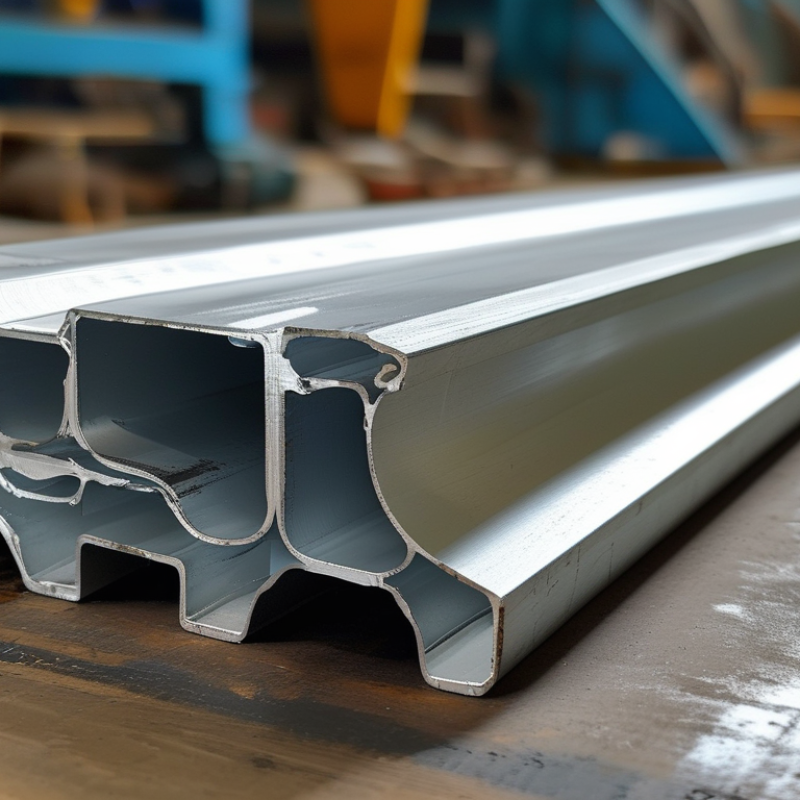
Extruded aluminum profiles are shaped sections made by pressing heated aluminum billet through a precision die. The die determines the cross-section, including channels, ribs, and mounting grooves. Unlike rolled sheet, a profile can place material where a frame needs strength. Common alloys balance corrosion resistance, low weight, machinability, and structural performance. Buyers should request alloy, temper, dimensional tolerance, and surface-finish data before approval. These details affect assembly, service life, and total cost.
Manufacturing starts with billet inspection and controlled heating. The billet enters an extrusion press, where a ram forces it through the die. The emerging profile is cooled, stretched to correct distortion, and cut into standard lengths. It may then receive anodizing, powder coating, machining, or heat treatment. Experienced suppliers check wall thickness, straightness, hardness, and surface defects at several stages. Still, no process is flawless. Thin corners can twist, and complex cavities may show uneven metal flow. A sample run often reveals problems that drawings hide. That lesson is easy to overlook.
Tips: Ask for a die drawing and a first-article inspection report. Confirm packing, cut-length tolerance, and corrosion requirements. Compare samples under natural light, not only catalog images. Keep critical dimensions realistic. Very tight tolerances can increase waste and tooling costs.
2026 Best Extruded Aluminum Profiles for Global Buyers
Key properties matter more than catalog appearance. Alloy and temper define strength, machinability, and corrosion behavior. For general architectural sections, 6xxx-series alloys often balance formability with dependable mechanical performance. ASTM B221 provides useful requirements for extruded aluminum profiles, including chemical composition and dimensional tolerances.
Tolerance deserves careful attention. A profile may fit one assembly but fail after shipping or thermal movement. Specify wall thickness, straightness, twist, and cut-length limits before requesting quotations. Surface tells a story. Anodizing can improve appearance and surface durability, while powder coating supports wider color choices. However, coating thickness and pretreatment must match the service environment. Coastal exposure needs stricter corrosion controls than indoor applications.
Weight matters. The International Aluminium Institute reports that recycled aluminum uses about 5% of the energy required for primary production. Its 2023 statistics also recorded global primary aluminum production above 70 million tonnes. These figures support recycled-content evaluation, but they do not replace quality checks. Ask for alloy certificates, batch traceability, inspection records, and finish samples. Thermal expansion is easy to overlook. Aluminum expands roughly 23 micrometers per meter per degree Celsius, so long frames need movement allowances. A perfect finish is not always the best choice. Some projects over-specify appearance and under-specify drainage, joining, or packaging. That mistake remains surprisingly common.
Extruded aluminum profiles support many industrial systems, but each shape serves a different purpose. T-slot profiles are common in machine frames, workstations, safety guards, and modular production lines. Their slots accept nuts and fasteners, allowing quick adjustments without welding. They are practical for buyers who expect frequent layout changes.
U-channels and L-angles suit edge protection, guide rails, cabinet frames, and lightweight supports. Square and rectangular tubes provide cleaner external surfaces for transport equipment, shelving, and automation enclosures. For thermal control, finned profiles work as heat sinks in LED systems, control cabinets, and power electronics. Fin spacing matters. Tight fins can improve heat transfer, but dust may collect between them.
Architectural profiles support curtain walls, doors, windows, and interior partitions. They require accurate dimensions, stable alloys, and consistent surface treatment. In factory inspections, I have seen small dimensional errors create difficult installation problems. A profile may look correct, yet fail when gaskets or connectors do not align.
Custom profiles help reduce assembly parts and improve strength around specific loads. However, new tooling increases development cost and may extend delivery time. Our early specifications were too optimistic. We later checked load direction, wall thickness, alloy condition, cutting tolerance, and corrosion exposure together. Global buyers should also request drawings, inspection records, packaging details, and sample approval before placing larger orders. Surface appearance alone is not enough.
2026 Best Extruded Aluminum Profiles for Global Buyers
Choosing an extruded aluminum profile starts with the supplier, not the catalog photograph. Ask for alloy, temper, dimensional tolerances, and production capacity in writing. Standards matter. EN 755 covers extrusion requirements, while EN 12020 addresses tighter tolerances for certain profiles. ASTM B221 may suit buyers working with North American specifications. Confirm which standard governs the purchase order. A certificate without batch traceability is weak evidence. Request mill certificates, inspection reports, and samples from current production.
Evaluate the factory through measurable questions. Can it control wall thickness at corners? How are die wear and straightness checked? A reliable supplier should explain sampling frequency, calibration records, and corrective actions. Review a small trial order before committing to thousands of meters. Measure cut length, twist, surface scratches, and hole alignment on arrival. Packaging also matters. Foam separators and dry storage can prevent marks and moisture staining during transit. Do not accept vague claims.
Customization should balance function, tooling cost, and repeatability. Share a clear drawing with alloy, temper, finish, tolerance, cut length, drilling, and packaging requirements. Ask for die design feedback before approval. An experienced engineer may identify a sharp internal corner or uneven wall that raises cost. Powder coating, anodizing, and mill finish each need sample approval under controlled lighting. Color can shift between batches. A recurring sourcing mistake is focusing on unit price while overlooking setup charges, minimum order quantities, and replacement terms. That mistake is understandable, but expensive. Recheck every assumption.
6063 aluminum profile mechanical-property benchmarks for supplier and specification evaluation
The chart compares minimum tensile strength and 0.2% proof stress for 6063-T5 and 6063-T6 extruded profiles. Values are shown in MPa and reflect commonly specified EN 755-2 requirements; exact limits can vary by wall thickness, cross-section, and product condition. Buyers should also verify dimensional tolerances, surface finish, testing records, ISO 9001 quality systems, and the supplier’s ability to deliver customized dies and fabrication.
For 2026 buyers, an extruded aluminum profile is not ready to ship when its surface looks bright. The supplier should confirm alloy, temper, wall thickness, straightness, and cut-length tolerances in writing. Ask for a recent mill test certificate, dimensional report, and coating record for the actual batch. Not a generic sample. Check the applicable customs classification before ordering. Tariff treatment and documentation requirements may vary by destination and product design. Request declarations for relevant safety, environmental, and material requirements, but verify them independently.
Freight quotes should show packing dimensions, gross weight, loading method, insurance, and delivery terms. Long profiles often need reinforced crates, corner protection, and moisture control. A low unit price can lose its advantage after tooling, dies, anodizing, inland transport, and port fees. Use a landed-cost sheet. Compare standard lengths with cut-to-size shipments. Require written approval for substitutions, because a cheaper alloy or thinner wall can change performance.
Before mass production, inspect first articles with calibrated calipers, coating gauges, and straight edges. Record photos beside a scale and sample label. For critical profiles, test hardness, coating adhesion, and fit with mating parts. A spreadsheet can still lie. I have seen clean-looking bundles hide mixed lengths and scratched inner faces. Independent inspection before loading may be worth the cost, especially for repeat orders. Leave measurable acceptance criteria in the purchase contract, and review failures honestly rather than blaming transport too quickly.