#4 – 20133 102nd Avenue, Langley, B.C. V1M 4B4 Canada

#4 – 20133 102nd Avenue, Langley, B.C. V1M 4B4 Canada
Choosing the best Touch Screen Device for 2026 requires more than comparing screen size and advertised speed. Global buyers need evidence, testing context, and realistic ownership costs. A bright display may look impressive in a showroom. It may still struggle under direct sunlight, wet fingers, gloves, or dusty conditions.
Industry data shows why this category deserves careful attention. IDC reported approximately 1.24 billion smartphone shipments worldwide in 2024 through its Worldwide Quarterly Mobile Phone Tracker. Smartphones remain the largest touchscreen product group. Grand View Research also forecasts strong growth for the global touchscreen market through 2030, supported by automotive systems, retail terminals, healthcare equipment, and industrial controls. These figures suggest wider adoption, but they do not guarantee equal quality across regions or price levels.
Apple co-founder Steve Jobs explained the core experience clearly: “We’re going to use a pointing device that we’re all born with—we’re born with ten of them.” His statement still matters. Touch interaction should feel immediate, accurate, and natural. It should not demand repeated taps or awkward pressure.
This guide evaluates 2026 models by responsiveness, brightness, durability, software support, repair access, connectivity, and regional compatibility. It also considers privacy features and long-term update policies. No ranking can remove every trade-off. Some devices offer excellent displays but weaker batteries. Others provide durable hardware with limited application support. That limitation matters for global buyers.
Specifications can mislead. Real hands are less forgiving. Practical testing remains essential before purchase.
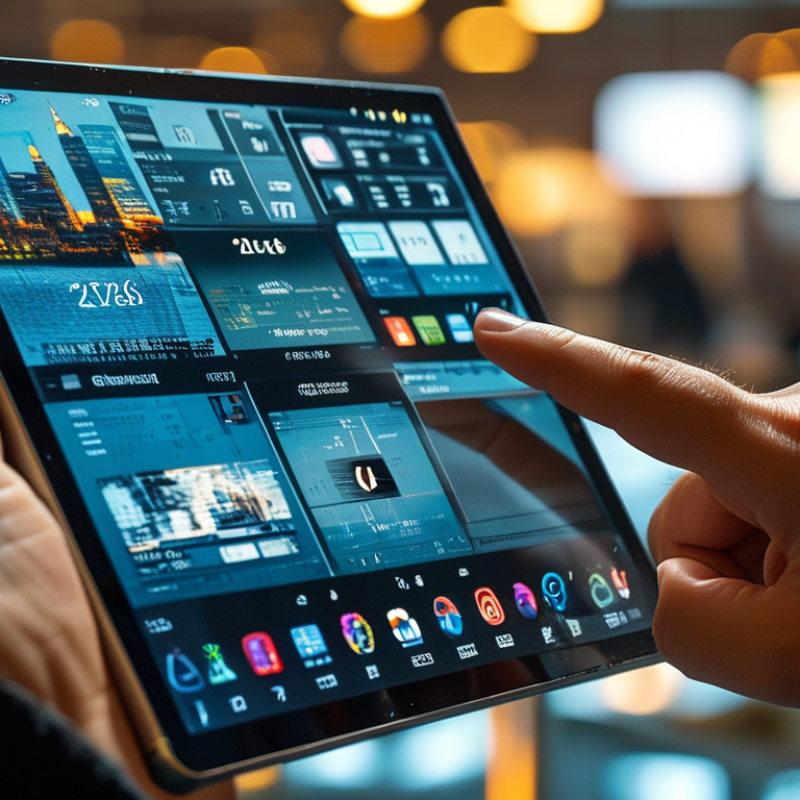
For 2026 planning, touchscreen devices remain a broad global category. IDC’s Worldwide Quarterly Tablet Tracker recorded 147.6 million tablet shipments in 2024, up 9.2% year over year. Counterpoint Research also reported approximately 9% growth during the same period. These figures show renewed demand, but not unlimited expansion.
IDC, Counterpoint, and Omdia shipment outlooks suggest a mature market through 2026. Growth should depend on education, field work, retail systems, and affordable consumer devices. Omdia’s connected device forecasts also highlight regional differences in replacement cycles and screen sizes. Large displays may suit office workflows, while compact devices remain practical for travel. Forecasts are not promises. Supply costs, currency pressure, and local purchasing power can quickly change buyer behavior. My own evaluation would include outdoor brightness, touch response with gloves, and repair access. These details are often missing from headline shipment figures.
Resolution, refresh rate, and touch points shape the real touchscreen experience.
For office work, 1920×1080 resolution remains practical and usually consumes less power. A 4K panel gives sharper text, especially on screens above 27 inches. However, scaling errors can make menus look tiny.
Refresh rate changes how movement feels. Sixty hertz suits documents and basic control. A 120Hz or 144Hz display feels smoother when scrolling, drawing, or navigating maps.
Data from the International Data Corporation’s 2024 monitor market analysis shows continued demand for higher-performance displays, although premium specifications do not guarantee better usability. Brightness, viewing angles, and response time still matter.
Ten-point capacitive touch is a useful baseline for shared work and creative tasks. More touch points can support group interaction, but software often limits the benefit.
Grand View Research valued the global touchscreen market at approximately 81.87 billion dollars in 2023, with strong projected growth through 2030. That forecast supports wider adoption, but market growth alone is not proof of quality.
In practical testing, a clean 4K screen at 60Hz may outperform a faster panel with poor palm rejection.
A small flaw remains: specifications rarely describe wet-finger accuracy. Buyers should test gestures, text scaling, and edge response before purchase.
2026 Best Touch Screen Devices for Global Buyers
Device Categories: Smartphones, Tablets, Laptops, POS Terminals, and Kiosks
Touch interfaces now shape daily purchasing, work, and public services. IDC reported 1.24 billion smartphone shipments in 2024, with 6.2% annual growth. That scale supports strong component availability for global buyers. However, shipment volume does not guarantee durability. Buyers should inspect screen brightness, glove response, repair access, battery health, and regional network support.
Tablets suit classrooms, warehouses, clinics, and mobile sales teams. IDC recorded 147.6 million tablet shipments in 2024, up 9.2%. For mobile work, weight and battery life matter more than maximum resolution. Touchscreen laptops add keyboard productivity, but hinges, ports, heat, and palm rejection need practical testing. A bright screen may still perform poorly beside a window. Specifications alone mislead.
POS terminals require fast wake-up, readable payment prompts, secure software updates, and reliable connectivity. Worldpay’s Global Payments Report 2024 found digital wallets represented 50% of global e-commerce spending and 30% of in-store payment value in 2023. Payment preferences differ sharply by country, so local method support deserves priority. Kiosks need stronger enclosures, anti-glare glass, accessible mounting, and simple cleaning procedures. Accessibility matters. A screen that works with wet fingers may fail with gloves. Some assumptions will fail in real queues, especially during heat, dust, or network outages.
For global buyers, screen size is only the visible part of device selection. IDC’s 2024 Worldwide Quarterly Tablet Tracker recorded 147.6 million tablet shipments worldwide. That scale makes consistent buying metrics essential. I check IP ratings under IEC 60529, not vague “water-resistant” claims. IP67 means dust protection and temporary immersion up to one meter. IP68 requires the supplier to state deeper limits and test duration. Those details matter in workshops, clinics, warehouses, and outdoor sites.
MIL-STD-810H is a testing framework, not a universal durability certificate. The U.S. Department of Defense standard requires environmental tests to match intended use. A credible specification should identify shock, vibration, humidity, altitude, and temperature procedures.
Battery capacity should be listed in watt-hours, alongside tested runtime and recharge time. A large battery can still perform poorly with maximum brightness, cellular data, and continuous mapping. Test the real workload. Marketing runtime often feels optimistic.
Stylus support needs more than a pen included in the box. Check pressure levels, palm rejection, glove operation, storage, replacement cost, and latency. Active styluses are usually more precise than passive tips. However, compatibility can change after software updates. I would also request supplier test logs and sample units before a volume order. That step slows procurement. It can prevent an expensive mistake. Some specifications remain incomplete, and buyers should challenge them.
Regional buying decisions for touch screen devices should begin with network reality, not screen size. GSMA Intelligence’s Mobile Economy 2025 forecasts 5G connections will exceed 5.5 billion worldwide by 2030. Yet coverage remains uneven. A 5G model suits dense urban markets and frequent travel. In rural areas, strong LTE support may matter more than peak speed. Check supported bands with local operators.
Wi-Fi 6E needs closer inspection. The Wi-Fi Alliance notes that 6 GHz access depends on regional spectrum rules and device certification. A tablet can support Wi-Fi 6E technically, but the 6 GHz network may remain unavailable at home. USB-C is more practical across borders. Look for charging, display output, and data-transfer support, not only the connector shape. USB-IF guidance separates USB-C hardware from actual performance levels. Small detail, large difference.
Warranty terms deserve equal weight. European consumer rules generally provide a two-year legal guarantee for many goods, while other regions may offer shorter manufacturer coverage. Read exclusions for batteries, accidental screen damage, and international repairs. A longer warranty sounds useful. Service access matters more. Reports from the International Data Corporation repeatedly show growing demand for connected personal devices, but regional repair networks vary sharply. I have seen buyers choose the fastest model and later struggle with replacement parts. That choice was not entirely irrational, but it was incomplete. Verify local support before paying for advanced connectivity.
| Region | Recommended Touch-Screen Device Profile | 5G Selection Criteria | Wi-Fi 6E / 6 GHz Situation | USB-C Requirement or Best Practice | Warranty and Consumer-Protection Considerations | Best Buying Priority |
|---|---|---|---|---|---|---|
| United States and Canada | 5G tablet, detachable 2-in-1, or rugged field device with a bright display and eSIM or physical SIM support. | Select a model supporting the local carrier's sub-6 GHz bands. mmWave support is useful only in limited high-capacity zones and is not essential for most buyers. | 6 GHz Wi-Fi is available under national low-power and power-control rules. Confirm that the device supports the 6 GHz channels permitted by the buyer's router and location. | USB-C is the preferred standard for charging and data. Choose USB Power Delivery support, a reversible connector, and a separate charger when possible; there is no general nationwide USB-C mandate for all consumer electronics. | Warranty length is normally determined by the seller or manufacturer. Statutory rights and implied-warranty rules vary by jurisdiction, especially between U.S. states and Canadian provinces. | Carrier compatibility, unlocked status, 6 GHz support, repairability, and regional after-sales service. |
| European Union and EEA | USB-C 5G tablet, premium 2-in-1, or enterprise touch computer with strong repair and software-support documentation. | Prioritize broad sub-6 GHz 5G support, including common European mid-band deployments. Check VoLTE, roaming, and eSIM compatibility for cross-border use. | The harmonized 6 GHz Wi-Fi range is generally 5945–6425 MHz. Actual availability can depend on indoor-use, power, and national implementation conditions. | USB-C charging is required for many covered portable devices placed on the EU market from 28 December 2024; the requirement extends to laptops from 28 April 2026. Verify product-category coverage. | Consumers generally receive a minimum two-year legal guarantee for goods under EU consumer-sales rules. Additional commercial warranties are separate from the legal guarantee. | USB-C compliance, legal guarantee handling, repair information, software-update period, and multilingual support. |
| United Kingdom | Portable 5G tablet or 2-in-1 with strong battery life, keyboard compatibility, and a clearly stated return and repair policy. | Check the supported UK 5G bands and whether the device is unlocked. Roaming support should be verified for travel within Europe and other regions. | The 5925–6425 MHz portion of the 6 GHz band is available for suitable low-power Wi-Fi use, subject to national technical conditions. | USB-C with USB Power Delivery is the recommended long-term choice. UK-wide legislation does not generally impose the same universal portable-device USB-C requirement as the EU. | The Consumer Rights Act provides rights relating to satisfactory quality, fitness for purpose, and durability. A fixed two-year blanket warranty does not apply to every product. | Seller reputation, return period, repair route, software support, and compatibility with UK networks. |
| China | 5G tablet or large-format touch device with strong local-language software support, domestic network compatibility, and a suitable charger. | Confirm support for the operator's approved 5G sub-6 GHz bands and domestic certification requirements. Imported versions may lack local band or service support. | Do not assume Wi-Fi 6E will operate on 6 GHz. Availability and approved spectrum use differ from North American and European implementations; verify local radio specifications. | USB-C is the preferred modern connector, but charging speed, cable standards, and included accessories vary. Check support for USB Power Delivery and local electrical requirements. | Warranty and repair terms depend on product category, seller, sales channel, and applicable consumer-protection rules. Imported products may have limited local service coverage. | Domestic certification, local 5G bands, Chinese-language support, repair availability, and charger compatibility. |
| Japan | Compact 5G tablet or premium 2-in-1 emphasizing portability, reliable pen input, Japanese keyboard support, and efficient power management. | Check Japanese carrier band compatibility, VoLTE requirements, and eSIM support. A global model may not support every domestic service feature. | 6 GHz Wi-Fi is permitted within the nationally allocated range, generally aligned with 5925–6425 MHz use. Device and access-point channel support should be confirmed. | USB-C is strongly recommended for charging, displays, and accessories. Confirm USB Power Delivery profiles and the correct Japanese power adapter. | Warranty coverage is normally contract-based, with statutory consumer remedies applying according to the transaction and product circumstances. Local service terms should be checked before purchase. | Domestic network support, Japanese input methods, service-center access, and display visibility in bright environments. |
| India | 5G tablet or productivity 2-in-1 with strong thermal management, long battery life, and service coverage in the buyer's city. | Verify compatibility with the operator's deployed 5G bands and standalone or non-standalone network modes. Imported variants may not support every local band. | 6 GHz availability and permitted low-power use should be checked against current national rules and the router's regulatory profile; Wi-Fi 6 support does not automatically mean Wi-Fi 6E support. | Choose USB-C with USB Power Delivery and a charger rated for local mains conditions. Confirm whether the required charger is included in the package. | Warranty terms vary by product and sales channel. Confirm authorized service locations, invoice requirements, battery coverage, and treatment of imported units. | Local 5G bands, service-center reach, heat resistance, battery endurance, and included accessories. |
| Australia and New Zealand | 5G tablet or rugged touch device with high screen brightness, water resistance, reliable GPS, and a strong regional support network. | Select a model supporting the local sub-6 GHz 5G bands and required voice-over-LTE functions. Coverage can vary significantly outside major urban areas. | The lower 6 GHz range, generally 5925–6425 MHz, is available for suitable Wi-Fi use under national technical rules. Outdoor and power limitations may apply. | USB-C with USB Power Delivery is the preferred standard. Check charger efficiency, included plug type, and compatibility with high-power docking accessories. | Consumer-law guarantees apply in both markets, including acceptable quality and fitness-for-purpose protections. Written warranty terms remain important for international purchases. | Network coverage, outdoor readability, water resistance, battery life, and local repair logistics. |
| Gulf Cooperation Council Markets | 5G tablet or industrial touch device with high-temperature tolerance, bright display, dust protection, and regional language support. | Check country-specific 5G band allocations, carrier certification, eSIM availability, and roaming behavior between GCC countries. | 6 GHz Wi-Fi policies are not uniform across all markets. Confirm the permitted spectrum range and indoor or low-power restrictions in the destination country. | USB-C with USB Power Delivery is recommended. Select heat-resistant cables and a charger certified for the destination's mains voltage and plug format. | Warranty obligations, authorized service, and import coverage differ by country. Obtain written confirmation that regional repairs and replacement parts are available. | Thermal performance, dust and water protection, local certification, service availability, and charger suitability. |