#4 – 20133 102nd Avenue, Langley, B.C. V1M 4B4 Canada

#4 – 20133 102nd Avenue, Langley, B.C. V1M 4B4 Canada
Choosing the right Milling Machinery manufacturer can shape production quality, operating costs, and delivery reliability in 2026. Global buyers now expect more than impressive catalogs. They need stable tolerances, responsive service, transparent specifications, and practical support after installation.
This guide examines leading manufacturers through a buyer-focused lens. It considers machine accuracy, spindle performance, automation options, energy use, safety systems, and long-term maintenance access. Real purchasing decisions often depend on details seen on the factory floor: clean cable routing, accessible lubrication points, sturdy guarding, and controls that operators can learn quickly. Small details matter.
The review also considers manufacturing experience, engineering capability, quality management, and international customer support. Buyers should verify certifications, reference projects, warranty terms, spare-parts availability, and local service coverage before signing a contract. A polished website is not enough evidence. Neither is a low quotation.
No ranking can perfectly match every workshop. A high-speed machining center may suit aerospace components, while a compact vertical mill may serve a smaller general engineering plant better. Some manufacturers communicate clearly but provide limited regional support. Others offer strong machines but slower technical responses. These weaknesses deserve attention.
The following overview helps global buyers compare manufacturers with greater confidence. It does not replace factory audits, sample machining, or technical discussions. Careful verification remains essential, especially when production deadlines are tight and every machine hour affects profitability.
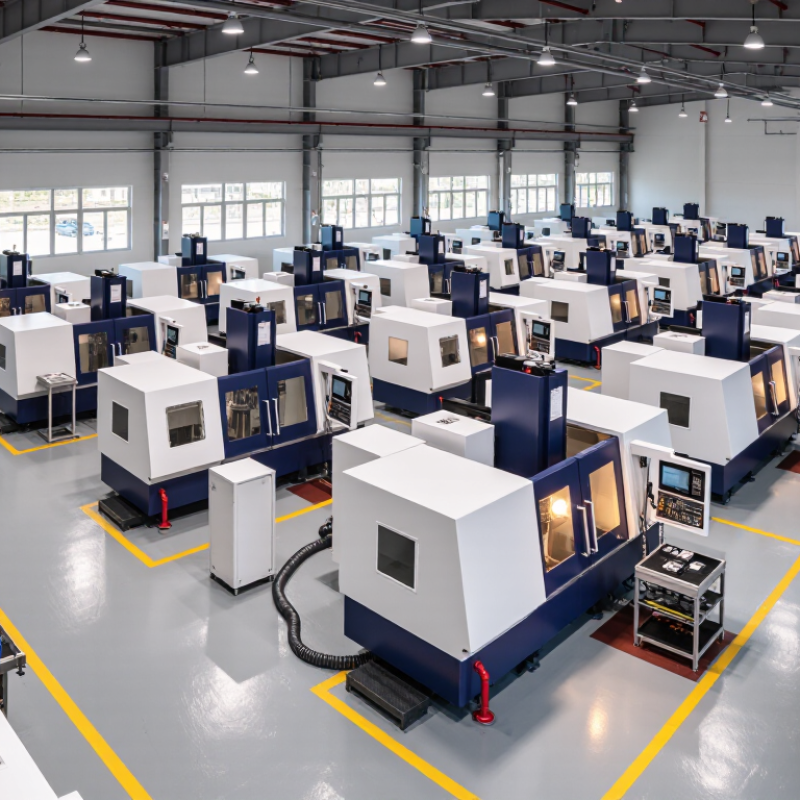
Milling machinery uses rotating cutting tools to remove material from a fixed workpiece. It can shape metal, plastic, wood, and selected composite materials. In a typical workshop, the tool spins above a clamped block, cutting controlled layers from its surface. The operator adjusts speed, feed rate, and cutting depth according to the material and tool geometry.
Common types include vertical, horizontal, bed-type, and multi-axis milling machines. Vertical models suit face milling, slots, and general component work. Horizontal machines handle heavier cuts with strong chip removal. Multi-axis equipment reaches angled surfaces and complex cavities, reducing repeated setups. Computer numerical control improves repeatability, but it does not replace careful inspection.
The core principle is relative motion. A powered spindle rotates the cutter while the table moves the workpiece along selected axes. Each tooth removes a small chip, creating heat, vibration, and cutting forces. Coolant may control temperature and carry chips away. Dry cutting can work, but only after testing tool life and surface quality. Small errors matter. Loose fixturing may leave chatter marks, while excessive feed can break the cutter. Even experienced operators should question a perfect-looking result and verify dimensions with calibrated instruments. Hands-on checks remain essential when selecting machinery for global production environments.
Milling machinery removes material with a rotating multi-point cutter. The representative spindle-speed ceilings below show how machine design and application influence cutting capability: conventional machines generally operate at lower speeds, while CNC and high-speed multi-axis machining centers support faster tool rotation for smaller cutters and high-speed materials.
Choosing a milling machinery manufacturer requires more than comparing prices and catalog images. Global buyers should examine machining accuracy, spindle stability, energy use, and expected production volume. A reliable supplier provides test-cut results, tolerance data, and clear information about machine materials.
Ask how each manufacturer controls quality during assembly. Request inspection records, calibration procedures, and factory acceptance testing.
Real production samples can reveal surface finish, vibration, and tool-wear behavior. Numbers matter.
After-sales support is equally important. Check the availability of spare parts, remote diagnostics, technician training, and local service coverage. A low purchase price may become expensive when a critical component waits weeks for shipment. Confirm warranty conditions in writing, including response times and excluded items.
Evaluate the manufacturer’s experience with similar materials and working environments. Their engineers should explain machine limits without hiding difficult details. They should also provide installation guidance, safety documentation, and operator training suited to your team. Independent customer references can strengthen confidence, but they need careful verification.
Do not rely on impressive promises alone. A factory visit is useful, although it cannot prove every future result. Ask for a realistic trial using your material, tooling, and operating cycle. One overlooked issue may be maintenance access. Another may be software compatibility. These details often appear after purchase, when correction becomes costly. A practical evaluation leaves room for doubt, testing, and follow-up questions.
The 2026 milling machinery market is shaped by automation, precision, and regional service capacity. The International Federation of Robotics recorded more than 541,000 industrial robot installations worldwide in 2023. That figure explains why leading manufacturers now design milling cells around robotic loading, probing, and digital monitoring.
Strong manufacturers usually publish measurable evidence. Buyers should examine spindle power, positioning accuracy, thermal compensation, tool-change time, and five-axis interpolation tests. ISO 230-2 provides a useful reference for positioning accuracy and repeatability. The machine should also be tested with the buyer’s material, not only with an ideal aluminum sample. Small details matter. A heavy cast bed, sealed way covers, and accessible coolant filtration can reduce downtime on a crowded factory floor.
Energy performance deserves equal attention. The International Energy Agency reports that industry remains one of the world’s largest energy consumers, increasing pressure on factories to reduce operating costs. Leading suppliers now offer regenerative drives, standby modes, and software that tracks electricity per part. However, manufacturer data is not always comparable. Some figures exclude auxiliary pumps or chip conveyors. That weakness deserves scrutiny. A dependable profile should include installation references, local technicians, spare-parts response times, cybersecurity controls, and documented acceptance-test results. Sales claims alone are insufficient.
For global buyers, regional capability matters as much as machine specifications. The 2024 Gardner Intelligence World Machine Tool Survey indicates that Asian markets represent roughly two-thirds of global machine-tool consumption. This concentration supports large production networks, competitive component sourcing, and faster customization. East Asian suppliers often provide high-volume milling platforms with broad model ranges. Their export systems usually include multilingual documentation, container-ready packaging, and established distributor networks. Delivery quality still varies between factories.
European manufacturers generally compete through precision, automation, and process stability. The 2024 VDW machine-tool report identifies continuing demand for digitally connected equipment and energy-efficient production. Buyers seeking aerospace, medical, or complex mold applications may value stronger metrology integration and application engineering. North American suppliers often show advantages in retrofit support, controls integration, and short-distance service across the regional market. However, export coverage can be narrower than expected.
UN Comtrade data for 2024, using HS 8459, places several Asian and European economies among the leading exporters of metal-cutting machine tools. This classification includes multiple machine types, so it is not a perfect measure of milling strength. Buyers should compare shipment records with spindle configuration, tolerance data, installation cases, and service response times. A low quoted price can hide training gaps or delayed spare parts. I would treat reported export volume as evidence, not proof. Supplier audits remain necessary.
Selecting the right milling machinery manufacturer requires more than comparing prices. Begin with your material, required tolerance, production volume, and available floor space. A machine cutting aluminum differs greatly from one handling hardened steel. Ask for verified test results, spindle performance data, and sample parts made with your materials. Request details about machine accuracy after prolonged operation, not only factory-new measurements. I have found that practical demonstrations reveal issues that brochures often omit.
A reliable manufacturer should provide clear documentation, operator training, installation support, and accessible spare parts. Check the service response time for your region. Review customer references from companies with similar workloads. Inspect the control system, safety features, power requirements, and maintenance access before signing a contract. Total cost matters more than the purchase price. Unplanned downtime is expensive.
Tips: Compare at least three manufacturers. Ask for a written warranty. Confirm delivery timelines and installation duties. Request a factory acceptance test using your actual production requirements. Check whether local technicians can support repairs. Do not ignore small details, such as chip removal, lighting, and door access. They affect daily productivity. One mistake is trusting impressive demonstrations too quickly. A polished test piece may not represent continuous production. Recheck every assumption before approval.