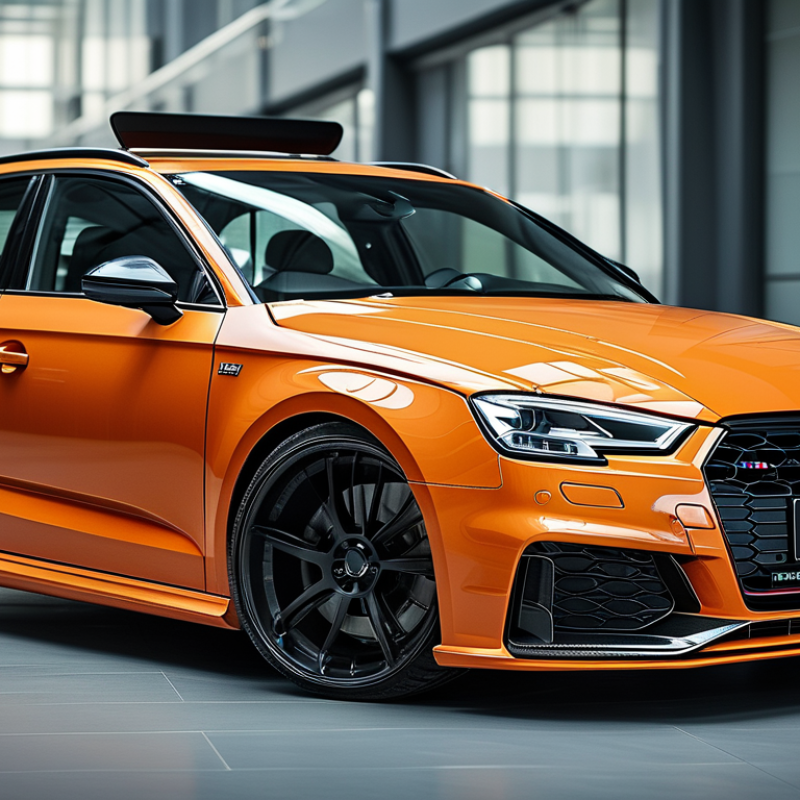
How to Choose the Best Body Kit for Audi A3 8P?

Choosing the right Body Kit Audi A3 8p is not simply a styling decision. It is a fitment, safety, and usability decision.

The Audi A3 8P appeared in several forms, including three-door, Sportback, S line, and facelift versions. Their bumper shapes and mounting points are not always identical. Measure carefully before ordering. A kit that looks perfect online may leave uneven gaps beside the headlights or wheel arches.

Audi tuning consultant Daniel Weber offers a practical reminder: “Fitment comes before drama; a clean installation always looks more expensive.” His advice reflects real workshop experience. A quality body kit should align with the original panels, preserve adequate ground clearance, and avoid blocking parking sensors or cooling ducts.

Material matters too. ABS plastic usually offers predictable flexibility and easier repair. Fiberglass can create sharper shapes, but it may crack after a small impact. Carbon fiber looks impressive, yet its cost and repair difficulty deserve honest consideration. Do not ignore the hardware. Weak brackets and poor fasteners can ruin an otherwise attractive kit.

Check whether the design suits your wheels, suspension height, and exhaust layout. A wide front bumper may look aggressive, but it can expose mismatched side skirts. Small details matter.

Be realistic.

A professional installer should test-fit every panel before painting. Ask for photographs of completed Audi A3 8P projects, not only polished product images. Verify local road, insurance, and inspection requirements before installation. Even experienced owners can overlook these details. The best Body Kit Audi A3 8p is not the loudest option. It is the one that fits properly, remains practical, and still feels like an Audi.

How to Choose the Best Body Kit for Audi A3 8P?

Define Your Audi A3 8P Body Kit Goals and Style Preferences

Before choosing a body kit for your A3 8P, define the result you want. Do you prefer a subtle factory-like appearance, a sharper track-inspired look, or a completely custom style? Write down your priorities. A lower stance may look impressive, but daily driving can become frustrating on steep ramps and uneven roads. Consider parking spaces, road conditions, and passenger use.

Fitment should support your goals, not fight them. Measure the existing bumpers, wheel arches, and side skirts carefully. Check mounting points, panel gaps, and clearance around the wheels. Experienced installers often recommend test-fitting every panel before painting. This reveals warped edges or unexpected gaps early. Material also matters. Flexible composite panels may tolerate minor contact, while rigid panels can crack more easily. Confirm the kit’s technical specifications and installation requirements from reliable documentation.

Think about the visual balance. A large front bumper can look awkward with narrow wheels or standard suspension. Matching the front, rear, and side profiles creates a more deliberate shape. I once preferred an aggressive design, then found it impractical after repeated scraping. That changed my priorities. Not every dramatic feature improves the car. Leave room for revision. Your first sketch may be too ambitious. Compare reference photos, inspect real installations, and choose details you can maintain consistently.

How to Choose the Best Body Kit for Audi A3 8P?

Define Your Audi A3 8P Body Kit Goals and Style Preferences

Body-kit fitment depends on the Audi A3 8P body style. The three-door model has a shorter rear-door profile, the Sportback uses a five-door layout, and the Cabriolet has a different roof and rear-body structure. Choose a kit designed for your exact body style before comparing visual themes such as OEM-plus, sporty, or aggressive styling.

Check Compatibility With Your A3 8P Model, Year, and Existing Parts

Choosing a body kit for an Audi A3 8P begins with exact fitment, not appearance. Confirm the model year, three-door or Sportback body, drivetrain, and facelift status. The 8P platform changed across production periods, so it is not one universal shell. S&P Global Mobility reported that the average U.S. vehicle age reached 12.6 years in 2024. Older cars may carry replacement lamps, repaired brackets, or non-factory wiring. That history matters.

Compare the kit with your VIN, not only catalog photos. Measure bumper mounting points, wheel-arch edges, grille width, and undertray clips. Check clearance around parking sensors, headlamp washers, fog-lamp housings, and tow hooks. Existing parts can create hidden conflicts. A wider bumper may require matching liners or modified splash shields. Wheel and suspension changes also affect tire clearance and ride height. SAE J1100 dimensional conventions can guide measurements, but they cannot guarantee plug-and-play installation.

Grand View Research valued the global automotive aftermarket at approximately USD 427.3 billion in 2022. A crowded market does not prove consistent quality. Ask for material details, mounting hardware, instructions, and documented testing standards. Fiberglass may need careful adjustment, while molded plastic usually offers more consistent edges.

I once trusted a “direct-fit” label and ignored a changed headlamp assembly. The bumper needed reworking. That mistake was avoidable. Photograph the underside and record measurements before ordering. Five minutes can prevent an expensive mismatch.

Compare Body Kit Materials, Construction Quality, and Durability

How to Choose the Best Body Kit for Audi A3 8P?

Material sets the starting point. Fiberglass is light and affordable, but it can crack around drilled holes. ABS plastic bends better and usually handles minor impacts more gracefully. Polyurethane offers useful flexibility, although heat can affect its shape. Carbon-fiber panels are light and stiff, yet their cost does not guarantee perfect fitment.

The numbers deserve context. PlasticsEurope reported 400.3 million tonnes of global plastic production in 2022. Automotive applications represented about 8.3% of European plastic use. The OECD’s Global Plastics Outlook reported only 9% of plastic waste was recycled globally in 2019. These figures reinforce one point: material selection should include repairability and long-term waste, not appearance alone.

Construction quality often decides durability. Inspect panel thickness, inner bracing, mounting points, and edge finishing. Uneven edges can expose paint to stone chips and moisture. Check every gap before installation. A stable kit should sit evenly without excessive force or enlarged holes. UV-resistant coatings matter, especially on dark panels parked outdoors. Professional test reports commonly evaluate impact resistance, moisture exposure, and temperature cycling; ask for those results, not only marketing claims. I would still inspect the kit personally. Even a well-documented product can arrive with warped corners or weak brackets. That small detail is easy to underestimate.

How to Choose the Best Body Kit for Audi A3 8P? - Compare Body Kit Materials, Construction Quality, and Durability

Comparison Factor Injection-Molded ABS Polyurethane (PU) Fiberglass-Reinforced Plastic (FRP) Carbon-Fiber Composite
Typical construction Factory-style injection molding creates a consistent, uniform part. Flexible polymer molded or cast into a single-piece component. Layers of glass fiber bonded with resin; quality depends heavily on lay-up and curing. Carbon-fiber fabric bonded with resin, commonly using a molded shell or composite panel.
Impact resistance High for normal road impacts; can crack under severe force. Very high because the material can flex and rebound. Medium to low; rigid panels may crack or splinter on impact. Medium; strong and stiff, but localized impact can cause hidden delamination.
Flexibility Moderate flexibility with good shape retention. Excellent flexibility, useful for low front lips and areas exposed to scraping. Low flexibility; requires careful handling during fitting and installation. Low flexibility; designed primarily for stiffness and reduced weight.
Panel rigidity Medium; sufficient for most exterior trim applications. Medium; flexibility can reduce the sharpness of very thin styling details. High; maintains aggressive shapes when properly supported. Very high relative to its weight.
Typical weight tendency Moderate; generally lighter than steel but heavier than thin carbon composite. Moderate to relatively heavy, depending on thickness and reinforcement. Light to moderate; thickness and resin content can vary considerably. Lightest tendency when engineered with a thin composite laminate.
Fit consistency High when produced from an accurate mold; mounting points should still be checked. Good because the material tolerates minor alignment adjustment. Variable; hand finishing may be needed around edges, holes, and mounting flanges. Good when made from an accurate mold; poor tooling can produce expensive alignment problems.
Surface finish before painting Usually smooth and uniform; requires plastic adhesion promoter and suitable primer. Generally smooth; flexible-compatible preparation is important for paint adhesion. May show pinholes, weave marks, or uneven edges; extra preparation is often required. Clear-coated woven texture may be ready for installation, but exposed edges and clear coat must be inspected.
Weather and UV durability Good with UV-stable formulation and proper paint protection; unprotected plastic can fade over time. Good when UV-stabilized and correctly painted; heat exposure should be considered. Good after sealing and painting; exposed resin and unfinished edges can absorb moisture and degrade. Good with a high-quality UV-resistant clear coat; damaged clear coat can allow cosmetic deterioration.
Repairability Repairable, although welding or compatible plastic repair methods may be required. Very good; small deformations can often be reshaped, and flexible repairs are possible. Very good for cracks using compatible fiberglass cloth and resin. Repairable by a composite specialist, but matching the weave and restoring structural strength can be difficult.
Long-term road suitability Excellent for daily driving and normal road conditions. Excellent for daily driving, steep ramps, and occasional contact with road debris. Good for careful street use; less suitable for frequent scraping or rough roads. Good for appearance-focused builds and controlled road use; impact damage can be costly.
Best choice for Balanced fit, everyday durability, and a factory-style installation. Maximum flexibility, practical daily use, and lower risk of cracking from minor impacts. Custom shapes, wide-body styling, and projects where surface preparation is acceptable. Low weight, high stiffness, and a premium visible composite appearance.
Selection guide: For a dependable daily-driven Audi A3 8P, injection-molded ABS or polyurethane is usually the safest overall choice. Choose FRP when custom styling and easy composite repair are more important than impact resistance. Choose carbon-fiber composite when low weight, stiffness, and appearance justify higher inspection and repair requirements.
Important quality checks: Confirm the exact A3 8P body style and model year, inspect panel symmetry, verify mounting points, check uniform thickness, look for sealed edges, and test-fit every component before painting. Material performance varies with formulation, laminate thickness, mold accuracy, curing, and installation quality.

Evaluate Installation Requirements, Fitment, and Professional Support

A suitable body kit for an A3 8P begins with honest inspection. Check the bumper mounts, wheel arches, undertray, and existing damage before ordering parts. Measure the original panels carefully, because production years can bring small differences. A kit may look correct online but still require trimming around fog-light openings or parking sensors. That is not always a defect, but it should be expected.

Installation material matters too. Flexible polyurethane usually tolerates minor contact better than brittle fiberglass. Confirm that the kit includes brackets, grilles, mesh, and compatible fasteners. Ask a qualified installer to test-fit every panel before painting. The gaps should remain even near the headlights and doors. A rushed fitting can create wind noise, paint cracking, or loose edges later. I once underestimated a two-millimeter gap; correcting it took an entire afternoon.

Tips: Request measured photos and a fitting guide before purchase. Choose a workshop experienced with modified body panels, not only routine repairs. Professional support is valuable when instructions are unclear or replacement hardware is missing. Keep the original parts until the new kit is fully aligned. Also, check lighting visibility, ground clearance, and local vehicle requirements. Good advice should include limitations, not just attractive photographs.

Balance Kit Cost, Legal Rules, Maintenance, and Long-Term Value

Choosing a body kit for an 8P hatchback requires more than matching aggressive styling. SEMA’s 2023 market report valued the U.S. specialty-equipment sector at approximately $52.65 billion. That figure shows strong demand, but it does not guarantee resale value. Fiberglass panels can cost less initially, yet fitting, sanding, painting, and correcting uneven gaps may increase the final bill. My first estimate was too optimistic.

Legal compliance deserves an early check. Road rules differ by country, region, and inspection authority. Government inspection guidance commonly examines secure mounting, sharp edges, wheel coverage, lighting, and ground clearance. A lower front lip may look harmless, but it can scrape ramps and obstruct required airflow. Keep the original parts, installation records, and material documentation. Ask a qualified inspection professional before ordering.

Maintenance is often underestimated. Measure fastener access, jack-point clearance, and replacement-part availability. A kit that needs removal for every oil service becomes expensive and frustrating. SEMA’s market data also indicates substantial consumer spending on vehicle upgrades, but spending alone does not create long-term value. Choose reversible modifications where possible. Leave room for doubt. A perfect appearance today may become a noisy, cracked panel after two winters.

Your trusted partner for all your precision injection molding needs … and more