#4 – 20133 102nd Avenue, Langley, B.C. V1M 4B4 Canada

#4 – 20133 102nd Avenue, Langley, B.C. V1M 4B4 Canada
Choosing the best Industrial Adhesive for global use in 2026 is not a simple product comparison. It is a performance decision.
Dr. Steven Abbott, a respected adhesion scientist, states, “Adhesion is not a property of a material; it is a property of a system.” That principle remains practical. A strong bond on painted steel may fail on recycled plastic. A reliable seal in Germany may soften in tropical humidity. Even small differences matter.
This article examines Industrial Adhesive options through real manufacturing conditions. It considers substrate compatibility, application speed, curing method, temperature resistance, and long-term durability. It also reviews supplier consistency, technical support, documentation, and regional compliance requirements. These factors affect automotive parts, electronics, packaging equipment, renewable-energy systems, and heavy machinery.
The best choice must survive more than a laboratory test. It should handle vibration, dust, moisture, thermal cycling, and uneven surfaces. A factory technician may need a fast fixture time. A purchasing team may need stable supply across several countries. Engineers may require low emissions and clear safety data.
No adhesive wins every application.
That is the uncomfortable truth.
Acrylic, epoxy, polyurethane, cyanoacrylate, and silicone systems each have limitations. Cost can mislead. A cheaper cartridge may create higher rework, waste, or downtime. A premium formula may still fail when surface preparation is poor. Therefore, this guide compares performance with practical risk, rather than relying on marketing claims alone. Examples, testing logic, and expert principles will help readers make a more defensible global decision in 2026.
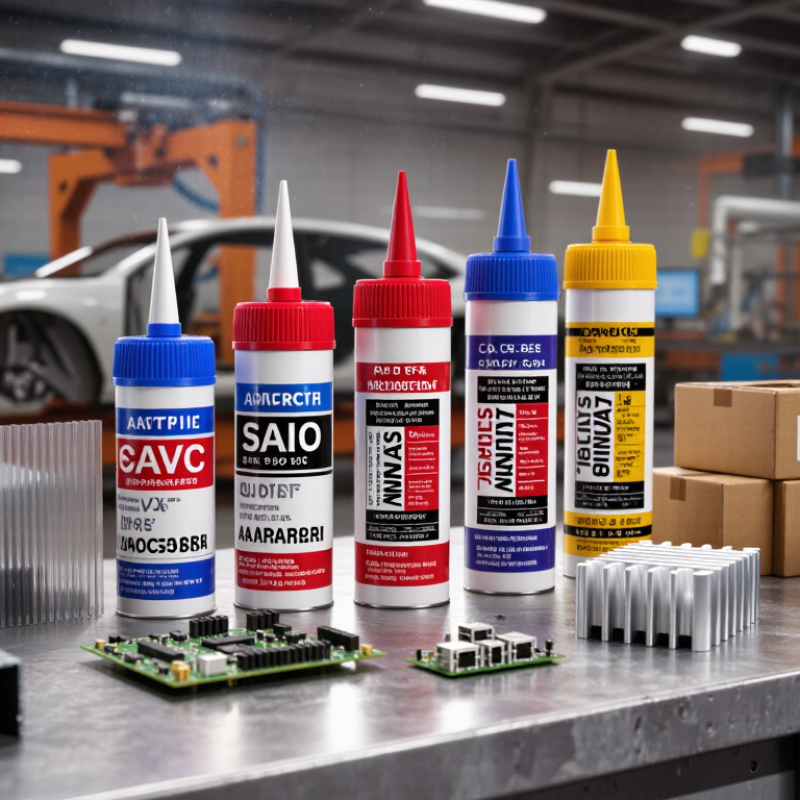
What Is the Best Industrial Adhesive for Global Use in 2026?
An industrial adhesive joins materials through chemical bonding, physical bonding, or both. Its scope now covers metals, plastics, glass, composites, wood, ceramics, and coated surfaces. In 2026, manufacturers use adhesives for structural assembly, sealing, vibration control, and thermal management. Unlike mechanical fasteners, adhesives can distribute stress across a wider area. That matters.
Global applications include electric equipment, vehicle interiors, wind-energy components, medical devices, construction panels, and protective packaging. Each sector demands different performance. A factory in a humid coastal region may need strong moisture resistance. A high-altitude facility may face faster curing and temperature changes. Production speed, surface preparation, worker safety, and repair access also influence the choice.
A reliable selection process begins with the joint, not the product label. Engineers should test bond strength, aging, chemical exposure, temperature cycling, and real production tolerances. I have seen clean laboratory results weaken after dusty surfaces entered a busy assembly line. That detail is easy to miss. Documentation should include technical data, safety information, batch traceability, and application limits. Global teams also need consistent training and storage controls across sites. The strongest adhesive is not always the best option. A slower system may reduce defects, while a flexible one may protect a joint from repeated movement. Even careful specifications can overlook local climate, maintenance habits, or unexpected substrate coatings. Reevaluation remains necessary when materials or production conditions change.
Industrial Adhesives: Definition, Scope, and Global Applications in 2026
There is no single best adhesive for every global application. Silicone and epoxy systems generally provide the highest continuous-use temperature capability, while acrylic, polyurethane, cyanoacrylate, and hot-melt systems are selected for specific requirements such as rapid curing, flexibility, impact resistance, or high-volume processing. The values shown are representative engineering ranges for common industrial formulations; actual performance depends on formulation, joint design, surface preparation, load, and environmental exposure.
Selecting an industrial adhesive starts with the joint, not the product label. Substrate chemistry, surface energy, gap size, and load direction determine real performance. A bond carrying vibration needs different evidence than a static assembly. ASTM D1002 lap-shear data helps, but it should not stand alone. A high laboratory value can mislead when surfaces are oily, damp, or poorly prepared.
Temperature resistance is equally important. Record the lowest and highest operating temperatures, including short spikes. Then check chemical exposure, humidity, ultraviolet light, and thermal cycling.
MarketsandMarkets estimates the industrial adhesives market could reach about USD 54.9 billion by 2028, up from roughly USD 42.6 billion in 2023. This growth reflects wider manufacturing use, but it also creates more inconsistent sourcing and technical claims.
Cure speed affects line efficiency, while open time affects assembly accuracy. Safety data, worker exposure limits, and regional documentation must be verified before global deployment. ISO-based quality systems can improve traceability, yet they cannot replace plant trials. Start with representative materials and realistic aging tests. I have seen promising bonds fail after repeated cleaning cycles. That failure is useful evidence, not a minor inconvenience. Cost per kilogram is incomplete; calculate cost per bonded unit, rework, downtime, and expected service life. Supplier continuity matters too, especially when one formulation depends on a single region or raw-material route.
There is no universal winner among epoxy, polyurethane, acrylic, and silicone adhesives. The best choice depends on materials, temperature, moisture, and production speed. Epoxy offers high strength and strong chemical resistance. It suits metals, composites, and rigid assemblies. However, it can become brittle under vibration and may need careful mixing.
Polyurethane Polyurethane remains useful where flexibility and impact resistance matter. It bonds dissimilar materials and tolerates moderate movement.
Acrylic Acrylic adhesives often support fast production, even on some difficult surfaces. Their odor, surface preparation, and curing conditions still require attention.
Silicone Silicone performs well across wide temperature ranges and resists moisture. Yet, it usually provides lower structural strength than epoxy or acrylic.
A practical lesson from plant trials is simple: laboratory strength does not always predict long-term factory performance. Humidity, dust, joint design, and operator technique can change results. The first choice may be wrong.
Tips: Test the complete assembly, not only the adhesive. Measure peel, shear, vibration, and aging performance. Record surface preparation steps and curing time. Confirm compatibility with local safety requirements and transport conditions. For global use, select a formulation with stable supply, clear technical documentation, and consistent batch quality. Keep backup options. Mistakes happen.
What Is the Best Industrial Adhesive for Global Use in 2026?
Global use requires more than high bond strength. The best industrial adhesive must meet regional safety, emissions, and performance rules. ISO 10993 may matter for medical assemblies, while ASTM and EN tests often guide construction and manufacturing approvals. Under REACH, the European Chemicals Agency reports registrations for more than 23,000 substances. That makes a complete safety data sheet essential. Check restricted substances, worker exposure limits, VOC content, and labeling before approval. A product can perform well in one factory and fail market entry elsewhere.
Supply reliability deserves equal attention. UNCTAD’s Review of Maritime Transport 2024 states that maritime shipping carries over 80% of global merchandise trade. Recent route disruptions exposed weaknesses in single-source purchasing. Choose adhesive systems with qualified regional alternatives, stable curing requirements, and documented lot traceability. Consider storage temperature, shelf life, packaging size, and customs classifications. Small details matter.
Tips: Build a compliance file before testing. Include SDS records, technical data, test reports, and supplier change notices. Audit two supply regions where possible. Keep a backup formula validated, not merely listed. This costs more initially. It may prevent expensive line stoppages.
Environmental decisions remain imperfect. Water-based systems can reduce solvent emissions, but they may cure slowly in humid conditions. Reactive systems can improve productivity, yet handling controls become stricter. The “greenest” option is not always the safest operational choice. Measure total impact, including waste, energy, transport, and rework. Then review the decision annually.
The most suitable global adhesive depends on substrate, service temperature, required durability, curing conditions, emissions limits, and regional regulatory requirements. The values below are representative engineering ranges; the applicable technical data sheet, safety data sheet, and local compliance review should govern final selection.
| Adhesive family | Typical industrial applications | Typical service temperature | Curing profile | Strength and durability profile | Environmental and worker-exposure considerations | Key global standards and regulatory checks | Supply-chain suitability |
|---|---|---|---|---|---|---|---|
| Two-part epoxy | Metal and composite bonding, structural assemblies, transportation equipment, machinery, and repair systems | Approximately −50°C to 150°C; specialized formulations may extend beyond this range | Two-component mix; working time commonly ranges from several minutes to approximately one hour; full cure often requires 24 hours at room temperature | High lap-shear strength, good gap filling, strong adhesion to many metals and composites, generally good chemical and moisture resistance | Often available as 100% solids or low-VOC systems; some curing agents may cause skin or respiratory sensitization; hazardous classification must be checked under the local SDS | ISO 4587 or ASTM D1002 for lap shear; ISO 9142 for environmental durability; EU REACH and CLP; US TSCA; UN GHS-based hazard communication | High. Two-component packaging is widely available, but resin-to-hardener ratios and temperature-controlled storage requirements must be managed |
| One-part moisture-curing polyurethane | Construction components, wood products, transportation interiors, panels, and flexible assemblies | Approximately −40°C to 100°C; heat-resistant grades may provide higher short-term performance | Moisture-activated; cure speed depends on humidity, joint thickness, temperature, and substrate moisture; commonly slower than instant or light-cured systems | Good flexibility, vibration resistance, impact tolerance, and adhesion to porous substrates; generally lower ultimate strength than structural epoxies | Low-solvent and solvent-free grades are available; unreacted diisocyanates require strict exposure controls and may be subject to regional restrictions or training requirements | ISO 17178 for wood adhesives where applicable; ISO 4587 or ASTM D1002 for comparative strength; EU REACH restriction requirements for diisocyanates; EU CLP and local GHS rules | Medium to high. Moisture sensitivity, limited shelf life after opening, and packaging-barrier requirements affect international logistics |
| Modified silane polymer | Sealing and bonding in building materials, rail interiors, vehicle bodies, appliances, and industrial panels | Approximately −40°C to 100°C; some grades offer higher continuous-use temperatures | Moisture-curing; skin formation and full cure vary with humidity, temperature, and bead thickness | Elastic, weather-resistant, and low-shrinkage; suitable for joints exposed to movement, but usually not the first choice for very high structural loads | Many solvent-free, low-odor, and isocyanate-free options are available; formulation-specific biocides, plasticizers, and catalyst classifications still require review | ISO 11600 for building sealant classification where applicable; ISO 8339 for façade sealants; EU REACH and CLP; VOC requirements depend on the country and use category | High. Ambient storage is generally simpler than refrigerated systems, but moisture-barrier cartridges or foil packs are important |
| Acrylic structural adhesive | Metal, plastic, composite, sign, appliance, and transportation assemblies requiring rapid handling strength | Approximately −40°C to 120°C, depending on formulation and loading conditions | Two-part reactive cure; handling strength may develop in minutes, with final properties developing over several hours | High strength and good impact tolerance; often bonds difficult plastics and coated metals with limited surface preparation | Some systems have strong odor and flammable components; solvent-free grades exist, but workplace ventilation and flammability controls may still be required | ISO 4587 or ASTM D1002; ISO 9142 for durability screening; EU REACH and CLP; transport classification under applicable dangerous-goods rules | Medium. Fast cure improves production throughput, while flammability classification and cold-weather performance can complicate transport |
| Cyanoacrylate | Small-part assembly, electronics, rubber, plastics, and rapid fixture operations | Approximately −50°C to 80°C for many general-purpose grades | Very rapid moisture-triggered cure, often seconds to minutes; gap filling and repositioning time are limited | High initial handling strength on close-fitting joints; comparatively brittle and less suitable for large gaps, impact, or sustained high humidity | Low or zero solvent is common, but vapors can irritate eyes and airways; blooming and odor may affect enclosed production areas | ISO 4587 or ASTM D1002 for comparative testing; EU REACH and CLP; product-specific electrical, optical, or medical compliance where relevant | Medium. Small containers are easy to ship, but shelf life and temperature exposure must be controlled |
| Hot-melt adhesive | Packaging, bookbinding, filters, nonwoven products, furniture, and high-speed automated assembly | Approximately −20°C to 80°C for common grades; specialized chemistries may extend the range | Thermoplastic melt application; sets as it cools, typically enabling seconds-level handling | Fast processing and no curing reaction; heat resistance, creep resistance, and low-temperature flexibility vary substantially by polymer type | Usually solvent-free with low VOC emissions during normal use; heated equipment creates burn, thermal-decomposition, and energy-use risks | ASTM D4498 for heat stability of hot-melt adhesives; ISO 11339 where applicable; packaging and food-contact requirements must be assessed for the end use | Very high for ambient transport. Solid form reduces leakage risk, but storage temperature and melting equipment requirements remain relevant |
| Water-based dispersion | Paper, packaging, woodworking, labels, textiles, and porous-substrate assembly | Approximately 0°C to 70°C for many general-purpose grades; application-specific formulations vary | Water evaporation or absorption into porous substrates; drying time is affected by humidity, airflow, temperature, and coating weight | Good coverage and processability on porous materials; generally less resistant to prolonged water exposure and low temperatures than reactive systems | Typically low VOC and low flammability; preservatives, ammonia, and other formulation components may still require occupational and wastewater controls | VOC limits under regional air-quality rules; EN 204 for classification of certain wood adhesives; packaging, food-contact, and biocide rules where applicable | Medium. Water content increases freight weight, and freeze protection is required during cold-weather storage and transport |
| UV- or light-curing adhesive | Glass, optics, electronics, medical-device assembly, and transparent-component bonding | Approximately −40°C to 120°C, depending on chemistry and post-cure conditions | Cures in seconds under suitable wavelength and light intensity; shadowed areas may require a secondary moisture, heat, or chemical cure | Excellent process speed and optical clarity in suitable grades; joint reliability depends strongly on light access, substrate transmission, and aging performance | Often solvent-free; operators require controls for uncured resin and optical radiation; photoinitiator and extractables assessment may be required for sensitive applications | ISO 4587 or ASTM D1002 for comparative bonding; ISO 10993 for applicable medical-device biological evaluation; EU REACH, CLP, and electrical-product requirements where relevant | Medium. Light-sensitive packaging, equipment compatibility, and controlled storage conditions are important for international distribution |
Choosing the best industrial adhesive starts with the application, not the product label. Identify the materials, joint design, load direction, and expected service life. Metals, plastics, glass, and composites can require different bonding chemistry. Surface condition matters too. Oil, dust, oxidation, and moisture can reduce bond strength before curing begins.
Temperature changes deserve careful attention. A joint exposed to heat, freezing conditions, vibration, or outdoor moisture needs an adhesive rated for those stresses. Check the full operating range, not only the peak temperature. Cure speed also affects production. Fast curing may support high output, but it can reduce adjustment time. Fit matters.
In production reviews, I examine the weakest part of the assembly first. A strong adhesive cannot correct a poor joint design or excessive gap. Select the right viscosity for vertical surfaces, narrow seams, or automated dispensing. Then confirm chemical resistance, storage requirements, worker exposure controls, and applicable regional standards. Technical data sheets are useful, but they are not final proof. Test twice. Use samples made from the actual substrates and exposed to realistic heat, humidity, chemicals, and vibration.
A simple lap-shear test may not represent peeling or impact loads. That is an easy mistake. I would not pretend one adhesive can serve every global application equally well. Supply stability, curing equipment, climate, and local compliance can change the practical choice. Record test conditions carefully, because an impressive result without repeatable evidence is only a promising guess.