#4 – 20133 102nd Avenue, Langley, B.C. V1M 4B4 Canada

#4 – 20133 102nd Avenue, Langley, B.C. V1M 4B4 Canada
China’s manufacturing sector is moving toward faster, more measurable quality control. Machine Vision Inspection supports this shift by converting images into production decisions. Cameras check dimensions, surface defects, labels, alignment, and assembly accuracy within milliseconds.
The International Federation of Robotics reported that China installed 276,288 industrial robots in 2023. That represented more than half of global installations. This scale creates strong demand for dependable vision systems, lighting, optics, software, and integration services. It also raises expectations. A camera alone cannot guarantee reliable inspection. Accuracy depends on calibration, sample quality, algorithms, operator training, and stable factory conditions.
Market estimates show continued expansion. MarketsandMarkets projected the global machine vision market to grow from approximately USD 13.7 billion in 2023 to USD 20.6 billion by 2028. Fortune Business Insights reported different values because its market boundaries differ. That difference deserves attention. Industry numbers are not perfectly comparable.
This guide examines ten leading Chinese Machine Vision Inspection manufacturers through practical criteria. These include product capability, application experience, system integration, technical support, customization, and documented reliability. The list should not be treated as an absolute ranking. Supplier strengths vary by sector, production speed, material type, and inspection complexity.
A useful evaluation begins on the factory floor. Look for clear images under changing light. Test reflective metal parts. Review false-rejection rates. Ask how quickly engineers respond when a production line stops. These details often matter more than a polished brochure. The market is competitive, but not every impressive specification proves real inspection performance.
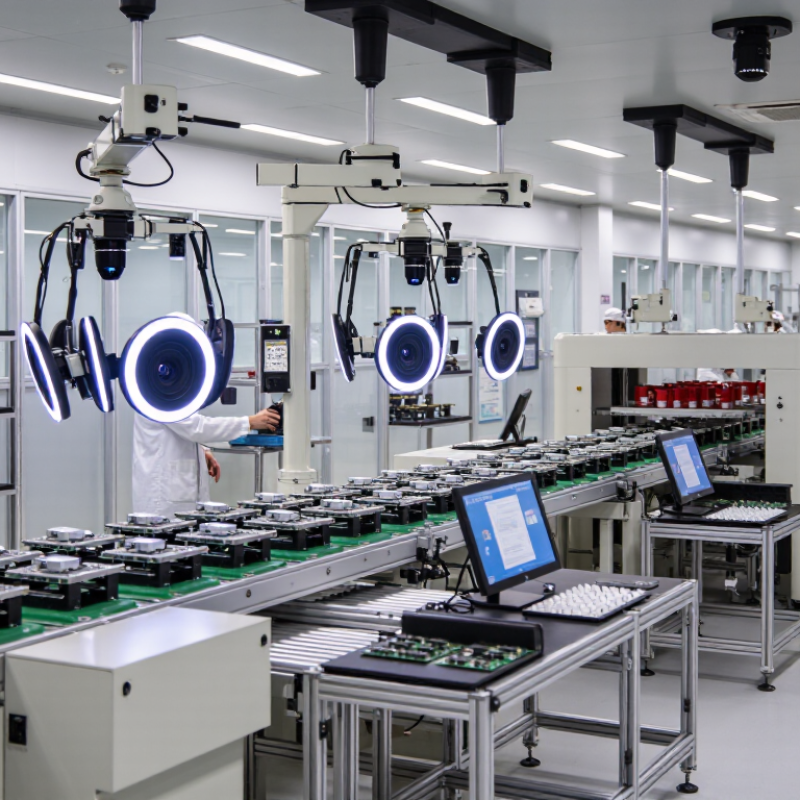
Machine vision inspection manufacturers in China design systems that help factories examine products automatically. These systems use cameras, lighting, lenses, software, and controlled inspection equipment. They may check scratches on metal parts, missing components on circuit boards, or incorrect labels on packaging. A capable manufacturer does more than supply a camera. It studies production speed, material texture, lighting changes, and acceptable defect limits.
In practical projects, engineers install cameras above a conveyor and connect them with sensors, software, and rejection devices. The system can record images, identify patterns, and remove defective items within milliseconds. Reliable manufacturers also support calibration, operator training, maintenance, and data traceability. Their role is important because inspection results affect quality decisions and production costs. However, machine vision is not automatically accurate. Dust, reflection, vibration, or poor lighting can confuse the algorithm. The process is not flawless. Careful validation remains necessary.
Tips: Ask for sample testing before purchase. Request measurable accuracy data, response time, and maintenance plans. Check whether the system can handle real production samples, not only perfect demonstration parts. Discuss false rejects and missed defects openly. A professional supplier should explain limitations clearly and provide documented testing methods. Local engineering support can also reduce downtime, although service quality may vary between manufacturers.
Machine vision inspection systems used by leading Chinese manufacturers combine precise imaging with practical factory control. Industrial cameras capture surfaces, edges, codes, and dimensions at production speed. Lens selection matters because a wide view can hide small defects. Controlled lighting reveals scratches, dents, missing parts, and uneven textures.
A reliable system uses strobes, filters, and carefully timed triggers. This prevents motion blur when products move beneath the camera. Two-dimensional imaging works well for printed marks and flat components. Three-dimensional sensors measure height, volume, and assembly position. Calibration is essential. Even a small camera shift can distort measurement results.
Processing hardware now supports rule-based algorithms and deep learning models. Rule-based tools remain useful for stable shapes and fixed tolerances. Deep learning handles changing textures, but it needs representative images. Clean training samples are not enough. Dust, reflections, and unusual product colors must also appear. Otherwise, the model may reject good parts or miss real faults.
In factory trials, engineers often connect inspection software with PLCs, robots, and traceability systems. Results can include defect images, timestamps, and measurement values. This helps technicians locate process drift instead of guessing. Yet automation is not perfect. Operators still need to review uncertain images and update inspection thresholds. A fast system that produces unexplained decisions is difficult to trust. Testing under real production lighting remains more valuable than a polished laboratory demonstration.
China’s top 10 machine vision inspection manufacturers serve demanding production lines across electronics, automotive, packaging, and medical devices. Their profiles differ by engineering focus, not just sales scale. One specializes in high-speed surface inspection, using line-scan cameras above moving metal sheets. Another develops three-dimensional measurement systems for connectors, housings, and precision-machined parts. A third focuses on label, print, and seal verification, where tiny text errors can stop shipment.
Several manufacturers build configurable platforms for factories with changing product models. Their engineers commonly combine industrial cameras, controlled lighting, lenses, motion systems, and inspection software. Some provide robotic guidance, while others concentrate on defect classification and traceability. Strong suppliers show sample images, repeatability data, response times, and installation records. They also explain false rejects clearly. That matters.
The remaining profiles include specialists in semiconductor inspection, battery-cell checking, food packaging, and pharmaceutical containers. Their value often appears in difficult details, such as detecting pinholes under reflective film or measuring uneven adhesive lines. Experienced teams test customer samples before proposing equipment. They should document acceptance criteria and operator training. Public rankings remain imperfect because manufacturers report different metrics, and some project results stay confidential. A supplier may appear smaller yet deliver better support in one region. Buyers should compare verified trials, maintenance response, software flexibility, and long-term data access. Claims without test conditions deserve caution.
Industry capability profile based on commonly documented machine vision inspection functions, without displaying company or brand-level data.
The chart summarizes the core capabilities typically offered by leading Chinese machine vision inspection manufacturers, including dimensional measurement, defect detection, OCR, barcode reading, surface inspection, and 2D/3D inspection integration.
China’s top 10 machine vision inspection manufacturers differ mainly in product focus, industry experience, and inspection depth. Some specialize in 2D area-scan cameras for surface defects, label checks, and character reading. Others provide 3D cameras for height measurement, volume analysis, and uneven surfaces. Line-scan systems suit continuous materials, including films, metals, and textiles. Integrated systems may combine cameras, lighting, lenses, software, and motion control.
Their industry coverage also varies. Electronics factories often need fast inspection for chips, connectors, and solder joints. Automotive production demands dimensional checks, assembly verification, and traceability. Packaging applications focus on seal integrity, print quality, and missing components. Food and pharmaceutical users usually require hygienic designs, stable lighting, and documented inspection records. A capable manufacturer should explain accuracy, repeatability, cycle time, software compatibility, and after-sales support with test data. Marketing language alone is not enough.
Tips: Ask for sample testing with your real products. Check performance under dust, glare, vibration, and changing colors. Request defect images, not only accuracy percentages. Also, compare training and maintenance services. No ranking is perfect. A lower-cost system may become expensive when integration is weak. Even experienced teams can overlook reflective surfaces or rare defects. Leave room for retesting before final selection.
China Top 10 Machine Vision Inspection Manufacturers
Selection Criteria for Machine Vision Inspection Suppliers in China
Choosing a machine vision supplier requires more than comparing equipment prices. Start with relevant inspection experience. A supplier familiar with metal parts may struggle with transparent packaging or reflective surfaces. Ask for test records from similar materials, speeds, and defect sizes. Request sample trials using your own products. Real evidence matters.
Evaluate the complete inspection system, not only the camera. Check lighting stability, lens selection, software logic, rejection timing, and data tracking. A reliable supplier should explain false rejects and missed defects in measurable terms. Review repeatability across several production shifts. Ask how calibration is controlled. Small calibration errors can become expensive quality problems.
Visit the facility when possible. Observe assembly standards, electrical testing, documentation, and technician training. Confirm spare-part availability and remote support response times. Clear acceptance criteria should cover accuracy, cycle time, uptime, and operator training. Some suppliers present excellent demonstrations but provide weaker after-sales support. That risk deserves attention. No supplier is perfect. A pilot run may reveal limitations that polished presentations hide. Assess communication, engineering discipline, and willingness to revise the design before signing a long-term agreement.