#4 – 20133 102nd Avenue, Langley, B.C. V1M 4B4 Canada

#4 – 20133 102nd Avenue, Langley, B.C. V1M 4B4 Canada
China has become an important sourcing destination for museum lighting, offering a wide range of luminaires, controls, and custom solutions. But a polished catalogue is not proof of conservation expertise. Buyers should examine beam control, color consistency, dimming performance, and documentation. Ask for test data, sample fixtures, and clear answers about ultraviolet output and heat. Then compare them under realistic gallery conditions.
Conservation scientist David Saunders has written about the balance between seeing collections and limiting light damage. A practical summary of that principle is: “Reveal the object; limit its exposure.” This is a paraphrase, not a verified verbatim quotation. It points to the central challenge of Museum Lighting: a vivid display can still expose sensitive works to unnecessary risk. Paper, textiles, and pigments may respond differently, so one setting rarely suits every gallery. Small details matter. A visible flicker, uneven beam, or poorly documented dimming curve can undermine an otherwise promising installation.
This outline will help global buyers assess China’s top museum lighting suppliers through product performance, customization, quality assurance, and export support. It will also consider communication, project references, and after-sales service. Supplier rankings can be useful, but they are not final proof. A shortlist deserves careful testing. And some claims need scrutiny. Real-world results may differ from a showroom demonstration, so buyers should verify specifications and request project evidence before making decisions.
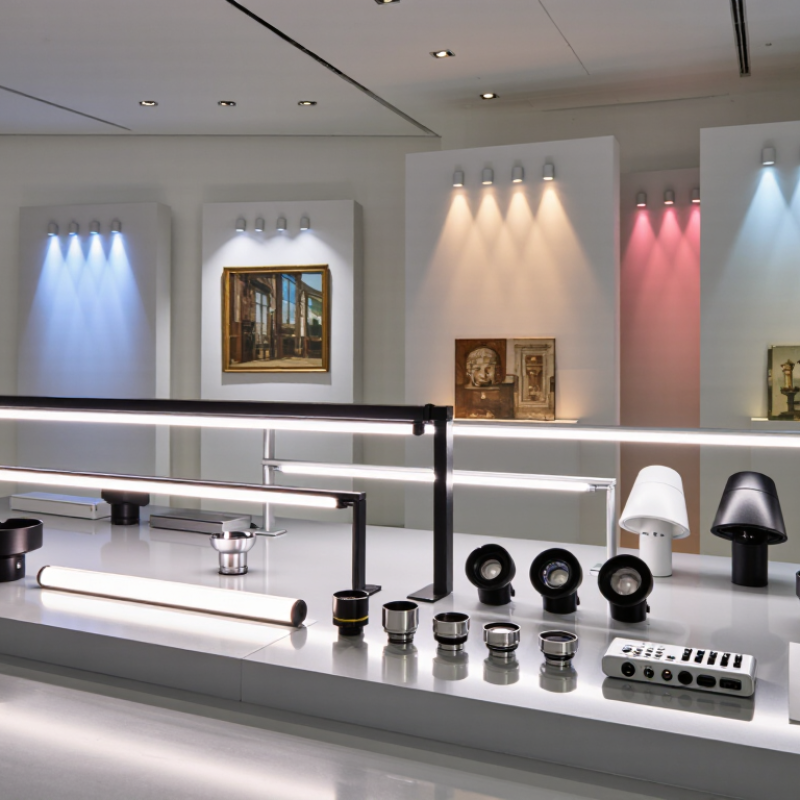
Museum lighting suppliers serving global projects provide more than fixtures. They help turn curatorial goals into practical lighting plans for galleries, display cases, and circulation areas. A project may need narrow-beam accents for a small sculpture and softer, even illumination for a large painting. Suppliers can recommend optics, color temperature, and dimming options to suit each space. The details matter.
Technical support may include lighting calculations, sample fixtures, and on-site mock-up guidance. Buyers can compare beam spread, glare, color rendering, and how surfaces look under actual gallery conditions. For sensitive collections, suppliers can discuss ultraviolet control and adjustable light levels with the project team. No single setting fits every object. A sample test can reveal issues a drawing misses.
For international installations, suppliers may also provide product schedules, installation instructions, spare-parts lists, and export packaging suited to long-distance transport. They can coordinate with architects, electricians, and museum staff on control-system compatibility and commissioning needs. Clear documentation helps when teams work across languages and time zones. Still, specifications do not guarantee a smooth installation. Room finishes, ceiling access, and late design changes can alter the result, so buyers should confirm responsibilities and testing arrangements before shipment.
Museum lighting must reveal texture without accelerating damage. Paper, textiles, pigments, and photographs respond differently to light. Set illumination levels according to object sensitivity, display duration, and rotation plans—not room brightness alone. Vulnerable works often need lower, carefully controlled light, while stone or metal may tolerate more. Confirm targets with conservators and measure them at object surfaces. UV filtering helps, but it cannot replace exposure management.
Tips: Ask suppliers for measured lux levels, color-rendering data, flicker information, and heat performance. Request a sample installation to check glare on glass and shadows around labels. Test before installation. Small details matter.
A useful system offers smooth dimming, stable color, and controls that staff can operate without specialist tools. Check how fixtures perform after long operating hours, and ask how lenses and drivers can be serviced. A frequent oversight is judging a lamp by color-rendering scores alone; those figures do not show whether colors look natural in a particular gallery. Review actual objects under the proposed light. Even careful plans need adjustment once visitors, cases, and wall finishes are in place.
Museum lighting projects in China often combine several fixture types rather than relying on one general light. Track-mounted spotlights can highlight a sculpture or label, and their adjustable heads help staff refine the beam after installation. Narrow beams suit small objects; wider optics spread light across paintings. Glare still happens. A sample display is worth testing.
Linear wall washers create a more even field on large paintings and exhibition panels. Recessed or surface-mounted case lights illuminate objects inside vitrines, where compact fixtures and careful heat management matter. Fiber-optic systems can keep the light source away from sensitive objects, while ultraviolet-filtered LEDs offer another option for reducing unwanted exposure. Neither approach replaces sensible light levels and display rotation.
Many suppliers also offer dimming controls and adjustable color temperature. These features help curators balance visibility, material appearance, and conservation needs across different galleries. Ask for beam-angle data, color-rendering measurements, flicker information, and sample fixtures before approving a specification. Check performance through the actual case glass, too. A technically strong fitting may look harsh on a pale ceramic surface. I have seen plans that seemed clear on paper but needed adjustment once the room was lit. Practical mock-ups reveal those gaps.
For museum lighting, a polished catalogue is not proof of performance. Ask Chinese suppliers for test reports covering color rendering, color temperature, flicker, ultraviolet output, and thermal behavior. Check whether the reported results match the exact fixture and configuration you plan to buy. Ask for proof.
Request a sample and inspect it under realistic conditions. Place it near a sensitive object or color reference, then check for glare, uneven illumination, and visible color shifts. Confirm that the supplier can provide photometric files, wiring diagrams, and clear installation instructions. A useful report should identify the test method, date, and product model—not just show a pass mark.
Compliance depends on the destination market and the finished product. Ask which electrical safety and electromagnetic compatibility requirements apply, and request current certificates with their scope and issuing laboratory. Verify that factory quality checks include incoming component inspection, burn-in testing, and batch traceability. A video call can show the production line, but it cannot replace independent documentation. One detail is easy to overlook: a certificate for a driver may not cover the complete luminaire. No checklist catches everything. Compare records with the sample, clarify gaps in writing, and allow time for retesting when specifications change.
When assessing suppliers, ask for photometric test reports and verify that fixtures, optics, and dimming controls can deliver the required illuminance at the object. These commonly used planning limits are not universal legal requirements; confirm project targets with a conservator and applicable local guidance.
Reference: CIE 157:2004, Control of Damage to Museum Objects by Optical Radiation; actual limits depend on object sensitivity, exposure duration, and conservation policy.
When comparing museum lighting suppliers in China, begin with the collection, not the fixture catalogue. Record object materials, display-case dimensions, viewing distances, and target illuminance with a conservation specialist. A textile, a painted panel, and a stone carving may need different light levels and beam angles. Details matter.
Ask shortlisted suppliers for photometric files, spectral data, dimming compatibility, and clear statements about ultraviolet and infrared output. Request a sample fixture or a small mock-up using the proposed lens and mounting position. A reading on paper is useful, but it cannot show glare on glass or uneven light across a case. That part is easy to underestimate.
Plan installation before placing the order. Share reflected ceiling plans, track locations, power requirements, access limits, and local voltage details. Confirm who provides drivers, adapters, labels, spare parts, and commissioning records. Clarify packaging, delivery milestones, and how damaged components will be documented. Keep a buffer for customs or site changes; schedules rarely behave perfectly. During commissioning, measure light at object level and test scenes at actual viewing angles. Keep the final settings and maintenance notes with the museum’s records. Something may still need adjustment. That is normal. A careful sourcing plan leaves room for it.