#4 – 20133 102nd Avenue, Langley, B.C. V1M 4B4 Canada

#4 – 20133 102nd Avenue, Langley, B.C. V1M 4B4 Canada
Wooden Doors can make an entry feel warm and substantial, but appearance is only part of the decision. The right choice also depends on location, exposure, maintenance, and how the door fits its frame. The U.S. Energy Information Administration’s 2020 Residential Energy Consumption Survey reports that space heating and cooling account for roughly half of U.S. household energy use. That figure is not a measure of door-related savings, but it shows why a drafty exterior door deserves attention. Check its fit, weather seals, and energy-rating information before comparing finishes.
Wood movement matters, too. The USDA Forest Products Laboratory’s Wood Handbook explains how moisture affects wood’s dimensions and performance. In practical terms, a sunny, rain-exposed entry may need more protection than a sheltered interior opening. Species, construction, finish, and upkeep all count. Charles Eames, a celebrated product designer, observed, “The details are not the details. They make the design.” That idea applies to doors: inspect the grain, edge detailing, hardware, and finish in person, not just in a showroom photo. A small sample can look different beside your home’s trim. It can still be hard to picture the full effect. This guide will help you compare solid wood and engineered options, weigh style against durability, and choose a door suited to your home and climate.
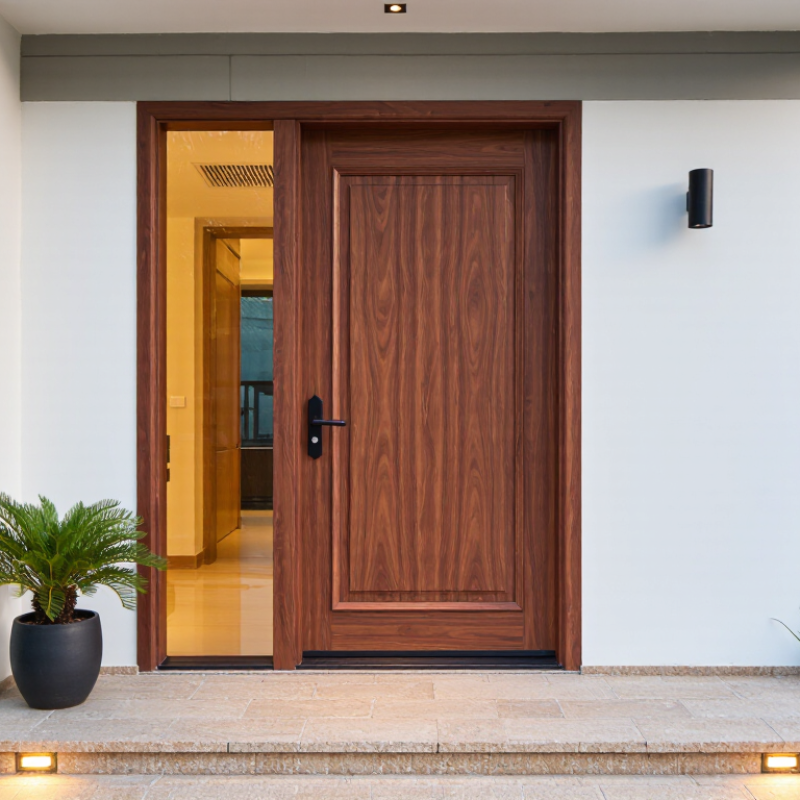
Wooden doors differ in both appearance and what lies beneath the surface. A solid-wood door is made from natural timber, often assembled from joined boards. Its grain feels warm and varied, but seasonal humidity can cause slight swelling or movement. That matters in older homes. Check that the door has been properly dried and finished on all sides, including its top and bottom edges.
Panel doors use vertical stiles, horizontal rails, and inset panels. The panels may be solid wood or engineered material, and their joints allow some movement as conditions change. Flush doors have a flat face instead. They may use a solid timber core, a lighter hollow core, or an engineered core beneath a wood veneer. Look closely. A veneer gives a genuine wood surface, but it is thinner and needs gentler sanding than solid timber. I would not judge quality by weight alone; that shortcut can mislead. Ask what the core is, inspect the edges, and compare the door’s stated construction with the room’s needs. A bedroom may benefit from a solid core for better sound reduction, while a closet door may not need the extra weight. Construction details are easy to miss.
Choosing a wooden door means balancing appearance with wear, moisture, and upkeep. The USDA Forest Products Laboratory’s Wood Handbook reports Janka hardness values of about 1,360 pounds-force for white oak and 1,290 for red oak. That small gap matters less than construction and finish. White oak also offers better natural decay resistance than red oak, according to the handbook. For a busy entry, consider oak or another durable species; for a sheltered interior door, lighter pine may be suitable and easier to work.
Durability depends on where the door sits. A south-facing entrance can take strong sun, while a damp porch may expose edges to repeated wetting. Even stable wood can swell or shrink as moisture changes. Check that the door has a sound, even finish, especially along its top and bottom edges. Inspect hinges and seals, too. A heavy door that drags after a wet season may need adjustment, not immediate replacement. Real homes are rarely perfect.
Tips: Wipe spills promptly, and inspect exterior finishes each year. Recoat when the surface looks dull or water no longer beads. Keep a small gap around the frame for seasonal movement, and follow the finish maker’s maintenance guidance. For a door exposed to rain, add an overhang where practical. These habits help, but they cannot fully prevent weathering.
| Wood Species | Appearance and Grain | Durability in Everyday Use | Maintenance Needs | Often Suited To |
|---|---|---|---|---|
| White Oak | Prominent, open grain with warm tan to brown tones; commonly finished with a visible grain. | Hard and wear-resistant, so it generally stands up well to frequent use. Like other solid woods, it can expand or contract as humidity changes. | Keep the finish intact and clean with a soft, slightly damp cloth. Recoat when the finish becomes worn; avoid prolonged moisture. | Interior doors in busy areas; exterior doors when made and finished for exterior exposure. |
| Hard Maple | Fine, subtle grain and a light, even appearance; stains may look uneven without careful preparation. | Hard and resistant to dents compared with softer woods, making it a practical option for frequently used interior doors. | Dust and wipe gently. Maintain the protective coating, and use a suitable sealer or finish if staining to help achieve an even result. | Interior rooms where a smooth, light-colored look and good resistance to everyday wear are priorities. |
| Mahogany | Usually reddish-brown with a relatively straight grain. The name can refer to different species, so color and properties vary. | Many commonly used mahogany-type woods are valued for dimensional stability, but durability depends on the exact species, door construction, and exposure. | Use a finish appropriate to the door’s location. Inspect exterior finishes regularly and renew them when they show wear or allow water to reach the wood. | Interior doors with a rich, warm appearance; exterior applications only when the specific wood and door are rated for them. |
| Black Walnut | Distinctive brown tones and attractive grain, often chosen for a natural or clear finish. | Moderately hard and suitable for normal residential use, though it can dent or scratch under impact more readily than harder options such as maple. | Protect the surface from scratches and moisture. Dust regularly and refresh the finish if it becomes dull, worn, or damaged. | Interior doors where natural color and grain are key design features. |
| Pine | Light-colored, often with visible knots and varied grain; typically accepts paint or stain, depending on the grade. | A softwood that is more prone to dents and scratches than oak or maple. Knots and grain can vary from board to board. | Repair dents and maintain paint or varnish to protect the surface. Keep it dry, particularly near entryways or other damp areas. | Interior doors, painted styles, and projects where a softer, rustic look is desired. |
| Douglas Fir | Usually has a straight, pronounced grain with warm reddish or golden tones. | A moderately durable softwood, but its surface can dent more easily than harder hardwoods. Performance depends on grade and construction. | Maintain a sound protective finish and address scratches or exposed wood promptly. For exterior use, select a suitable door assembly and coating. | Interior doors with a pronounced wood grain; appropriately constructed and finished exterior doors. |
Selection note: Durability depends on the exact species and grade, whether the door is solid wood or engineered, its construction, finish, installation, and exposure. For exterior doors, prioritize an assembly designed for exterior conditions and inspect its finish periodically. Solid wood may move as indoor humidity changes.
A wooden door should suit the room, not just the hallway. In a living room, a wide hinged door creates a clear, welcoming entrance. A simple panel design works with many interiors and is easy to maintain. For a compact study, a sliding door can save floor space, but check that furniture will not block its track. Small details matter.
Measure the opening at several points, since older walls are not always square. Record the height, width, and wall thickness before ordering. Also consider the door swing: a bedroom door should not hit a bed, while a pantry door should leave shelves accessible. Standard sizes can simplify installation, but a close fit is not guaranteed. Allow for the frame and floor clearance.
Bedrooms often benefit from solid-core wooden doors, which can reduce everyday noise more effectively than hollow-core options. Bathrooms need a suitable finish and ventilation; persistent moisture can damage wood over time. A glazed panel may brighten a dark dining area, while a solid door offers more privacy. Test samples in the room’s actual light. Wood tones can look warmer or cooler than expected, and matching every door perfectly may feel stiff rather than cohesive.
Evaluate Installation, Security, and Energy Efficiency
A wooden door performs well only when it fits the opening properly. Measure the frame at several points; older homes often have slightly uneven walls. During installation, check that the door swings freely and sits evenly against the weatherstripping. A small gap at the bottom can invite drafts and moisture.
Small gaps matter.
Perfect alignment may take adjustment, so inspect the door again after the first few weeks.
For security, look beyond the wood itself. A solid-core construction, sturdy hinges, and a reinforced frame can help resist forced entry. Ask whether the frame can support the lock you plan to use. Glass panels bring daylight, but consider their size and placement near the handle. For energy efficiency, compare insulation details and choose suitable glazing for your climate. Continuous weatherstripping and a snug threshold often make a noticeable difference.
Check after rain.
Tips: Ask the installer how they’ll seal the frame and adjust the threshold. Test the latch before signing off. If the door sticks in humid weather, note when it happens; seasonal movement is common, but persistent rubbing may need attention. Don’t judge insulation by appearance alone—ask for documented performance details.
Set a realistic budget before comparing wooden doors. Include the door, frame, hardware, delivery, finishing, and installation. A low quote may exclude several of these costs. Ask for an itemized estimate, so you can compare the same specifications across suppliers. Solid wood, engineered wood, and different finishes vary in price and upkeep. Leave room for unexpected fitting work. Measurements can be off, and older doorways are not always square. A budget is a working estimate, not a promise.
Choose a supplier who explains materials clearly and answers practical questions without pressure. Request written details about timber type, finish, lead time, installation, and warranty coverage. Ask how the door should be maintained, especially if it faces sunlight or damp conditions. Check recent customer feedback and, where possible, inspect a sample or completed project. Look closely at the grain and finish. Small details matter. If answers stay vague, pause before paying a deposit; a polished showroom is not proof of dependable service.
Tips: Compare full installed prices, not just door prices. Keep the quote and measurements in writing. Ask who handles damage or delays. Then take a day to think it over. A little hesitation can save an expensive regret.
This sample budget totals $2,000: $1,200 for the door, $400 for installation, $200 for hardware and finishing, and $200 for contingency. These are example planning amounts, not market-price averages. Request itemized quotes from multiple suppliers, check what is included, and verify warranty terms, product specifications, and customer references before choosing.