#4 – 20133 102nd Avenue, Langley, B.C. V1M 4B4 Canada

#4 – 20133 102nd Avenue, Langley, B.C. V1M 4B4 Canada
Choosing a reliable EV e-axle supplier China requires more than comparing prices and product brochures. An e-axle combines the electric motor, reducer, inverter, and control system in one compact unit. Its quality directly affects vehicle range, acceleration, noise, heat management, and long-term safety. For this reason, buyers should examine engineering capability, production consistency, testing procedures, and after-sales support before signing a contract.
A qualified supplier should provide clear technical data, including rated power, peak torque, voltage range, efficiency maps, cooling performance, and mounting dimensions. Factory audits can reveal practical details that websites often hide. Look at machining accuracy, assembly cleanliness, end-of-line testing, and traceability records. Ask whether the supplier has completed real vehicle projects, not only laboratory prototypes. References from comparable commercial vehicles or passenger cars can offer stronger evidence than impressive claims.
Communication also matters. A dependable partner explains limitations instead of promising everything. That honesty is valuable. However, no supplier is perfect, and early specifications may change after road testing. Buyers should therefore define validation stages, sample quantities, warranty terms, spare-part responsibilities, and response times in writing. Independent testing may still be necessary, especially for thermal durability, vibration resistance, electromagnetic compatibility, and high-voltage protection. The best EV e-axle supplier China is not always the cheapest option. It is the supplier that combines proven experience, transparent engineering, stable manufacturing, and a realistic commitment to continuous improvement.
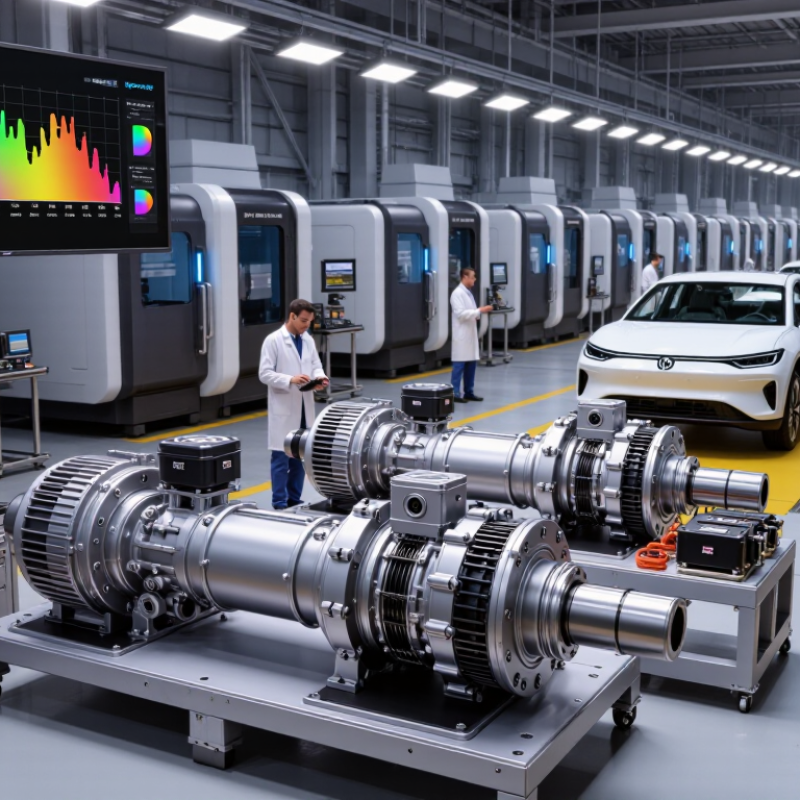
An EV e-axle combines an electric motor, inverter, reduction gearbox, and differential. This compact assembly delivers torque directly to the wheels. It reduces mechanical connections and can improve packaging efficiency. The IEA’s Global EV Outlook 2024 reported nearly 14 million electric car sales in 2023. Electric cars represented more than 18% of global car sales. This growth increases demand for reliable, efficient e-axle systems.
When choosing a Chinese supplier, request measured performance data rather than brochure claims. Check continuous power, peak torque, voltage range, efficiency maps, thermal limits, and noise results. Ask how the supplier manages sealing, bearing wear, software updates, and end-of-line testing. ISO 26262 processes and IATF 16949 quality systems are useful evidence, but certificates alone prove little. The U.S. Department of Energy’s Vehicle Technologies Office highlights power electronics and thermal management as major drivetrain efficiency factors. A practical audit should examine test records, traceability, prototype failures, and corrective actions. No scorecard is perfect.
Tips: Compare identical operating conditions. Ask for independent validation. Review warranty data by mileage, not only calendar time. A supplier willing to show weaknesses may be more trustworthy than one showing perfect charts. That detail matters.
Typical peak power requirements by electric vehicle segment
E-axles integrate the electric motor, reduction gearbox, differential and power electronics into one compact drivetrain unit. The required peak power generally increases with vehicle size, payload and acceleration targets. When evaluating an EV e-axle supplier, compare rated power, efficiency, thermal management, voltage compatibility, durability testing and system integration capability—not power output alone. The figures shown are representative engineering reference values; actual specifications vary by vehicle platform.
Before contacting a potential EV e-axle supplier in China, define your vehicle requirements precisely. State the gross vehicle weight, axle load, wheel size, target speed, climbing grade, and driving range. Specify peak torque, continuous torque, motor voltage, gear ratio, and regenerative braking limits. Include the battery communication protocol and available installation space. Small details matter.
Your application profile should describe real operating conditions. A delivery van may stop every few minutes, while an off-road vehicle faces dust, water, and steep gradients. Record ambient temperatures, daily mileage, road surfaces, and expected service intervals. Ask for thermal data at continuous load, not only impressive peak figures. Request drawings showing mounting points, half-shaft angles, ground clearance, and connector positions. Bench data is not enough.
We once treated a short test route as a complete duty cycle. That assumption was too optimistic. The axle later needed stronger cooling during repeated climbs. This experience changed our review process. Ask suppliers for prototype testing, endurance records, failure analysis, and traceable production procedures. Review sample inspection plans, software update control, and end-of-line testing. A factory audit can reveal storage problems, unclear calibration methods, or weak quality records. Leave room for honest uncertainty. Requirements often change after testing, so a reliable supplier should document revisions and explain their technical limits clearly.
Choosing a top EV e-axle supplier in China requires more than comparing unit prices. The China Association of Automobile Manufacturers reported 12.87 million new-energy vehicle sales in 2024. That scale demands proven engineering, stable processes, and fast technical support.
Technology should be tested on the production line, not only shown in presentations. Ask for measured efficiency maps, peak torque data, thermal derating curves, and noise results. A capable supplier should explain inverter cooling, gear durability, sealing, and software calibration in clear terms. The IEA reported that global electric car sales exceeded 17 million in 2024, increasing pressure on efficiency and reliability. Small losses become expensive at this volume. Real vehicle data matters more than laboratory claims.
Quality evidence should include IATF 16949 certification, PPAP records, traceability, end-of-line testing, and failure-analysis reports. Check whether each axle receives leak, insulation, torque, vibration, and functional checks. Ask how field failures are closed. A glossy audit can still mislead. Production capacity also needs careful verification. Compare annual rated capacity with actual output, OEE, shift plans, supplier redundancy, and expansion timelines. The China supplier may quote 100,000 units, but available capacity could be much lower during peak demand. Visit the machining, assembly, and testing areas. Look for controlled warehouses, calibrated equipment, and visible process discipline. My own assessment would leave room for doubt, because capacity, quality, and engineering maturity can change quickly after a contract is signed.
Choosing a top EV e-axle supplier in China requires more than a low quotation. Compare the full cost, including tooling, samples, software integration, freight, warranty reserves, and future maintenance. Ask for a cost breakdown, not a polished total. A cheaper axle may use less efficient cooling or offer limited diagnostic access. That difference appears later in energy consumption and downtime. Request test data from comparable vehicle loads, speeds, and grades. Real operating conditions matter.
Customization should be measured in engineering hours and validation evidence. Discuss motor rating, reduction ratio, mounting points, battery voltage, CAN communication, thermal limits, and braking coordination. A capable supplier should explain what can change without weakening reliability. Certification records should identify the applicable market, test scope, and certificate holder. Check traceability for key parts and review quality procedures. Documents alone are not proof. I would inspect sample reports and ask how failures were corrected. This step feels slow, but rushed approval is expensive.
Tips: Keep one comparison sheet for every supplier. Record quoted cost, lead time, prototype results, certification status, spare-part availability, and response times. Ask for a named after-sales engineer and a written escalation process. Test support during a minor issue, not after a major failure. Some suppliers promise 24-hour replies; the real answer may be less impressive. Clarify remote diagnosis, replacement-unit stock, training, and warranty exclusions before signing. Trust grows through evidence, not confident language.
Request audited records for rated torque, peak power, efficiency, thermal cycling, noise, vibration, and water-ingress testing. Ask whether test conditions match your vehicle’s mass, tire size, voltage, and duty cycle. A laboratory certificate alone is insufficient. Review raw test data, calibration dates, failure reports, and corrective actions.
Inspect the production line personally. Check rotor balancing, gear inspection, winding quality, cleanliness controls, and end-of-line testing. Require traceability from material batch to finished unit. Confirm quality systems, engineering staffing, and software update procedures. IATF 16949 certification helps, but it does not replace process verification.
The supplier’s capacity plan deserves equal attention. The China Association of Automobile Manufacturers reported China’s new energy vehicle sales exceeded 9 million units in 2023. Rapid growth can hide subcontracting, overtime pressure, or component shortages. Ask for three-year capacity records and proof of backup tooling.
Commercial due diligence should include warranty reserves, spare-parts response, cybersecurity controls, and export documentation. Compare total cost, not only unit price. A cheaper axle may create expensive calibration work.
No audit is perfect. I would keep a scored shortlist, conduct sample validation, and negotiate a staged award. Leave room for doubt. It often exposes the risks that polished presentations conceal.