#4 – 20133 102nd Avenue, Langley, B.C. V1M 4B4 Canada

#4 – 20133 102nd Avenue, Langley, B.C. V1M 4B4 Canada
Choosing the right Hvac Filter Drier is a small decision with major consequences. It protects refrigeration circuits from moisture, acids, wax, and installation debris. ASHRAE Handbook—Refrigeration identifies contamination control as essential for reliable system operation. A clean circuit is not optional.
Energy demand makes this choice more important. The International Energy Agency reported that space cooling represented about 10% of global electricity consumption in 2018. The U.S. Department of Energy also notes that heating and cooling account for roughly half of household energy use. These figures do not measure filter-drier performance directly. They show why efficient, dependable HVAC components deserve careful selection. A restricted drier can increase pressure drop, reduce capacity, and raise compressor stress. That cost may remain invisible until the service call arrives.
The correct model depends on refrigerant type, system capacity, connection size, temperature range, and moisture load. Sporlan’s Filter-Drier product guidance emphasizes matching construction and capacity to the application, rather than choosing by pipe diameter alone. Emerson’s refrigeration application materials similarly stress proper installation, evacuation, and contamination control. Field experience adds another warning: a neatly installed drier can still be undersized. It can also be installed backward. Small details matter. This guide will compare core types, pressure-drop data, compatibility requirements, and replacement practices. The selection process is not perfectly simple. Manufacturer charts help, but actual operating conditions still require professional judgment.
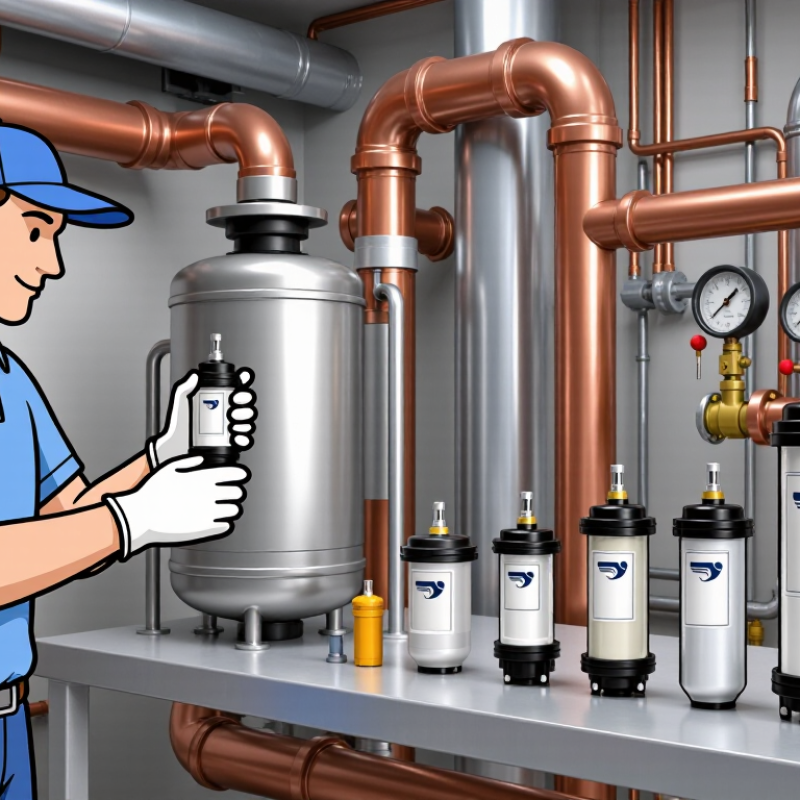
How to Choose the Right HVAC Filter Drier?
An HVAC filter drier protects the refrigeration circuit from moisture, acid, and solid debris. Moisture can freeze near the expansion device and restrict refrigerant flow. It can also react with refrigerant oil, creating acids that damage compressor windings and metal surfaces. The drier traps these contaminants before they travel through sensitive components. Small component, serious responsibility.
Choosing one requires more than matching the pipe diameter. Confirm the refrigerant type, system capacity, operating pressure, and liquid-line temperature. The drier must also suit the connection method and expected flow rate. Oversizing is not always harmful, but an unsuitable internal material can reduce protection. For heat pumps, a bi-directional model may be necessary because refrigerant flow changes during operation.
Installation quality matters just as much. Keep the drier sealed until use, and avoid exposing it to humid air. During brazing, technicians should control heat and use an appropriate inert gas procedure. A long, overheated joint can damage the drier’s internal filter. After installation, proper evacuation and leak testing remain essential. I have learned that selection charts are helpful, but they cannot replace checking the actual system conditions. A rushed replacement may appear correct while leaving moisture inside the circuit. That mistake is easy to miss.
Choosing the correct filter drier begins with identifying the system’s refrigerant, oil, flow direction, and contamination risk. A liquid-line drier is normally selected for moisture and debris control before the expansion device. A suction-line drier is more suitable after compressor burnout, when acid and carbon contamination may return through the suction circuit. Heat-pump systems need a bi-directional design. A one-way drier can restrict reverse flow.
Capacity matters too. Match the drier with the system’s rated refrigerant flow, connection size, pressure rating, and acceptable pressure drop. Pipe diameter alone is not enough. The IEA’s The Future of Cooling report estimates that global space-cooling energy demand could more than triple by 2050. Small flow restrictions may therefore create larger operating penalties across heavily used equipment. Check the manufacturer’s technical table, not only the carton label.
Field experience also exposes a common mistake: installing a high-capacity drier without checking moisture-loading conditions. It may fit physically, yet still be unsuitable for the refrigerant or oil. ASHRAE Handbook—Refrigeration recommends evaluating refrigerant compatibility, filtration performance, and pressure loss as part of component selection. I recheck these points after brazing, because nitrogen protection and clean tubing reduce risk but do not guarantee a clean circuit. The U.S. Energy Information Administration reports that buildings account for about 40% of national energy consumption, making reliable HVAC operation more than a maintenance detail. Reconsider the selection after any compressor failure, retrofit, or refrigerant conversion.
Choosing the right HVAC filter drier starts with system size, not guesswork. Match the drier’s connection size with the liquid line. A smaller fitting can restrict flow and increase pressure loss. A larger shell may not improve protection. Check rated capacity under the actual refrigerant, evaporating temperature, and condensing conditions.
ASHRAE Handbook—Refrigeration stresses correct moisture and contaminant control during commissioning. Moisture capacity also changes with refrigerant and oil type. Therefore, confirm compatibility with the refrigerant, POE or mineral oil, pressure rating, and system temperature range. The U.S. Environmental Protection Agency’s 2024 Technology Transitions rule includes a 700-GWP limit for many new residential and light-commercial air-conditioning systems. This makes refrigerant compatibility more important during replacement work. A drier approved for one refrigerant should not be assumed suitable for another.
Tips: Read the current equipment data plate. Compare liquid-line capacity, not only tonnage. Verify the flow arrow. Confirm maximum working pressure. Replace the drier after major system opening.
A common field mistake is choosing by pipe diameter alone. That shortcut ignores moisture load and refrigerant behavior. Another imperfect habit is using extra capacity “for safety.” It may add cost without improving performance. Use the manufacturer’s selection table, then recheck pressure drop and service conditions. AHRI certification data can support equipment ratings, but it cannot replace job-specific calculations. Small details matter, especially after compressor burnout or refrigerant conversion.
Match the filter drier size, flow capacity, pressure rating, and refrigerant compatibility before installation.
Select a filter drier approved for the refrigerant, oil type, operating pressure, and temperature range. The chart uses 100-year GWP values from commonly referenced IPCC AR4 data.
Use the manufacturer's rated refrigerant mass-flow or cooling-capacity table. Choose a size that meets the design load while keeping the permitted pressure drop within specification.
The inlet and outlet connections should match the liquid-line diameter. Do not reduce the line solely to fit a smaller drier, because restriction can increase pressure drop and flashing risk.
Reference values only. Always verify the exact drier capacity, maximum working pressure, desiccant suitability, and oil compatibility against the equipment and component manufacturer's technical data.
How to Choose the Right HVAC Filter Drier?
Checking Installation Requirements and System Conditions
Choosing a filter drier starts with the system, not the shelf label. Check the refrigerant type, system capacity, liquid-line size, and expected operating pressure. The drier must match these conditions without creating excessive pressure drop. Use the equipment manual and technical data from the component manufacturer. Do not guess.
Installation direction also matters. A standard drier usually has an arrow showing refrigerant flow. Heat pump systems may require a bi-directional model because flow changes during operation. Confirm the connection size and fitting type before opening the circuit. Measure twice. Small details matter.
Inspect the system condition before installation. A new system may need moisture protection after assembly, while a repaired system could contain acid, debris, or excess moisture. In serious compressor failures, a cleanup procedure and follow-up replacement may be necessary. Keep tubing sealed until the moment of connection. Avoid exposing the core to humid air.
Experienced technicians also check access, mounting space, and service clearance. A drier placed too close to a hot discharge line may suffer unnecessary stress. Secure the component against vibration, but do not distort the tubing. After installation, evacuate the system properly and verify pressure, temperature, and leakage. One imperfect habit is rushing the vacuum test. That shortcut can leave hidden moisture behind. A careful inspection is slower, but it protects the compressor and improves system reliability.
How to Choose the Right HVAC Filter Drier?
Replacing a filter drier properly starts with the system history. A new drier is normally required after compressor failure, refrigerant contamination, or a long open repair. Moisture can freeze at the expansion device and damage winding insulation. ASHRAE Handbook—Refrigeration recommends using a drier suited to the refrigerant, oil, system capacity, and expected contaminants. Size alone is not enough.
Recover the refrigerant before cutting the line. Use clean tools, keep the replacement sealed, and install it in the correct flow direction. Braze with dry nitrogen flowing through the tubing. This reduces internal oxidation. Small details matter. Do not leave the ports open. Pull a deep vacuum, then verify that it holds after isolation. A vacuum reading that rises quickly suggests moisture, leakage, or both.
After startup, record suction pressure, liquid pressure, line temperatures, and temperature drop across the drier. A sudden pressure drop deserves attention, even when cooling appears normal. ENERGY STAR reports that incorrect refrigerant charge can increase HVAC energy use by 5% to 20%, making post-service measurements essential. AHRI Standard 700 also defines refrigerant purity requirements, but field contamination may still enter during service. A clear sight glass is not proof of a healthy circuit. That assumption needs questioning. Replace the drier again if contamination remains, and document the reason, date, readings, and vacuum level. Incomplete records are common—and costly.