#4 – 20133 102nd Avenue, Langley, B.C. V1M 4B4 Canada

#4 – 20133 102nd Avenue, Langley, B.C. V1M 4B4 Canada
Choosing a Mattress Lamination Machine is not just a matter of comparing speed and price. The right equipment must match your materials, production volume, and finished mattress design. A machine that handles a thin foam layer may struggle with thick, uneven stacks or delicate fabric. Small details matter.
Start by checking the maximum working width, lamination speed, and pressure controls. Consider whether the machine uses heat, adhesive, or another bonding method, and confirm that it suits your foam, fabric, and production process. Ask for a demonstration using materials similar to yours. A clean bond on a sample is more useful than a polished brochure.
Look closely at practical features. Adjustable rollers, consistent temperature control, and accessible emergency stops can affect daily operation and product quality. Ask how operators clean the rollers, change settings, and handle routine maintenance. Also check the availability of spare parts and technical support. These details are easy to overlook when a machine is new.
A specification sheet rarely tells the whole story. Test before buying. Observe whether material feeds evenly, whether edges stay aligned, and whether the bond remains consistent across the mattress surface. Keep in mind that real production conditions can expose weaknesses that a short trial misses. This guide outlines the questions worth asking before you invest, helping you compare machines with clearer criteria and fewer assumptions. Even careful research cannot remove every risk, but it can help you make a better-informed choice.
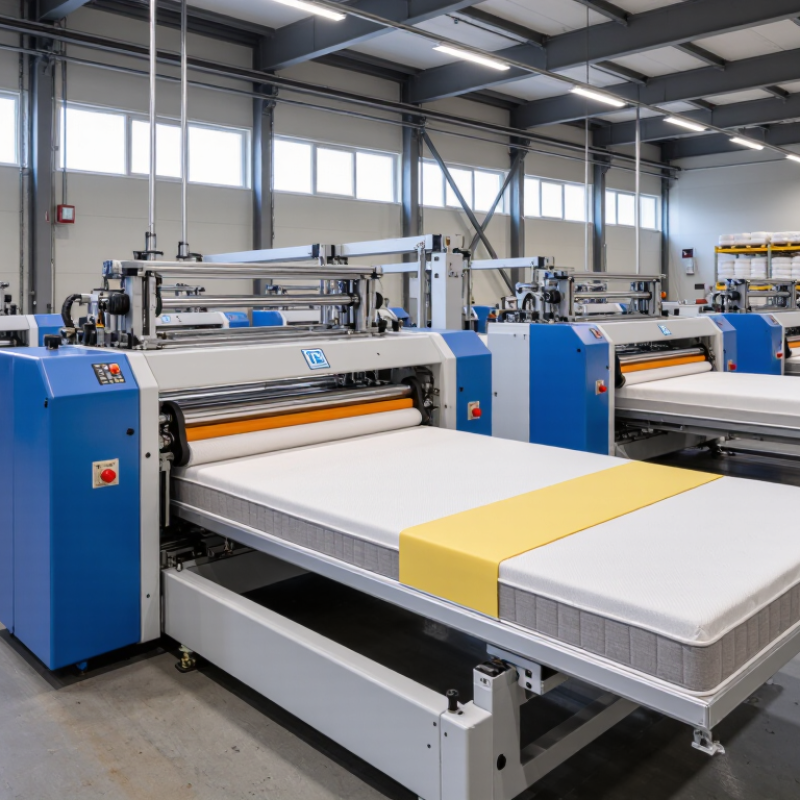
Before comparing machine speed, define the materials being bonded. Foam varies in thickness, density, and recovery, so roller pressure must suit the actual foam rather than a catalog example. Some foam compresses easily and may not return evenly after lamination. Fabric brings different challenges: knitted covers can stretch, while woven cloth may shift or fray at the edges. Check how the chosen adhesive behaves on both surfaces, and test a small sample for bond strength and flexibility. Small details matter.
Measure the largest mattress panel, including its full width and length, then note the smallest pieces and side panels. The machine’s usable working width should accommodate the largest piece without forcing operators to fold or misalign it. Consider how panels will be fed, supported, and guided through the rollers. A long panel that enters crooked can develop wrinkles or uneven bonding. Specifications alone are not enough. Run actual foam and fabric through a trial, then inspect for bubbles, edge lift, and changes in feel after cooling. One limitation may only become obvious during handling. Do not overlook it.
Typical nominal U.S. mattress dimensions are shown for planning panel size and machine capacity. Actual foam and fabric panels may need extra material for seams, quilting, or trimming. Check your product specifications and allow for the machine’s required handling clearance when selecting usable lamination width.
How to Choose a Mattress Lamination Machine?
When comparing mattress lamination machines, start with your largest panel, not your average order. A 1,600 mm working width may suit narrower products, while 2,200 mm can accommodate wider panels. Check whether the stated width is usable bonding space or simply the roller’s overall span. Leave room for alignment and edge variation. Measure the panel in its actual feed direction, too. Small details matter. A panel that barely fits on paper may be awkward to feed consistently.
Tips: Measure several panels from different production runs, including the widest one. Confirm the machine’s usable width with the supplier, and ask how much clearance operators need at each edge. Keep a written record of your measurements; memory gets fuzzy.
Width is only one part of the decision. A larger machine may need more floor space and careful material handling. Before choosing, test representative foam and fabric with your intended adhesive, if possible. Check that panels enter straight and exit without catching. This check is not perfect: real production can vary with material thickness and operator setup. Still, a short trial can reveal problems that a specification sheet will not. Don’t assume extra width fixes every feeding issue.
A mattress lamination machine rated at 5–30 m/min can appear versatile, but the speed range alone does not predict daily output. Start with confirmed orders, product dimensions, and staffed production hours. Then estimate good units per shift, allowing time for roll changes, adhesive checks, cleaning, and material alignment. These small pauses add up.
For example, a line running at 15 m/min for six productive hours processes 5,400 linear meters. If each mattress assembly uses two meters of laminated material, that equals 2,700 units in theory. That estimate is optimistic. Trimming waste, slow starts, and rejected bonds will reduce the count. Track actual output during a representative shift before choosing a rated speed.
Higher speed helps only when feeding, bonding, and downstream cutting can keep pace. Watch the web at the nip: wrinkles or uneven pressure may force operators to slow the line. A machine sized for a 30 m/min target may be poor value if the rest of the plant runs near 10 m/min. Compare measured good output, not just the maximum on a specification sheet, and leave practical room for product changes. The first calculation may need revising.
How to Choose a Mattress Lamination Machine? 15–40 g/m² adhesive target Validate its metering system against the 15–40 g/m² adhesive target, not just its advertised speed. Confirm whether the figure means wet or dry coat weight; confusing the two can distort every trial. Ask for a calibrated collection test: weigh a known-area release sheet before and after coating, then calculate adhesive mass per square metre. Small checks matter. Record results across the web, since a good average can hide thin edges or heavy bands.
Then test the bond, not only the coating. ASTM D903, Standard Test Method for Peel or Stripping Strength of Adhesive Bonds, and ISO 11339, which covers T-peel testing of flexible-to-flexible bonded assemblies, provide recognized methods for comparing samples. Keep foam type, adhesive batch, conditioning time, and peel speed consistent. Log the force and note where failure occurs: within the foam, at the adhesive interface, or inside the adhesive layer. A high coat weight alone does not prove a durable bond. Nor does one strong coupon. Run replicates at low, middle, and high target weights, and inspect cut edges for dry spots, squeeze-out, and uneven cell collapse. The uncomfortable part: lab coupons may not reproduce full-width production tension, so confirm settings on the actual line before accepting the machine.
A mattress lamination machine should match your foam, fabric, and adhesive—not just your target output. Ask how evenly the heating system holds temperature across the working width. A hot spot can affect bonding, while insufficient heat may leave layers lifting at the edges. Request a trial with your actual materials. Watch the temperature reading, but also inspect the finished laminate after cooling.
Pressure control deserves equal attention. Adjustable rollers or platens should apply consistent force without crushing softer foam. Check whether operators can set and repeat pressure and line speed, then examine samples from both sides of the machine. Small details matter. A neat specification sheet can still mislead; I would not judge performance from one sample alone.
Safety and total cost of ownership shape the real decision. Look for accessible emergency stops, guarded moving parts, clear controls, and protection from hot surfaces. Ask how routine cleaning and maintenance are performed. Then estimate energy use, replacement parts, operator training, and likely downtime—not only the purchase price. The cheapest option may cost more if it slows production or needs frequent adjustment. There is some uncertainty here: actual costs depend on your materials, shift pattern, and local energy prices, so compare machines using your own production data.
| Machine Type | Heating and Adhesive Process | Pressure Control | Safety Considerations | Total Cost of Ownership | Best Fit and Key Checks |
|---|---|---|---|---|---|
| Flame lamination | Uses a controlled gas flame to soften the surface of compatible foam so it can bond to fabric or another foam layer. The process does not rely on a separate adhesive application system. | Bonding pressure is generally applied by a nip roller after the foam surfaces meet. Check whether roller gap, loading, and line speed can be adjusted for the materials being processed. | Requires suitable flame safeguards, gas-train controls, emergency shut-off, guarding, ventilation, and procedures for fire prevention. Confirm applicable local fire and occupational-safety requirements. | May avoid recurring adhesive purchases, but gas use, ventilation, fire-safety provisions, maintenance, and material yield affect operating cost. Foam compatibility and process losses should be included in cost calculations. | Consider for suitable foam-to-fabric or foam-to-foam products. Test the actual foam and facing materials; confirm bond strength, appearance, and production consistency before purchase. |
| Hot-melt adhesive lamination | Melts a thermoplastic adhesive and applies it to one or both surfaces before the layers are joined. Heated tanks, hoses, or application components may be part of the system, depending on the design. | Nip rollers bring the layers together. Look for repeatable adjustment of roller gap or load, stable web alignment, and a way to set pressure for different material thicknesses. | Heated adhesive can cause burns. Check guarding, temperature controls, over-temperature protection, safe cleaning access, and the adhesive supplier’s handling instructions. | Includes adhesive consumption and heating energy, as well as cleaning, changeover, and maintenance. Actual cost depends on adhesive type, coat weight, utilization, and scrap rate. | Consider when adhesive bonding is needed across a range of facings or foam combinations. Request trials with the intended adhesive and verify open time, bond quality, and changeover requirements. |
| PUR hot-melt lamination | Applies reactive polyurethane hot-melt adhesive, which typically bonds through cooling and subsequent moisture curing. Equipment may need heated, moisture-protected adhesive handling components. | Joining rollers apply contact pressure while the adhesive is distributed between the layers. Check the adjustment range, roller parallelism, and consistency across the working width. | Follow the adhesive safety data sheet and supplier instructions. Assess hot-surface and burn hazards, ventilation needs, moisture protection, and safe procedures for purging or cleaning the system. | Adhesive and cleaning costs can be significant. Reactive adhesive may require careful handling and can be less convenient for frequent changeovers; evaluate material waste, downtime, and maintenance. | Consider where the required bond performance suits reactive adhesive. Confirm cure requirements, production handling time, compatibility, and cleaning procedures with the adhesive supplier. |
| Water-based adhesive lamination | Applies a water-based adhesive, usually followed by a drying or setting stage before or during bonding. Drying capacity and the adhesive’s process requirements influence line design. | Pressure is typically applied at a joining nip. Check whether roller settings can be matched to the adhesive application, material thickness, and required bond quality. | Review the adhesive safety data sheet, ventilation and housekeeping needs, electrical protection around wet processes, and safe access to dryers and moving rollers. | Adhesive cost, drying energy, line speed, and any required space or drying equipment affect ownership cost. Compare the full line rather than the laminator alone. | Consider when water-based adhesive is compatible with the materials and production workflow. Test drying time, bond strength, surface appearance, and performance at the planned line speed. |