#4 – 20133 102nd Avenue, Langley, B.C. V1M 4B4 Canada

#4 – 20133 102nd Avenue, Langley, B.C. V1M 4B4 Canada
Wooden Doors influence a room’s character, privacy, and everyday comfort. Their differences come from construction, design, and intended use. A solid-wood door is made from natural timber, so its grain, weight, and finish can vary. Engineered doors use layered materials or a timber frame, often with a veneer or other surface. They may offer greater consistency, but their quality depends on how they are built. Appearance matters. A carved panel door can suit a traditional interior, while a plain flush door creates a quieter look. Louvered and glazed designs bring different levels of airflow, light, and privacy.
This guide explores the main types of Wooden Doors and the details that help distinguish them. It considers panel, flush, louvered, glazed, solid-wood, and engineered options, along with common interior and exterior uses. The right choice depends on more than style. Room moisture, expected wear, door weight, hardware, and maintenance all deserve attention. A door near a busy hallway may need a durable finish; a bathroom door may require materials suited to humid conditions. Small details matter. Product labels can be vague, and two doors with similar appearances may have very different cores. Checking the manufacturer’s specifications is a practical step, though it does not replace seeing the door in person. Timber also changes with its environment, so performance is never entirely predictable. Knowing the trade-offs makes comparison easier—and leaves room to question whether a popular style truly fits your home.
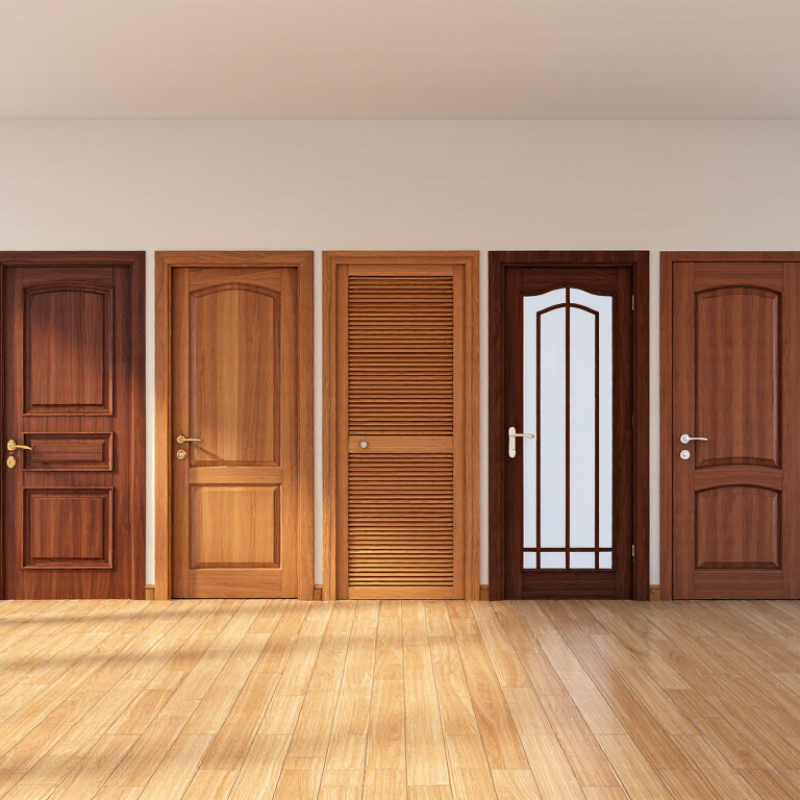
Door construction affects weight, sound, durability, and price. A solid wood door is made from natural wood boards or joined panels. Its grain and small color variations make each door distinctive. It feels substantial when opened and can often be repaired or refinished. However, wood responds to humidity. A door may swell or shrink slightly through the seasons, especially in a damp room. Fit matters.
A solid-core door has a dense engineered center, usually covered with wood veneer or another facing. It is typically heavier and better at softening everyday sounds than a hollow-core door, though it is not soundproof. Check the edges and finish, since the visible surface may not reveal the core. A hollow-core door has a lightweight frame and thin outer panels, with open space inside. It is easier to lift and often costs less, making it practical for closets or rooms where sound privacy is less important. Listen closely. Tap each type in a showroom, then compare its weight and feel. Construction labels can vary, so ask what the core contains; I would not choose by the label alone.
Panel doors have raised or recessed sections framed by vertical stiles and horizontal rails. Their shadow lines add depth to a hallway or bedroom. They suit both traditional and simpler interiors, depending on the panel profile. They feel solid. Check that the panels sit evenly and the joints are tight; small gaps can grow noticeable as indoor humidity changes.
Flush doors have smooth, flat faces and a quieter appearance. They work well in compact rooms where elaborate details might feel busy. Glazed doors include glass panels that carry daylight between rooms, useful in darker corridors or kitchens. Clear glass offers little privacy, while textured or frosted glass softens views. The trade-off is real: glass needs regular cleaning and careful handling. A wooden door’s finish and construction also affect how it performs, so design alone is not enough.
Wooden doors differ not only by wood species or finish, but also by how they move. Hinged doors swing from one side and suit bedrooms, offices, and most standard openings. Leave enough clearance for the leaf to open without striking furniture. A solid door can feel substantial, but its weight calls for sound hinges and a sturdy frame.
Sliding doors travel along a track, so they save floor space in narrow rooms. Check that the track stays clear of dust and that the wall has room for the door to slide. Folding doors gather into sections and work well for closets or wide openings. Their many joints need occasional adjustment. They can feel less solid than a single panel, which is worth considering.
Pivot doors turn on hardware near the top and bottom of the door, rather than on side hinges. They can create a clean, dramatic entrance, though that look may not suit every home. Accurate measurements matter; a heavy wooden panel also needs suitable floor and overhead support.
Tips: Before choosing, mark the door’s full movement on the floor with tape. Check the opening width, nearby furniture, and daily traffic. Small details matter. A door that looks right in a drawing may feel awkward in a busy hallway.
Interior doors shape privacy, circulation, and sound control. Hinged panels suit bedrooms and offices. Pocket doors slide into wall cavities, saving floor space in tight bathrooms. Bifold doors work well on closets, though their tracks need occasional adjustment. A solid-core leaf can feel quieter and sturdier than a hollow-core one. The difference is noticeable.
Exterior doors face weather, daily handling, and security demands. A well-fitted wood door needs a durable finish, sound weatherstripping, and a threshold that sheds water. Check the frame, too; even a good slab performs poorly when air leaks around its edges. The USDA Forest Products Laboratory’s Wood Handbook (FPL-GTR-282, 2021) reports that wood’s shrinkage from green to oven-dry varies by species, ranging about 2–8% radially and 4–15% tangentially. That movement helps explain why exposed doors need careful sealing and maintenance.
Specialty types solve specific problems. Dutch doors open in two sections, while pocket and pivot doors can create distinctive layouts. Fire-rated or acoustic doors require tested assemblies, including compatible frames, seals, and hardware—not just a heavier wooden panel. Measure the opening and consider traffic, humidity, and maintenance before choosing. I still think appearance can distract buyers from those practical details.
Typical U.S. nominal widths are shown in inches: closet doors are often 24 inches, interior passage doors 30 inches, and exterior entry doors 36 inches. A pair of wooden patio doors is commonly 72 inches wide in total. Sizes vary by design, manufacturer, and local requirements.
Wooden doors differ in both their inner structure and their response to daily wear. A solid-wood door feels substantial and can be repaired or refinished, but changing humidity may cause it to swell or warp. That matters. In a damp entryway, even a well-made door needs a stable finish and careful fitting.
Engineered-wood doors use bonded layers that resist movement better than many solid boards. Their durability depends on construction and edge protection; exposed edges can absorb moisture. Solid-core doors, often built with a dense composite center and wood veneer, usually block more sound and slow heat transfer better than hollow-core doors. Hollow-core models are lighter and less costly, but offer limited insulation and may dent around the handle. Not always.
For energy performance, the door is only part of the picture. Gaps around the frame can let in cold air, even when the slab is thick. A snug threshold, sound weatherstripping, and a square installation often make a noticeable difference. It is tempting to judge by weight alone, but that can mislead. A heavy door with poor seals may feel sturdy and still leave a chilly draft near the floor. Check the core, finish, and frame together, especially for an exterior door exposed to rain or direct sun.