#4 – 20133 102nd Avenue, Langley, B.C. V1M 4B4 Canada

#4 – 20133 102nd Avenue, Langley, B.C. V1M 4B4 Canada
Global buyers comparing top Hengchang Quilting Machine models need more than a long feature list. They need to match machine capacity with product design, fabric, and daily production targets. The wider market offers useful context. Grand View Research estimated the global home textiles market at USD 133.99 billion in 2023, with projected growth of 5.4% annually from 2024 to 2030. That figure covers home textiles broadly, not quilting machinery. It is context, not proof of machine demand.
Model selection should start with practical details. Check the maximum quilting width, stitch patterns, operating speed, and compatibility with the materials you actually use. A broad quilt may need a different working area than a narrow mattress panel. Ask for a sample run using comparable fabric and batting, then review stitch consistency and setup time. Small differences matter.
This guide compares Hengchang models through those buyer-focused criteria. It also considers production scale, operator needs, and service support. Published specifications are a starting point; configuration and results can vary. That part is easy to overlook. Buyers should confirm current specifications directly with the manufacturer or authorized supplier before making a decision.
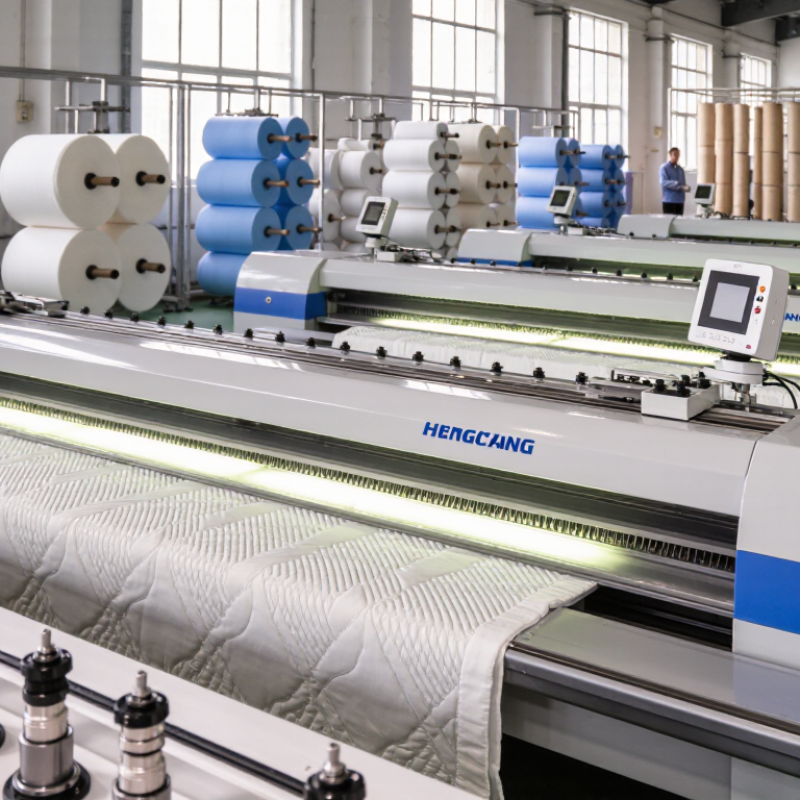
Quilting machines bring together a fabric top, batting, and backing with regular rows of stitching. An overview starts with the machine format: single-needle models suit flexible, smaller runs, while multi-needle systems can stitch several rows in one pass. Computerized models add repeatable patterns, but operators still need to check thread tension, fabric feed, and needle condition. A neat sample matters. Look closely at the back, too; skipped stitches can hide there.
Machine choice depends on the workpiece and production target. A longarm setup offers room for bulky quilts, while a compact frame may fit a smaller workshop. Textile Exchange’s 2024 Materials Market Report estimates global fiber production reached 124 million tonnes in 2023. That figure describes the wider textile supply chain, not quilting-machine sales, but it signals the scale of material moving through it. Buyers should compare usable throat space, stitch speed under load, pattern controls, maintenance access, and operator training—not just advertised speed. One detail is easy to miss: frequent changeovers can erase gains from faster stitching.
Tips: Test the exact batting and layered fabric you plan to use. Run a sample at normal production speed, inspect both sides, and record settings before approving a machine.
Quilting machines are best classified by construction, stitch method, and production workload, rather than model names alone. Start with the needle system: single-needle machines suit detailed patterns and short runs, while multi-needle systems stitch several parallel lines in one pass. This changes output, setup time, and the space needed beside the machine. Then compare working width, quilting speed, computerized pattern control, and material handling. A thick batting stack and slippery backing fabric can behave very differently under the same settings. Small detail, but it matters.
Classification should also separate frame design from automation level. Long-arm machines accommodate large quilts on extended frames; compact systems fit smaller workshops and limited floor plans. Manual, semi-automatic, and computerized controls describe how patterns are guided and repeated, not necessarily how durable a machine is. Grand View Research estimated the global textile machinery market at about USD 29.7 billion in 2023, with projected growth through 2030. That broad category includes more than quilting equipment, so it signals industry context, not quilting-machine sales. Buyers should verify stitch consistency, usable width, and service access using sample materials. A specification sheet can look convincing. Real fabric may disagree.
Quilting machine ranges often include compact single-needle longarm models, computerized multi-needle systems, and wider production machines. Each suits a different workflow. A single-needle model can handle custom patterns and smaller batches, while a multi-needle setup can stitch repeated designs with less manual repositioning. Check the usable quilting width, not just the machine’s overall frame size. That detail affects which quilts fit comfortably.
Computerized models typically offer pattern storage, adjustable stitch speed, and digital controls. These features help repeat motifs across a quilt, but they still depend on careful setup. Test a design on similar fabric first. Watch for skipped stitches, uneven tension, or puckering around dense patterns. A large screen is convenient; clear menus matter more during a long shift.
For higher-volume work, a wider frame and stable carriage can reduce handling between sections. Ask suppliers for sample stitching, service details, and the exact included accessories. Needle systems, software compatibility, and electrical requirements may vary by configuration. I would not choose by advertised speed alone. Fast stitching is useful, but consistent results usually depend on fabric control and operator experience. Specs can look tidy on paper. Real quilts are less predictable.
Quilting applications place very different demands on a machine. Mattress panels need consistent seams across thick, layered materials; lightweight comforters need gentle feeding to prevent puckering. Upholstery work may require a larger working area for bulky fabric. Match the throat space, needle system, stitch length, and speed range to the product—not just the advertised maximum speed. Small details matter. Test the actual fabric stack before committing to a production setting.
Material choice is changing, too. Textile Exchange’s Materials Market Report 2024 estimates that global fiber production reached 124 million tonnes in 2023 and could rise to 160 million tonnes by 2030. That expanding mix makes a single tension setting unreliable across every job. On the shop floor, check thread tension, presser-foot pressure, and stitch formation after each material change. For multi-needle quilting, confirm that pattern alignment stays steady across the full panel. Record settings, but treat them as starting points. I have seen a tidy test sample mislead operators; a full-width run can reveal drift that the small swatch never showed.
Match the machine to your real production, not a showroom sample. Bring your own fabric, batting, and backing, then run a full-size quilt. Watch for fabric drift, skipped stitches, uneven tension, and vibration near the machine’s maximum speed.
Ask for stitch-length settings, working width, daily-duty guidance, and power requirements in writing. Small details matter. A wide frame is less useful if operators cannot load it safely or reach the controls comfortably.
Check service access, spare-part lead times, training, and warranty terms across your destination market. Request an acceptance test with a defined run time and measurable pass criteria.
The International Textile Manufacturers Federation’s 2023 International Textile Machinery Shipment Statistics reported a 28% fall in global shuttleless-loom shipments. That figure does not measure quilting-machine demand, but it does show why broad market trends cannot replace supplier-specific evidence.
Compare quoted energy use under load, not only motor ratings. Ask which wear parts are stocked locally and how quickly technical support responds.
One point deserves caution: a short factory demonstration may hide problems that appear after hours of continuous sewing. A longer trial costs time, but may reveal more.