#4 – 20133 102nd Avenue, Langley, B.C. V1M 4B4 Canada

#4 – 20133 102nd Avenue, Langley, B.C. V1M 4B4 Canada
Choosing an injection mold making company can shape your product’s quality, schedule, and long-term cost. The lowest quotation may look attractive, but it can hide weak steel, unclear tolerances, or limited after-sales support. A reliable decision begins with evidence, not promises.
Review the company’s experience with similar parts, materials, and production volumes. Ask for case studies, sample molds, inspection records, and customer references. A capable supplier should explain mold flow, gate placement, cooling channels, and expected tool life in clear language. Their engineers should also identify risks, such as thin walls, sink marks, warping, or difficult ejection. Look closely at the workshop. Modern CNC machines matter, but skilled technicians, organized inspection areas, and clean assembly benches matter too. Details reveal habits.
Communication deserves equal attention. Can the team answer technical questions without avoiding specific measurements? Will they provide drawings, trial reports, maintenance instructions, and correction plans? A trustworthy partner discusses changes openly and documents each decision. No supplier is flawless. Even an experienced company may miss a design concern or underestimate a revision. That is why transparent problem-solving matters more than polished sales language. Check certifications, quality procedures, material traceability, and delivery records before signing an agreement. Compare the complete value, not only the initial price. The right injection mold making company should protect your product’s performance, production stability, and future growth. Choose carefully.
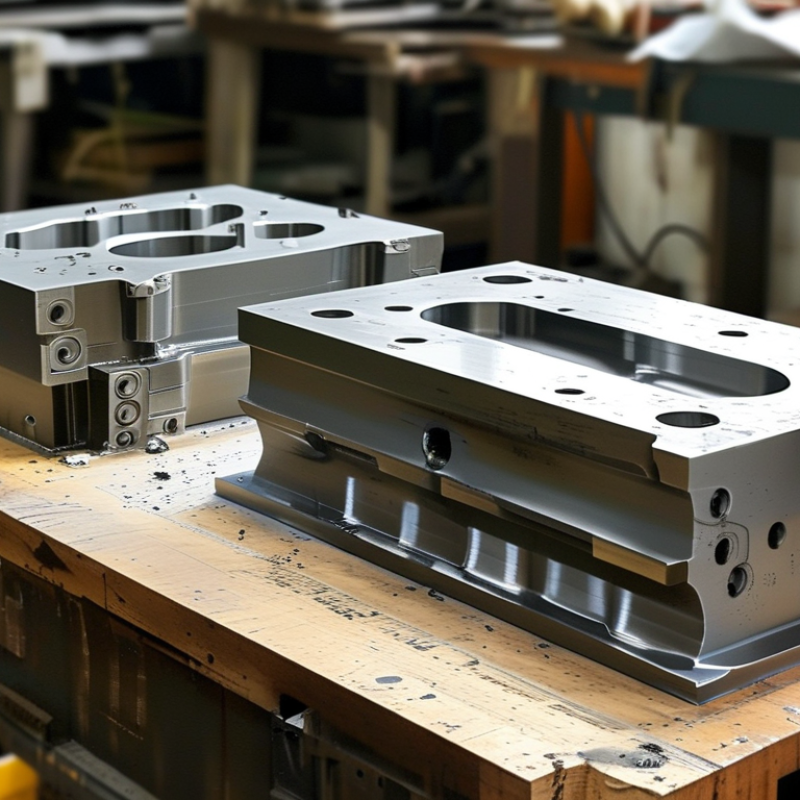
Choosing an injection mold making company starts with a clear project definition. State part dimensions, resin type, annual volume, tolerances, surface finish, and delivery target. A small housing may need hidden ejector marks, while a medical-style enclosure may require controlled appearance and documented inspections. Share the 3D model, 2D drawings, draft angles, and critical dimensions. Do not rely on a model alone.
Ask how the mold will be used. A prototype mold and a high-volume production mold require different steel, cooling, and maintenance decisions. Confirm the expected cycle count, machine size, gate location, parting line, and acceptable rework limits. I have seen schedules slip because a designer forgot space for slides or lifters. That mistake is expensive. Sometimes, the first design is wrong.
Require measurable evidence from each prospective supplier. Request a design-for-manufacturing review, mold-flow findings when useful, material certificates, inspection reports, and a trial plan. Clarify who approves steel changes, sample corrections, and dimensional deviations. Ask for photographs of comparable molds, not polished promises. A reliable partner should explain risks clearly and record open decisions. Keep a requirement sheet with revision numbers, approval dates, and named contacts. Early testing may show that one tolerance is unnecessarily strict or that the selected finish hides defects poorly.
| Requirement Category | Information to Define | Typical Data and Realistic Ranges | Why It Matters When Selecting a Mold Maker | Information to Request from the Supplier |
|---|---|---|---|---|
| Part Function | Primary use and operating conditions | Temperature, load, chemical exposure, UV exposure, moisture, vibration, and expected service life. | Functional requirements determine the plastic grade, mold design, cooling strategy, and required validation tests. | Design review experience, material recommendations, and documented risk analysis. |
| Part Size | Overall dimensions and projected area | Define length, width, height, wall area, and projected surface area. Larger projected area increases required clamping force. | Part size affects machine tonnage, mold footprint, steel consumption, handling, and shipping requirements. | Proposed mold dimensions, estimated mold weight, machine compatibility, and clamping-force calculation. |
| Plastic Material | Resin type, grade, additives, and color | PP ABS PA PC POM PEEK | Resin selection affects shrinkage, mold temperature, drying requirements, wear, corrosion, and gate design. | Material data sheet review, shrinkage assumptions, drying instructions, and compatibility with mold steel. |
| Annual Volume | Expected production quantity and order pattern | Prototype: fewer than 1,000 parts; low volume: 1,000–10,000 parts/year; medium volume: 10,000–100,000 parts/year; high volume: above 100,000 parts/year. | Production volume influences cavity count, automation, steel selection, cycle time, spare parts, and target mold life. | Recommended cavity layout, projected cycle life, maintenance schedule, and replacement-part plan. |
| Mold Life | Required number of molding cycles | Prototype tooling may be designed for approximately 10,000–50,000 cycles; production tooling commonly targets 100,000–1,000,000 or more cycles, depending on design and materials. | Mold life affects steel grade, heat treatment, surface treatment, component quality, and total tooling cost. | Guaranteed cycle-life target, steel certificates, heat-treatment records, and warranty terms. |
| Part Tolerance | Critical dimensions and allowable variation | General molded-part tolerances are often around ±0.1 to ±0.3 mm for moderate dimensions, while tighter tolerances require material, process, and measurement control. | Tight tolerances may require precision machining, steel-safe design, controlled molding conditions, and capability studies. | Achievable tolerance range, measurement equipment, inspection method, and capability data such as Cpk. |
| Wall Thickness | Nominal wall thickness and thickness uniformity | Many thermoplastic parts use approximately 1.5–3.0 mm walls; the suitable value depends on resin, flow length, strength, and appearance requirements. | Wall thickness affects filling, sink marks, warpage, cooling time, cycle time, and material consumption. | Mold-flow analysis, recommended wall modifications, filling-time estimate, and predicted warpage. |
| Draft Angle | Draft on external walls, cores, ribs, and textured surfaces | Smooth surfaces often use about 0.5°–1° per side; textured surfaces commonly require approximately 1°–3° or more, depending on texture depth. | Adequate draft reduces ejection force, scuffing, deformation, sticking, and premature mold wear. | Draft analysis, texture-depth recommendations, ejection-force assessment, and proposed parting line. |
| Surface Finish | Appearance, texture, gloss, and visible parting lines | Specify polished, matte, textured, etched, or functional surfaces. Surface roughness may be defined by Ra; polished mold surfaces can require Ra values below 0.2 µm. | Surface finish influences mold-steel preparation, polishing time, appearance consistency, release performance, and cost. | Finish samples, surface specifications, texture references, inspection method, and approval procedure. |
| Gating System | Gate type, gate location, and acceptable gate marks | Common options include edge gates, pin gates, submarine gates, hot-runner gates, and valve gates. | Gate design affects weld lines, filling balance, appearance, material waste, cycle time, and automatic production. | Gate-location proposal, filling analysis, runner-balancing method, and gate-mark limits. |
| Ejection | Ejection method and allowable ejector marks | Ejector pins, sleeves, stripper plates, lifters, or air ejection may be used according to part geometry and release requirements. | Poor ejection design can cause bending, whitening, drag marks, sticking, or damage to thin features. | Ejection layout, estimated ejection force, return-control method, and mark-location proposal. |
| Cooling System | Cooling layout, cycle-time target, and temperature control | Cooling channels are commonly arranged around thick or high-heat areas; cooling-water temperature depends on the resin and process window. | Efficient and balanced cooling reduces cycle time, shrinkage variation, residual stress, and warpage. | Cooling-circuit drawing, flow-rate requirements, pressure-test results, and thermal-analysis data when needed. |
| Mold Structure | Single-cavity or multi-cavity construction | Choose one cavity for low volume or large parts; multiple cavities are suitable when demand justifies higher tooling complexity and balanced filling. | Cavity count affects tooling investment, output per cycle, balance, mold size, quality control, and maintenance. | Cavity-layout proposal, filling-balance analysis, mold-base dimensions, and production-rate calculation. |
| Quality Control | Inspection standards and approval criteria | Define dimensional inspection, appearance inspection, material verification, first-article approval, and sampling frequency. | Clear quality criteria prevent disputes and help verify whether the mold and molding process meet the intended requirements. | Inspection plan, coordinate-measuring capability, sample report, traceability method, and nonconformance procedure. |
| Timeline | Design, manufacturing, trial, correction, and approval schedule | A simple mold may take several weeks; complex multi-slide, hot-runner, tight-tolerance, or high-cavity molds generally require a longer development period. | The schedule must include design approval, machining, assembly, first trial, dimensional corrections, and final validation. | Detailed project schedule, milestone dates, trial-shot plan, correction allowance, and escalation process. |
| Documentation | Required technical and maintenance records | 2D drawings, 3D files, mold-flow results, material certificates, inspection reports, spare-parts lists, and maintenance instructions. | Complete documentation improves future production, troubleshooting, maintenance, transferability, and mold ownership control. | Document list, file formats, revision-control method, ownership terms, and long-term storage policy. |
How to Choose an Injection Mold Making Company?
Experience should be measured through evidence, not promises. Ask how long the mold maker has handled similar parts, materials, and production volumes. Request case details, including mold size, expected cycle life, tolerances, and previous production problems. Look closely. A capable team should explain how it solved warpage, sink marks, weld lines, or difficult ejection issues. Its engineers should review your part design before quoting. They may identify thin walls, sharp corners, or uneven cooling that could increase costs later.
Equipment reveals practical capability. Check whether the facility uses modern CNC machining, wire cutting, EDM, polishing, and precision measurement equipment. Ask how often machines are calibrated. Confirm that the company can build prototype molds, production molds, or multi-cavity systems according to your needs. Its workshop should also show controlled assembly areas and clear inspection records. Advanced equipment helps, but skilled operators still matter more than impressive machinery.
Reliability appears in the details. Review sample inspection reports, material certificates, trial records, and customer references. Discuss communication schedules, design changes, spare parts, and maintenance support. A mold maker should provide realistic timelines instead of optimistic guesses. No supplier is perfect. Even experienced teams can miss a difficult tolerance or underestimate a material’s behavior. That is why trial testing, documented corrections, and honest technical discussions are essential. If a company avoids questions, hides process limits, or cannot explain its quality checks, reconsider the partnership.
Quality systems should be compared before quotations. The 2022 ISO Survey recorded more than 1.2 million ISO 9001 certificates worldwide. However, certification alone proves little about mold performance. Ask how the company controls design changes, steel traceability, inspection records, and corrective actions. Request a sample inspection report with cavity dimensions, surface finish, and critical tolerances. A polished certificate can still hide weak daily discipline.
Materials need equal attention. The mold maker should identify steel grades, hardness targets, coatings, and heat-treatment records. For plastic parts, testing can follow ISO 527 for tensile properties or ASTM D638, where applicable. Production standards also matter. ISO 20457 addresses tolerances for molded plastic parts, while ISO 14644 supports controlled environments for sensitive manufacturing. These standards are not interchangeable. Confirm which requirements fit your product. In practice, small omissions create large maintenance costs. I have seen material substitutions accepted too casually. That deserves reflection.
Tips: Ask for evidence.
Check steel certificates.
Review trial-run data.
Measure repeatability, not promises.
Compare preventive-maintenance intervals, spare-part planning, and process capability results. A supplier should explain its target Cpk and sampling method in clear language. If answers remain vague, pause the decision. A factory tour can reveal practical details: labeled bins, protected mold surfaces, calibrated gauges, and clean assembly benches. These details feel minor. They are not.
Choosing an injection mold making company requires more than comparing the lowest quote. Ask for a line-item price covering design review, mold steel, machining, testing, revisions, and packaging. A suspiciously low figure may exclude trial runs or corrective work. Request a written payment schedule. Experienced buyers also check cavity count, expected production volume, and maintenance costs. One overlooked detail can change the project budget.
Timelines should show practical milestones, not only a promised delivery date. A credible schedule includes design approval, material ordering, CNC machining, polishing, assembly, sampling, and final inspection. Ask how delays are reported and who approves changes. Weekly updates with photographs, measurement data, and open issue lists make progress easier to verify. Still, schedules can slip when the part design changes. I have seen teams underestimate feedback time. That mistake is avoidable, but not always.
Communication quality often predicts support after delivery. Before signing, test response speed with specific technical questions about draft angles, cooling channels, ejection marks, and tolerance control. The answers should be clear, documented, and connected to your part requirements. Ask whether the company provides trial samples, inspection reports, repair guidance, and defined response times for future problems. A reliable partner does not hide defects behind vague language. However, even a strong supplier needs accurate drawings and prompt decisions from the customer. That shared responsibility deserves a place in the project plan.
Choosing an injection mold making company starts with evidence, not impressive machinery. Request trial samples from comparable projects. Inspect parting lines, flash, sink marks, dimensions, and surface texture under consistent lighting. Ask for the measurement report and approved resin specification. A sample can look excellent while hiding unstable cycle times. Ask for the molding parameters, too.
Verify at least three customer references, preferably from similar part sizes and tolerances. Ask whether the supplier met the launch date, corrected defects quickly, and communicated problems early. Do not guess. McKinsey Global Institute estimates that supply chain disruptions lasting one month or longer occur every 3.7 years. This makes backup capacity and maintenance records practical reliability checks. Review machine lists, preventive-maintenance logs, inspection equipment, and subcontracting arrangements. A factory tour helps, but it is not proof by itself.
The contract should define steel grade, mold life, acceptance tolerances, sampling conditions, revision control, ownership, maintenance duties, and delivery milestones. Include a clear process for rework and final acceptance. Local legal review is sensible, especially for intellectual property and cross-border delivery. ISO’s 2022 Survey recorded 1,265,216 ISO 9001 certificates worldwide, yet certification alone cannot guarantee mold performance. Treat it as one signal, not a verdict. I still leave room for doubt. Require documented evidence before releasing each payment.