#4 – 20133 102nd Avenue, Langley, B.C. V1M 4B4 Canada

#4 – 20133 102nd Avenue, Langley, B.C. V1M 4B4 Canada
Choosing the best Push Up Bra in 2026 is less about chasing dramatic lift and more about finding reliable support that feels comfortable throughout the day. Start with fit: the band should sit level around your body, while the cups should contain breast tissue without cutting in or gaping. A mirror can help, but so can a few simple movements. Raise your arms, sit down, and check whether the bra shifts or pinches. Comfort comes first.
Push-up styles vary in padding, cup shape, materials, and strap design. Light padding may create subtle definition, while more structured cups can provide a fuller look under fitted clothing. Neither option is automatically better; the right choice depends on your shape, outfit, and preferred feel. Look for breathable fabric, secure stitching, and adjustable straps that stay in place without digging into your shoulders. Small details matter. If possible, try the bra with a familiar T-shirt and check its outline in natural light. Pay attention to how it feels after several minutes, not only in the fitting room. Sizing can differ between brands, so use each brand’s chart as a starting point rather than a guarantee. And honestly, even careful measurements cannot predict every fit issue. This guide will help you compare features, assess fit, and choose a Push Up Bra that suits your daily needs—not just the product photos.
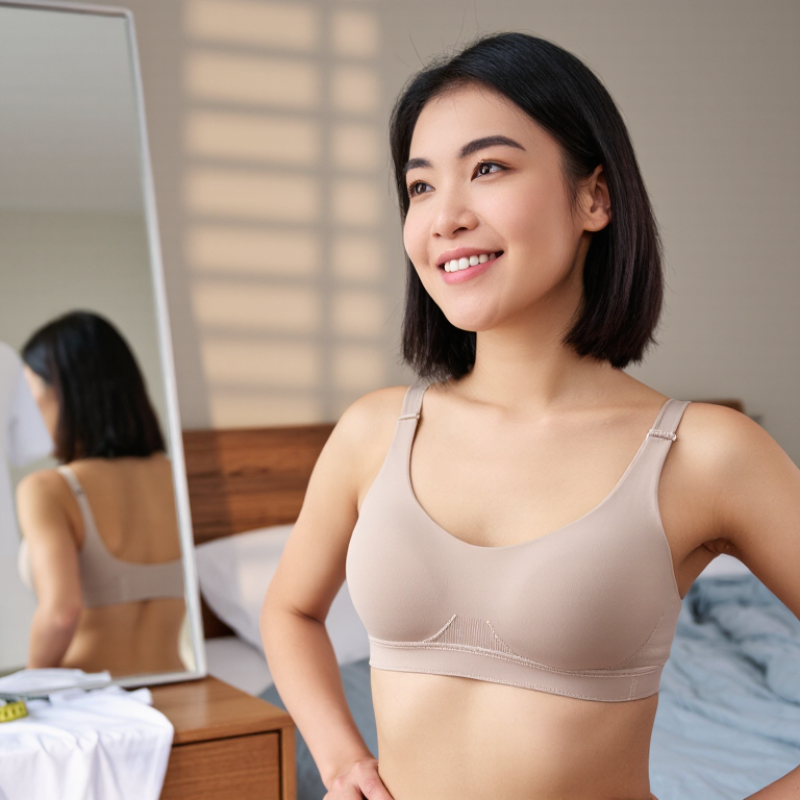
A push-up bra works best when its shape matches your goal, not just the label on the tag. For more lift, look for a firm band and cups that support from below without cutting into the top edge. For separation, choose a center gore that sits comfortably against your chest; if it floats, the cup or band may be wrong. ASTM D5585-21’s women’s sizing tables use body measurements to distinguish garment sizes, but a chart cannot capture every breast shape. Fit is personal—and sometimes annoyingly so.
Coverage matters, too. A plunge neckline can suit lower-cut tops, while fuller cups may feel steadier under a shirt. For everyday comfort, raise your arms and take a deep breath in the fitting room. The band should stay level, straps should not dig, and the cups should lie smooth when you move. Small detail. If you want lift and coverage together, compare cup heights rather than simply choosing more padding. Padding can add bulk without improving support. A careful fit check is worth repeating: bodies change, and the same marked size can feel different across styles. I would not treat one fitting as a permanent answer.
Start with the fit outcome you want, then check the bra’s construction and how it feels on your body. Push-up effect and coverage vary by design, size, and individual fit.
| Fit goal | Design details to look for | What the design can do | Fit checks | Everyday comfort notes |
|---|---|---|---|---|
| Lift | Angled or graduated padding, a supportive underband, and cups that fully contain breast tissue. | Padding concentrated toward the lower or outer cup can create a more lifted, fuller-looking shape. | Check that the cup edge lies smoothly and the wire, if present, follows the breast root without resting on breast tissue. | Choose padding that feels comfortable while seated and moving; thicker padding may feel warmer or more structured. |
| Separation | A center gore that sits close to the chest, cups with adequate space, and a firm band that stays level. | A well-fitting underwire style may help keep breasts more distinct rather than pressing them together. | If the center gore lifts away from the chest, the cups may be too small or the shape may not suit your body. | For a softer feel, consider a flexible-wire or wire-free style designed with separate cups. |
| Coverage | Fuller cup panels, higher cup edges, wider sides, and straps that adjust securely. | More cup and side fabric can provide greater coverage and help contain breast tissue during daily movement. | Look for gaps, overflow at the top or sides, and fabric or seams that dig in when you raise your arms. | Seamless or smooth cups may sit discreetly under clothing, while breathable fabric can feel more comfortable in warm conditions. |
| Everyday comfort | Soft lining, breathable fabric, adjustable straps, a stable band, and minimal pressure from seams or hardware. | A balanced fit can offer gentle shaping without relying on heavy padding or a very tight band. | The band should feel snug and level; straps should stay in place without carrying most of the support or digging into shoulders. | Try the bra through normal movement and a full day of wear. Comfort depends on fit, materials, and personal preference. |
For a push-up bra, start with two measurements: underbust girth and bust girth. ISO 8559-1:2017 provides standardized body-measurement terms and procedures for apparel sizing. It does not prescribe a universal bra-size formula, so treat measurements as a starting point, not a verdict. Stand naturally. Keep the tape level around your torso, snug under the breasts for underbust girth, then around the fullest part of the bust without compressing tissue. Breathe normally. Small difference. It matters.
The SizeUSA national anthropometric survey collected more than 10,000 body scans, offering apparel professionals a substantial dataset for understanding variation in body shapes. That variation is why two people with the same bust measurement may prefer different band or cup fits. Record both measurements in centimeters, and repeat them once; tape tension can shift the result. A soft tape, bare skin, and a mirror help reveal whether it rides up at the back. I still find this part a little awkward. That is normal. For a push-up style, check that the band stays level and the cup edge lies smoothly when you move your arms. If the center panel floats or tissue spills over, try another size or shape rather than tightening the straps. Sources: ISO 8559-1:2017; SizeUSA national anthropometric survey.
Measure the underbust and bust circumference with a flexible tape measure, keeping the tape level. These realistic example measurements are for illustration only; they are not a sizing standard or a substitute for your own measurements.
Underbust and bust are separate body measurements. Record both in centimeters, then use the bra size guide relevant to your region. ISO 8559-1:2017 provides body-measurement terminology; it does not prescribe bra sizes.
In US sizing, band labels usually advance in two-inch steps: 32, 34, 36, and so on. That does not mean your ribcage changes by exactly two inches between sizes. A size chart converts measurements into standard labels, and sizing methods can vary. Numbers can mislead.
Cup letters usually reflect roughly one-inch steps in the difference between bust and band measurements. They do not describe a fixed cup volume. A 34C and a 36C, for example, generally have different cup volumes; neighboring sizes may share similar volume with different band and cup combinations. This matters when choosing a push-up bra, since padding can make a close fit feel tight. The wire should sit around the breast tissue, not press into it, and the center should rest comfortably against the chest.
Measure your underbust snugly and your bust without compressing it, then compare both numbers with the specific size chart. Try the bra on the loosest hook, if available, and check for spilling near the cup edge or gaps at the top. Move your arms and sit down; the band should stay level. The chart can still feel oddly abstract. Use it as a starting point, then trust the fit and comfort you can actually assess.
How to Choose the Best Push Up Bra in 2026
Padding placement changes the shape more than padding thickness alone. Lower-cup cushions lift tissue upward; side panels guide it toward the center. Check both cups while standing and sitting. Spillage near the armpit or a floating center gore can signal a poor match. Underwire should follow the natural breast crease, not press into breast tissue. It should feel secure, not sharp. A 2012 Journal of Sports Sciences study by Scurr, White, and Hedger measured breast movement in 15 women under different support conditions. Though it examined running bras, it reinforces a useful point: construction affects how support behaves.
Strap width matters, too. Wider straps spread pressure across more shoulder area, while narrow straps may suit lighter, less padded designs. But width cannot fix a loose band. The band should sit level around the body, with room for two fingers beneath it. Recheck after a few minutes; comfort in the fitting room can change with movement. That detail is easy to miss.
Tips: Compare one design at a time. Try a shallow-bust style with lower padding, then a deeper cup with side support. Raise your arms and bend forward. If the wire shifts, pinches, or leaves red marks, reconsider the shape or size. Perfect fit is not always obvious. A little doubt is useful.
A push-up bra should lift without making the band do all the work. Fasten it on the loosest hook: it should sit level across your back and feel snug, not restrictive. You should be able to slide two fingers underneath. Raise your arms and twist gently; if the band rides up, it may be too loose. The center gore should rest against your sternum, not float above it. A small 2003 study in Chiropractic & Osteopathy assessed bra fit in 30 women and reported frequent size mismatches. Its small sample is not a population estimate, but it reinforces a useful point: the label is only a starting place.
Check the cups in a mirror, then move around. Breast tissue should stay inside the cup, with no cutting at the top or empty wrinkles near the base. Smooth edges matter under a T-shirt; sharp ridges can show even when the cup feels comfortable. If the gore presses painfully or refuses to lie flat, try a different cup shape or size rather than tightening the straps. ISO 8559-1:2017 separates key body measurements, including bust and underbust, which helps explain why one number alone cannot predict fit. Real bodies vary. I still find cup edges easy to overlook; check them in daylight, because indoor lighting can hide small ripples.