#4 – 20133 102nd Avenue, Langley, B.C. V1M 4B4 Canada

#4 – 20133 102nd Avenue, Langley, B.C. V1M 4B4 Canada
Choosing the right injection mold making company can determine whether a product launches smoothly or becomes an expensive correction project. The decision reaches beyond a polished website or the lowest quotation. It requires evidence.
An experienced buyer should examine the supplier’s mold portfolio, machining equipment, quality records, and production workflow. Ask to see comparable molds, not only attractive samples. A company producing small medical housings may not understand large automotive panels. The difference matters. According to injection molding expert John Bozzelli, “The mold is the heart of the injection molding process.” His view highlights an important reality: a small design mistake can create flash, warpage, short shots, or repeated downtime.
Look closely at the technical conversation. Does the company review wall thickness, draft angles, parting lines, cooling channels, ejection marks, and material shrinkage? Does it provide a clear DFM report before cutting steel? Strong suppliers explain risks with drawings, measurements, and practical alternatives. They should also define steel grades, mold-life expectations, inspection methods, trial shots, revisions, and maintenance support.
Price still matters. It should not lead alone.
A low quotation may exclude polishing, mold-flow analysis, spare inserts, or overseas repair costs. Yet expensive tooling does not automatically guarantee precision. That is where judgment becomes difficult. Review references, communication speed, documentation, and actual trial results. Ask who will solve problems when the first sample fails. The best injection mold making partner combines engineering discipline with honest communication, even when the answer is inconvenient. This guide examines those practical signals before you sign a purchase order.
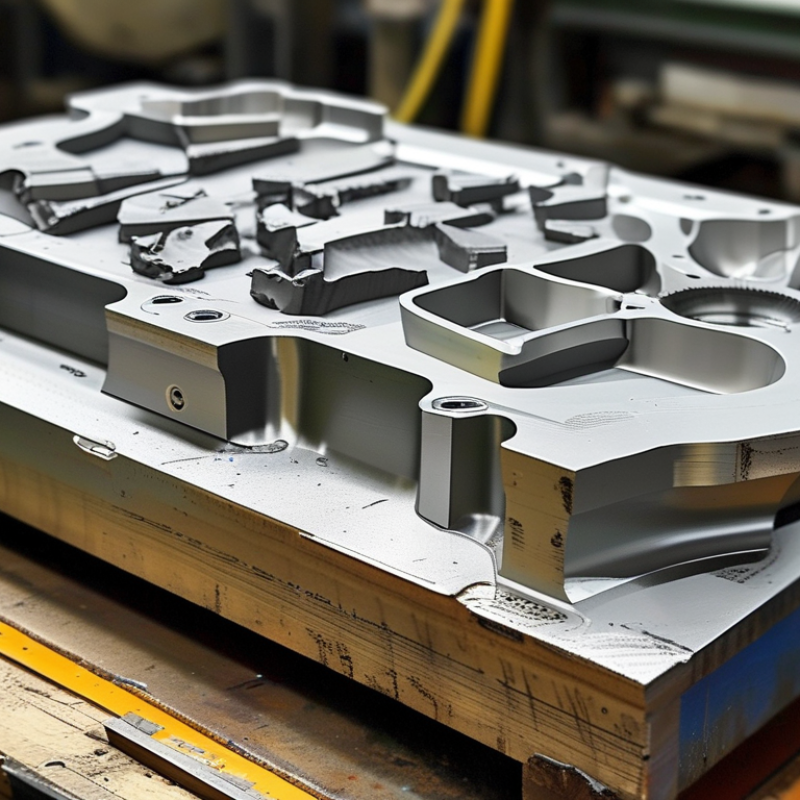
The gap is not only price. During project reviews, experienced engineers examine part geometry, resin behavior, cycle time, and planned production schedules. A supplier should explain why a mold class fits your actual workload. Ask for steel certificates, dimensional inspection records, mold trial data, and a clear maintenance plan. These documents reveal more than polished sales language. They also show whether the company controls its process.
A low-volume project may not need a Class 101 mold. However, selecting Class 105 for a product expected to sell widely can create costly rework. I have seen estimates change after designers reviewed annual demand honestly. That review is sometimes uncomfortable. It is still necessary. The mold maker should identify wear points, cooling risks, slide mechanisms, and likely repair intervals. A dependable partner will discuss limitations openly, including areas where the original design needs improvement. That honesty helps match mold life with production reality, rather than paying for capacity you may never use.
When choosing an injection mold making company, verify its quality system before comparing prices. ISO 9001 shows controlled procedures for design, purchasing, production, inspection, and corrective action. Ask for the certificate’s scope, expiry date, and issuing body. A certificate alone proves little.
For automotive molds, IATF 16949 can indicate stronger controls for traceability, process risk, supplier quality, and measurement equipment. Request evidence, such as inspection reports, revision histories, and nonconformance records. Check whether these controls cover mold design, machining, assembly, and trial production. A polished presentation may hide weak daily discipline.
Medical projects require closer attention to ISO 13485. This system emphasizes documented risk management, change control, cleanliness, validation, and production records. Ask how the company handles steel certificates, cavity identification, dimensional data, and engineering changes. Review a sample quality plan, with sensitive information removed. The response matters.
Look beyond the logo.
During an audit, notice practical details. Are drawings protected from unauthorized edits? Are gauges calibrated and clearly labeled? Can staff explain what happens after a failed dimension? Weak answers deserve further questions. I would also compare certificate scope with the actual work offered, because some companies present a valid certificate that excludes mold manufacturing. That gap is easy to miss. A reliable partner welcomes reasonable verification and provides records without excessive hesitation. Still, no system removes every risk; communication, technical judgment, and careful sampling remain necessary.
A capable mold maker compares the DFM review with ISO 2768 requirements, not just the 3D model. ISO 2768-1 offers general linear tolerances when drawings lack individual limits. For a 30–120 mm dimension, medium class tolerance is commonly ±0.3 mm. That may suit a cover, but not a sealing groove. Critical dimensions need explicit limits, datums, and geometric controls.
Ask for evidence from similar molds. The review should show shrinkage compensation, parting-line impact, draft angles, wall-thickness risks, and warpage predictions. On the shop floor, a 0.05 mm mismatch can appear around an ejector mark. A perfect spreadsheet is not proof.
Check trial-part reports, CMM records, and corrective-action history. AIAG’s Measurement Systems Analysis guidance generally treats less than 10% study variation as acceptable; 10–30% requires engineering judgment. Do not accept capability claims without the measurement method.
The Plastics Industry Association’s 2024 industry report places U.S. plastics manufacturing shipments above $500 billion, showing the scale of quality exposure. Yet many supplier evaluations still focus on quoted price. That is a weak shortcut.
Require the mold maker to separate ISO 2768 dimensions from critical-tolerance features, such as snap fits, bores, and sealing faces. Review Cpk targets, sample size, resin lot control, and inspection frequency. Some designs remain unrealistic after DFM. That uncomfortable finding is valuable.
A reliable mold making company should provide clear T1 and T2 trial results. These trials reveal how the mold performs before production approval. T1 samples often expose basic issues, such as short shots, flash, sink marks, or uneven walls. T2 trials should show controlled corrections and more stable dimensions. Ask for molding conditions, material lot details, and complete dimensional reports. Photos alone are not enough.
For critical dimensions, require a Cpk of at least 1.33. This value indicates that the process is capable and reasonably centered against specification limits. However, Cpk is meaningful only when the process is stable and the measurement system is trustworthy. Request gauge calibration records and repeatability checks.
A polished report can still hide poor sampling. I have seen studies based on too few parts, which made the result look stronger than reality. That weakness deserves discussion.
Tips: Ask the supplier to measure parts from continuous production, not selected samples. Check whether T1 and T2 use the intended resin, machine, and process window. Review trends, not only final values. Critical dimensions should be measured with suitable equipment and recorded by cavity. If Cpk falls below 1.33, expect a documented corrective plan, another trial, and fresh data. Mold experience matters, but disciplined evidence matters more.
A reliable RFQ should show more than a low mold price. Compare tooling cost, part price, lead time, and lifetime cost in separate columns. The 2024 Global Injection Molding Market report estimates steady market growth through 2030, increasing pressure on suppliers and production capacity. That pressure can quietly extend delivery dates. Ask whether the quoted lead time includes design approval, steel preparation, sampling, corrections, and final inspection. It often does not.
Look closely at the tooling scope. Confirm cavity count, steel grade, expected mold life, cooling design, spare inserts, and maintenance terms. A cheaper tool may need earlier repairs. Calculate the part price at realistic volumes, not only the supplier’s best-case quantity. Include scrap, packaging, freight, inspection, and possible secondary operations. Small differences matter over millions of cycles.
Think beyond launch cost. The International Energy Agency’s industrial efficiency reports repeatedly identify energy and process efficiency as major manufacturing cost drivers. A stable mold with balanced cooling may reduce cycle time and reject rates. Ask for measured cycle-time assumptions. Request sample data, not promises. I once treated a short lead time as a major advantage; later, repeated corrections erased the saving. The lesson was uncomfortable. A comparison sheet should include warranty response, spare-part availability, mold relocation costs, and projected maintenance. Lifetime cost is rarely the lowest opening quote.