#4 – 20133 102nd Avenue, Langley, B.C. V1M 4B4 Canada

#4 – 20133 102nd Avenue, Langley, B.C. V1M 4B4 Canada
Choosing the right Walk In Humidity Chamber affects test accuracy, product development, and long-term operating costs. The decision involves more than chamber size or advertised temperature ranges. A reliable selection begins with your actual test profile, including temperature cycles, humidity levels, product volume, loading frequency, and required recovery time.
The right chamber is rarely the largest one. A chamber must fit pallets, fixtures, cables, and operators without restricting airflow. For example, a tightly packed rack can create uneven humidity around products during an 85°C/85% RH test. Door size, floor loading, lighting, drainage, and internal materials also deserve practical attention. These details often appear minor until daily testing begins. I have seen specifications look impressive while service access remained awkward.
Technical credibility matters. Compare sensor accuracy, control stability, calibration traceability, safety systems, and documented performance tests. Ask suppliers how they verify uniformity under real loading conditions, not only an empty-chamber demonstration. Standards such as IEC 60068 may guide environmental testing, but your industry requirements still determine the final configuration. Consider facility power, heat rejection, water quality, noise, and maintenance access before approval. A cheaper chamber can become expensive when seals, sensors, or compressors are difficult to replace. No selection is perfect. However, recording assumptions and challenging optimistic claims can prevent costly mistakes. This guide explains the key questions, specifications, and supplier evidence needed to choose a dependable Walk In Humidity Chamber for controlled, repeatable testing.
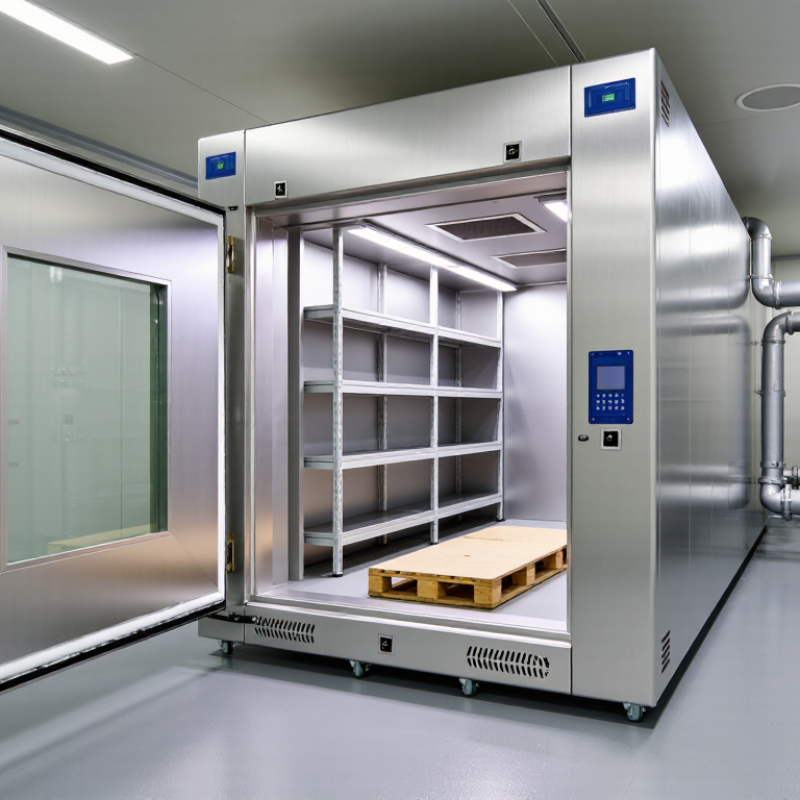
How to Choose the Right Walk In Humidity Chamber?
A walk-in humidity chamber is not simply a larger cabinet. It is a controlled environment for testing products, materials, and processes. Common types include constant-temperature humidity chambers, temperature-humidity cycling chambers, and rapid-change models. Constant conditions suit storage studies and long-term stability checks. Cycling chambers recreate changing warehouse or outdoor conditions. Rapid-change chambers test stress caused by sudden temperature and humidity shifts.
The application should guide the chamber design. Pharmaceutical packaging may require stable humidity, accurate mapping, and documented calibration. Electronics testing often needs condensation control and carefully managed temperature transitions. Building materials may require larger floor areas, product racks, and extended exposure periods. Food research can demand corrosion-resistant interiors and easy cleaning. Small details matter. A poorly positioned sensor can distort test results.
Capacity is only one decision. Check humidity range, temperature range, recovery time, airflow, door size, floor loading, and water quality requirements. Operators also need practical access to samples and safe emergency controls. In real facilities, maintenance space is often underestimated. That mistake can make routine service uncomfortable and expensive. A chamber may look ideal on paper, yet fail when loaded with dense racks. Test mapping under actual load conditions. Review power, drainage, ventilation, and monitoring requirements with qualified engineers. Reliable records matter as much as impressive specifications.
Defining testing requirements starts with the product, not the chamber size. Identify the material, operating life, failure risks, and required test duration. A battery enclosure may need condensation cycling, while a coated panel may need long-term moisture exposure. These are different tests. Do not treat them alike.
IEC 60068-2-78 specifies damp-heat testing at 93% ±3% relative humidity. IEC 60068-2-30 uses cyclic exposure, often reaching 95% relative humidity and 55°C. Those values should guide chamber performance, control stability, and sensor placement.
The IEA’s Global EV Outlook 2024 reported more than 14 million electric cars sold in 2023. That growth increases demand for repeatable environmental validation across automotive components. Still, market data cannot define your exact test profile.
Write the environmental conditions as a test matrix. Include temperature ramps, humidity levels, dwell time, specimen heat load, and recovery periods. Check whether the chamber can maintain conditions with doors closed and samples operating.
Airflow matters. Uneven circulation can leave one corner dry and another saturated. Real chambers are never perfectly uniform. That assumption deserves checking.
Measure the working space, not only the empty chamber. Reserve access space for racks, cables, drainage, and maintenance.
A smaller chamber may control better, but it can restrict future projects. A larger chamber may waste energy and reduce humidity recovery speed.
I have seen specifications look precise, then fail because the actual product load was never included.
How to Choose the Right Walk In Humidity Chamber?
Choosing a walk-in humidity chamber starts with the test, not the room available. List the largest product, fixture, and handling space required. Then add clearance for airflow, sensors, doors, and safe movement. An oversized chamber can waste energy and make humidity recovery slower. I once underestimated fixture space; loading became awkward, and the airflow study had to be repeated. That was avoidable.
Define the required humidity range before comparing equipment. A chamber operating from 20% to 95% relative humidity needs different control capabilities than one used near ambient conditions. Check stability, uniformity, recovery time, and measurement accuracy across the full range. High humidity can cause condensation on cold surfaces, while low humidity may challenge the drying system. Ask for calibration records, sensor traceability, and performance mapping at several shelf locations. Marketing claims alone are not enough.
Tips: Match chamber size to the largest realistic load, including future fixtures. Review temperature range, ramp rate, overshoot, and recovery under full heat load. Request test data at your actual humidity and temperature points. Leave space for maintenance access. A small pilot test can reveal problems that specifications miss. Also question your assumptions; the most convenient chamber is not always the most reliable one.
Comparing usable chamber volume, humidity operating span, and temperature stability
Larger chambers provide more test capacity, but they may require greater facility space, power, and humidity-conditioning capacity. A broad humidity span such as 10–95% RH supports more demanding environmental tests, while tighter temperature stability improves repeatability. The figures below represent typical engineering selection ranges and should be verified against the final chamber specification.
| Chamber Class | Usable Volume | Humidity Range | Temperature Range | Temperature Stability |
|---|---|---|---|---|
| Compact | 80 L | 20–95% RH | 10–85°C | ±0.5°C |
| Mid-Size | 500 L | 10–95% RH | 5–95°C | ±0.3°C |
| Large Walk-In | 1,000 L | 10–95% RH | 5–95°C | ±0.5°C |
Choosing the right walk-in humidity chamber requires more than checking temperature range. Construction directly affects stability, safety, and operating cost. Look for insulated wall panels, sealed floor joints, corrosion-resistant interiors, and doors with reliable gaskets. Poor sealing creates condensation near corners. That detail is easy to miss.
Safety features should support real laboratory work. Select independent over-temperature protection, door-release hardware, water-leak detection, and visible alarms. Electrical protection should align with IEC 61010-1 principles. Calibration records should follow ISO/IEC 17025 practices. These controls reduce risk, but they cannot replace routine inspections. A chamber may pass acceptance testing and still drift later.
Energy efficiency deserves equal attention. The International Energy Agency’s 2023 Energy Efficiency report states that buildings consume about 30% of global final energy. The U.S. Department of Energy also identifies HVAC as roughly 40% of commercial building energy use. Efficient compressors, variable-speed fans, LED lighting, and low-leakage doors can reduce demand. Compare annual energy use, not only rated power. A smaller chamber is not automatically cheaper if it struggles during frequent door openings.
Tips: Request heat-load calculations, alarm test records, and mapping data at empty and loaded conditions. Ask how often filters, sensors, and door seals need service. Review the warranty carefully. Energy estimates are often optimistic. Your actual loading pattern may prove otherwise.
How to Choose the Right Walk In Humidity Chamber?
Installation decisions shape performance long before testing begins. A chamber is not just a large insulated box. Measure doorway clearance, floor loading, drainage, ventilation, and electrical capacity first. Leave service space around compressors and control panels. I have seen projects fail because the chamber fitted the room, but not the maintenance route. The U.S. Energy Information Administration’s 2018 CBECS reports that space heating represents 32% of commercial building energy consumption. This figure is not chamber-specific, but it highlights the value of insulation, heat rejection, and efficient room planning.
Maintenance requires practical access, stable water quality, and scheduled sensor verification. Keep humidifier lines clean and inspect door gaskets for compression damage. Record temperature and humidity trends, not only alarm events. ASHRAE Handbook—HVAC Applications emphasizes psychrometric control, ventilation, and equipment access during design. Compliance also needs documented calibration, test tolerances, and traceable instruments. Standards such as IEC 60068-3-6 and ASTM E104 can guide humidity testing and measurement practices. Paperwork alone is weak evidence.
Total cost includes installation, utilities, calibration, repairs, downtime, and eventual disposal. Use a lifecycle-cost worksheet based on NIST Handbook 135 principles. Compare annual energy demand, water consumption, replacement parts, and technician hours. A cheaper chamber may become expensive after repeated seal failures. That assumption deserves challenge. Ask for realistic recovery-time data under loaded conditions, not empty-chamber demonstrations. Also verify local electrical, fire, and environmental requirements before ordering. Small omissions become expensive changes.
| Assessment Area | Key Dimension | Practical Data or Benchmark | Why It Matters | Recommended Selection Guidance |
|---|---|---|---|---|
| Installation | Available room footprint | Reserve the chamber footprint plus at least 600–1,000 mm of service clearance around accessible panels, doors, and mechanical components. | Insufficient clearance can delay installation, restrict maintenance access, and create safety risks. | Confirm the complete layout, including door swing, service routes, ventilation, drainage, and emergency access. |
| Installation | Floor loading | Large walk-in chambers may impose several hundred kilograms per square metre or more when the enclosure, equipment, racks, and test items are combined. | The supporting slab must safely withstand both static weight and localized loads from equipment or shelving. | Obtain the loaded floor-pressure calculation and verify it with the building or facilities engineer before delivery. |
| Installation | Power supply | Typical systems require three-phase electrical service; installed power depends on chamber volume, temperature range, humidity load, and recovery requirements. | Incorrect electrical capacity can cause nuisance trips, slow recovery, or unsafe operation. | Review voltage, frequency, phase, full-load current, circuit protection, grounding, and local electrical requirements. |
| Installation | Heat rejection and ventilation | Air-cooled refrigeration systems release heat into the facility; the required ventilation or cooling capacity increases with chamber size and operating load. | Excess room temperature reduces refrigeration performance and may shorten component life. | Select water-cooled equipment or dedicated room cooling when the facility cannot adequately remove the rejected heat. |
| Installation | Access and logistics | Check doorways, corridors, lifts, ceiling height, turning radius, and the maximum shipping-module dimensions before purchase. | A chamber that cannot enter the facility may require costly dismantling or structural modification. | Complete a documented site survey and delivery-path assessment before finalizing the enclosure design. |
| Maintenance | Routine cleaning | Inspect the chamber interior, floor, drain, humidification system, and door seals at least monthly, with frequency increased for heavy use. | Residue, standing water, and damaged seals can affect humidity control and promote corrosion or contamination. | Choose smooth, corrosion-resistant interior surfaces with accessible drains and removable or cleanable humidification components. |
| Maintenance | Filter and condenser service | Air filters commonly require inspection monthly and cleaning or replacement according to dust load; condenser coils should be kept clean. | Restricted airflow raises energy consumption and can cause high-pressure refrigeration faults. | Prefer easily accessible filters and condensers, and include a preventive-maintenance schedule in the operating procedure. |
| Maintenance | Sensor calibration | Temperature and relative-humidity sensors are commonly verified at least annually, or more often when required by the quality system. | Sensor drift can invalidate test results even when the chamber appears to operate normally. | Use traceable reference instruments and retain calibration certificates, adjustment records, and as-found data. |
| Maintenance | Door and insulation condition | Inspect gaskets, latches, viewing windows, insulation panels, and vapor barriers during scheduled maintenance. | Air leakage increases recovery time, condensation, energy consumption, and compressor cycling. | Select replaceable door seals, robust hinges, heated viewing windows where needed, and accessible insulation interfaces. |
| Compliance | Temperature and humidity uniformity | Acceptance criteria should be defined across the usable workspace under specified temperature, humidity, loading, and stabilization conditions. | Uniformity determines whether test specimens receive comparable environmental exposure throughout the chamber. | Require documented mapping data for the actual usable volume rather than relying only on controller display values. |
| Compliance | Validation and qualification | Installation Qualification, Operational Qualification, and Performance Qualification may be required by the site quality system. | Qualification demonstrates that the chamber is installed correctly, operates as intended, and performs consistently in routine use. | Define acceptance criteria, test points, load conditions, tolerances, and requalification intervals before commissioning. |
| Compliance | Safety functions | Important safeguards include over-temperature protection, humidity-limit protection, door release, alarm notification, and emergency stop provisions where applicable. | Independent protective functions reduce risks to personnel, products, and the chamber itself. | Verify alarm testing, fail-safe behavior, interlocks, access release, and documented response procedures. |
| Compliance | Data integrity and traceability | Record set points, measured values, alarms, calibration status, user actions, and test-cycle information in a controlled system. | Traceable records support investigations, audits, repeatability, and defensible test conclusions. | Choose a controller or monitoring system that supports secure access, time-stamped records, backups, and exportable reports. |
| Total Cost | Initial purchase and installation | Budget for the chamber, controls, sensors, racks, shipping, rigging, site preparation, electrical work, ventilation, commissioning, and qualification. | The purchase price alone does not represent the total project investment. | Compare complete installed cost rather than equipment price only. |
| Total Cost | Energy consumption | Energy use varies with chamber volume, insulation, set point, specimen load, door openings, ambient conditions, and recovery frequency. | Electricity can become a major operating expense over the chamber’s service life. | Request measured or calculated operating-power data for representative temperature and humidity cycles. |
| Total Cost | Service and spare parts | Include planned sensor calibration, filter replacement, refrigerant-system service, humidifier maintenance, seal replacement, and controller support. | Predictable maintenance costs help prevent unplanned downtime and emergency service charges. | Confirm spare-part availability, service response times, recommended replacement intervals, and technical documentation. |
| Total Cost | Downtime exposure | Consider the cost of cancelled tests, delayed product release, specimen loss, repeat qualification, and laboratory schedule disruption. | A lower initial price may result in a higher lifecycle cost if reliability or service support is weak. | Evaluate recovery performance, alarm notification, remote diagnostics, backup procedures, and service coverage. |
| Total Cost | Expected service life | A well-maintained industrial chamber can remain in service for many years, but useful life depends on operating hours, environment, maintenance quality, and parts support. | Lifecycle value depends on reliability, upgradeability, and continued access to critical components. | Assess the warranty, component quality, controller upgrade path, documentation, and long-term service plan. |
Note: Actual requirements depend on chamber size, operating envelope, test method, facility conditions, local regulations, and the organization’s quality system. Final specifications should be confirmed through a documented site survey and application review.