#4 – 20133 102nd Avenue, Langley, B.C. V1M 4B4 Canada

#4 – 20133 102nd Avenue, Langley, B.C. V1M 4B4 Canada
Phosphate Analyzer selection has become a practical priority for laboratories, utilities, and industrial water operators. Nutrient control is no longer only an environmental concern. It also affects treatment costs, discharge compliance, and process stability.
The United Nations World Water Development Report 2024 states that agriculture represents roughly 70% of global freshwater withdrawals. This pressure increases the need for reliable nutrient monitoring across irrigation, wastewater, and surface-water systems. The report also connects water quality with economic resilience and public health. Small measurement errors can create large operational consequences.
That matters.
A modern Phosphate Analyzer may use molybdenum-blue colorimetry, flow injection, or automated wet chemistry. Buyers should compare detection limits, response time, calibration needs, sample conditioning, and resistance to turbidity. EPA Method 365.1 and Standard Methods 4500-P remain useful technical references for laboratory phosphate testing. However, field conditions rarely resemble a clean reference sample.
The comparison is not perfectly neat. A low purchase price may hide frequent reagent replacement or difficult maintenance. Conversely, a premium instrument may offer unnecessary features for a small plant. Global buyers should examine validated performance data, service coverage, spare-part availability, and software compatibility. Independent evaluations, manufacturer documentation, and application experience deserve equal attention.
This guide reviews leading Phosphate Analyzer manufacturers for international buyers. It considers technical capability, installation flexibility, after-sales support, and suitability for different water matrices. Data from recognized water-quality reports provides context, while practical purchasing criteria keep the discussion grounded. No single brand fits every site. The best choice depends on accuracy requirements, operating environment, budget, and the people responsible for daily measurements.
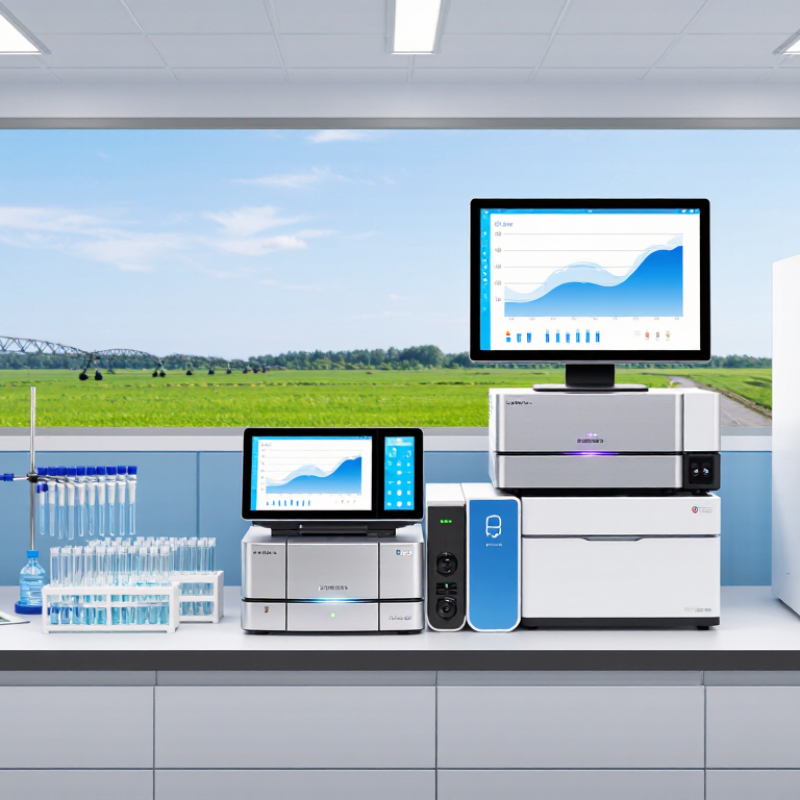
Phosphate analyzers measure phosphate concentrations in water, wastewater, and process streams. Many instruments detect orthophosphate through a color reaction. A reagent forms a blue compound, and the analyzer measures its intensity. This value helps operators control treatment performance and protect receiving waters from excess nutrients. High phosphate levels can encourage algae growth, reduce oxygen, and damage aquatic habitats.
The result is useful only when sampling and calibration are reliable. Total phosphate analysis may require digestion before measurement because organic and particulate forms behave differently. In practical testing, dirty sample lines, cloudy water, or expired reagents can distort readings. No analyzer is infallible. A low reading may reflect poor mixing rather than safe conditions. Experienced teams compare online results with laboratory checks and investigate unusual changes instead of trusting one number.
Tips: Keep sampling points representative and inspect tubing regularly. Record reagent lot numbers, calibration dates, and unusual water conditions. Rinse containers carefully; even small residues can affect low-range measurements. Check the detection range before purchasing equipment. A sensitive analyzer may still be unsuitable for a heavily loaded stream. Review trends, not isolated values. This approach often reveals gradual process drift before it becomes an expensive operational problem.
Modern phosphate analyzers combine proven chemistry with faster digital control. The most common method is colorimetric analysis, where phosphate reacts with molybdate reagents and forms a blue compound. The analyzer measures color intensity with a photometer. More phosphate creates a stronger signal. This approach remains practical for water treatment, agriculture, and industrial process monitoring.
Flow-injection systems improve consistency by controlling sample volume, mixing time, and reaction temperature. Online analyzers can collect readings every few minutes, helping operators detect nutrient changes before discharge limits are threatened. Some systems use ultraviolet or optical sensors for rapid screening. However, these sensors may respond to turbidity, suspended solids, or unusual water color. No method is perfect. A low reading can still reflect poor sampling or a blocked intake line.
Tips: Confirm the measuring range before purchase. Check reagent stability, cleaning access, and calibration procedures. Test samples with known phosphate concentrations, not only clean laboratory water. Keep a record of temperature, turbidity, and maintenance events. These details often explain unexpected results. Regular verification with an independent laboratory adds confidence, especially when readings guide treatment decisions. A technically advanced analyzer is not automatically reliable; careful installation and disciplined operation matter just as much.
| Analyzer Category | Core Measurement Technology | Typical Phosphate Reporting Range | Typical Detection Capability | Common Sample Types | Key Automation Features | Relevant Standards or Methods | Best-Fit Purchasing Requirement |
|---|---|---|---|---|---|---|---|
| Laboratory UV-Vis Phosphate Analyzer | Colorimetric molybdenum-blue reaction measured by visible or ultraviolet-visible spectrophotometry. | Approximately 0.01–100 mg/L as PO₄-P, depending on reagent chemistry and dilution. | Often capable of low-microgram-per-liter measurement when optimized for low-range analysis. | Drinking water, wastewater, surface water, boiler water, industrial process samples. | Automatic wavelength selection, calibration storage, reagent blank correction, cuvette temperature control, and data export. | Commonly aligned with Standard Methods 4500-P, EPA colorimetric procedures, and ISO-based laboratory methods. | Flexible laboratory testing |
| Online Orthophosphate Analyzer | Continuous or sequential colorimetric analysis using molybdate-based reagent chemistry and optical detection. | Typically 0.01–20 mg/L as P for water and wastewater monitoring; higher ranges may use automatic dilution. | Commonly in the low-microgram-per-liter to sub-milligram-per-liter range, depending on configuration. | Municipal wastewater, industrial effluent, cooling water, and nutrient-removal processes. | Automatic sampling, timed reagent dosing, self-cleaning, alarm relays, remote communication, and automatic calibration. | Usually based on recognized molybdenum-blue or phosphomolybdate colorimetric procedures. | 24/7 process control |
| Flow Injection Analysis System | Precisely injected sample zones react with molybdate reagents in a flowing carrier stream before photometric detection. | Commonly covers approximately 0.005–50 mg/L as P with suitable calibration and dilution. | High repeatability and low detection limits for routine environmental and industrial monitoring. | Water, wastewater, soil extracts, fertilizers, plant digests, and food-related samples. | Automated injection, controlled reaction time, high sample throughput, programmable calibration, and multi-channel operation. | Frequently configured to meet flow-injection or segmented-flow versions of Standard Methods and EPA procedures. | High-throughput laboratories |
| Segmented-Flow Nutrient Analyzer | Continuous-flow analysis with air segmentation, chemical conditioning, color development, and photometric measurement. | Approximately 0.001–10 mg/L as P for low-level nutrient applications; broader ranges require dilution. | Suitable for trace-level phosphate monitoring with strong precision across long analytical runs. | Seawater, freshwater, wastewater, soil extracts, fertilizers, and agricultural research samples. | Automatic sample sequencing, multi-parameter analysis, baseline correction, wash cycles, and computerized quality control. | Methods may be adapted from ISO, EPA, and Standard Methods nutrient-analysis procedures. | Research and environmental laboratories |
| Ion Chromatography System | Anion separation on an ion-exchange column followed by conductivity or suppressed-conductivity detection. | Often approximately 0.01–500 mg/L as phosphate, subject to column capacity, matrix, and dilution. | Low-milligram-per-liter to microgram-per-liter performance is possible with suitable sample preparation. | Drinking water, pharmaceutical water, environmental samples, industrial chemicals, and high-purity process water. | Automated eluent generation, autosampling, multi-anion separation, system suitability checks, and electronic reporting. | Commonly used with EPA 300-series methods, ASTM procedures, and ISO ion-chromatography methods. | Multi-anion identification |
| Discrete Photometric Analyzer | Robotic batch mixing of sample and reagents in individual reaction cuvettes, followed by photometric measurement. | Approximately 0.01–100 mg/L as P, depending on the selected reagent package and optical path length. | Suitable for routine low- to medium-level phosphate testing with good batch repeatability. | Municipal water, wastewater, food laboratories, agriculture, and general industrial quality control. | Automated pipetting, reagent addition, incubation, cuvette handling, washing, calibration, and result validation. | Can support approved colorimetric procedures such as Standard Methods 4500-P and equivalent national methods. | Multi-test routine laboratories |
| Portable Phosphate Photometer | Compact colorimeter using a reagent-based phosphomolybdate or molybdenum-blue reaction. | Typically 0.05–30 mg/L as P for field water and wastewater applications. | Generally optimized for practical field detection rather than ultra-trace laboratory analysis. | Field water, aquaculture, pools, cooling systems, agricultural drainage, and emergency testing. | Battery operation, simplified calibration, pre-programmed methods, internal memory, and handheld sample handling. | Performance depends on the selected reagent method and may be traceable to recognized colorimetric procedures. | On-site screening |
| Industrial Process Phosphate Monitor | Online photometric measurement, usually with automatic reagent addition and controlled sample conditioning. | Commonly configured for approximately 0.1–500 mg/L as P, with application-specific dilution systems. | Designed for stable control limits, repeatability, and fast response rather than broad laboratory versatility. | Boiler feedwater, cooling-water treatment, fertilizer production, metal finishing, and chemical processing. | Automatic sample filtration, pressure regulation, reagent management, alarm outputs, PLC integration, and predictive maintenance alerts. | Typically specified against validated plant methods, colorimetric phosphate procedures, and applicable water-quality standards. | Industrial process optimization |
| High-Temperature or High-Pressure Water Analyzer | Conditioned sampling combined with photometric phosphate detection; the analyzer is separated from harsh process conditions. | Application-dependent, commonly about 0.01–20 mg/L as P after cooling, depressurization, and controlled dilution. | Designed for low-level phosphate control in treated boiler and power-generation water. | Boiler water, condensate, feedwater, steam-cycle chemistry, and high-purity utility water. | Sample cooling, pressure reduction, automatic flushing, reagent monitoring, calibration routines, and plant control-system communication. | Often specified with ASTM, ASME, or plant-specific water-chemistry procedures. | Power and utility systems |
When evaluating phosphate analyzer manufacturers, start with measurement performance, not marketing claims. A credible supplier should provide detection limits, accuracy data, response time, and calibration procedures. Ask for test results using samples similar to yours. Clean water and wastewater can produce very different challenges.
Request documentation for reagent stability, sensor life, and temperature compensation. Compare the analyzer’s measuring range with your actual process conditions. Do not accept vague terms like “high precision.” Look for traceable standards, factory inspection records, and clear quality-control procedures. Independent validation is useful, but it may not reflect your sample matrix.
In real treatment plants, fouling can affect readings within days. Inspect the sample line design, automatic cleaning cycle, and enclosure rating. Look for accessible tubing and simple reagent replacement. Maintenance matters. Ask whether remote diagnostics work with your control system and whether spare parts remain available for several years. Review installation references from similar industries, not only impressive global projects. Global buyers should also confirm local service coverage, training quality, language support, and delivery responsibilities. A reliable manufacturer explains limitations openly. I would be cautious if every answer sounds perfect. Some analyzers need frequent calibration, and that cost is easy to overlook. The cheapest quotation may create higher labor expenses later. A documented total-cost estimate gives a more realistic comparison.
Global phosphate analyzer suppliers are strengthening their positions through automation, field reliability, and clearer validation data. A 2024 MarketsandMarkets assessment valued the broader water quality monitoring market at about USD 5 billion. It also identified online monitoring as a major growth area. This matters because phosphate levels can shift after rainfall, dosing changes, or industrial discharge events.
Leading suppliers usually fall into three practical groups. European and Japanese manufacturers often emphasize stable photometric systems, compact designs, and strong calibration control. North American suppliers commonly focus on plant integration, remote diagnostics, and compliance documentation.
Regional manufacturers may offer lower purchase costs and faster service, but buyers should examine reagent consistency and spare-part availability. A low initial price can become expensive.
Product strength is not only measured by detection range. It includes response time, sample conditioning, cleaning cycles, and resistance to suspended solids. EPA Method 365.1 and Standard Methods 4500-P provide useful reference points for laboratory comparison. In field evaluations, automatic zero checks and sealed reagent cartridges can reduce operator error. They do not remove it completely.
That detail is often overlooked.
The best purchasing process combines factory specifications with witnessed testing. Ask suppliers to analyze real site samples, not only clean standards. Review at least six months of service records when possible. The data may reveal weaknesses that brochures hide. Independent verification remains essential, especially for nutrient-control projects where a small measurement bias can trigger unnecessary chemical dosing.
International buyers should evaluate phosphate analyzers against real sampling conditions, not brochure specifications. Start with the sample. Wastewater containing suspended solids may require filtration, digestion, or automatic cleaning. Drinking water applications often demand lower detection limits and tighter repeatability. Ask manufacturers for test data using a matrix similar to yours.
Measurement range matters, but stability matters more. Review calibration frequency, reagent shelf life, temperature compensation, and alarm functions. A unit that performs well in a laboratory may struggle beside a humid process line. Request records from comparable installations, including maintenance intervals and failed tests. Small details matter. Confirm whether standards, tubing, lamps, and sensors are locally available.
International service can decide the purchase. Check response times, remote support, language coverage, training, and spare-parts delivery to your country. Verify electrical requirements and communication protocols before ordering. Independent certificates, documented quality procedures, and traceable calibration records improve confidence. Do not rely on a single performance claim.
A common mistake is choosing the lowest initial price. Reagent consumption, cleaning labor, downtime, and import delays can cost more later. I would also challenge unclear promises about “maintenance-free” operation. Few instruments are truly maintenance-free. Ask for a complete ownership estimate over three years, then compare it with verified field evidence. Some buyers may still prioritize compact size, but a small enclosure cannot compensate for unreliable data.