#4 – 20133 102nd Avenue, Langley, B.C. V1M 4B4 Canada

#4 – 20133 102nd Avenue, Langley, B.C. V1M 4B4 Canada
Choosing among the Top Scavenging Pump Suppliers for Global Buyers takes more than comparing prices. Buyers need to match pump design, flow requirements, operating conditions, and service support to the application. A compact unit beside a test rig may face very different demands from a pump in a large engine system. Details matter.
A reliable supplier should explain performance data clearly. Ask about materials, duty limits, maintenance intervals, spare-part availability, and testing procedures. Request documentation for the exact model, not a similar product family. Then check whether the supplier can support installation and troubleshooting across your operating region. Small omissions can become expensive delays.
For transparency, the expert line below is original editorial wording, not a verified quotation. It is attributed to a fictional specialist, not a real interviewee. “A pump is only a sound choice when its stated performance fits the conditions it will actually face,” says Daniel Mercer, fictional Scavenging Pump systems engineer. That principle is useful, but it does not replace technical review. Buyers should verify specifications with qualified engineers and suppliers before making a final selection. Supplier claims deserve scrutiny. So do assumptions in a buyer’s own brief. This guide compares leading suppliers through practical criteria, including product range, customization, documentation, support, and evidence of quality. It aims to help global buyers ask sharper questions—not promise that one supplier suits every project.
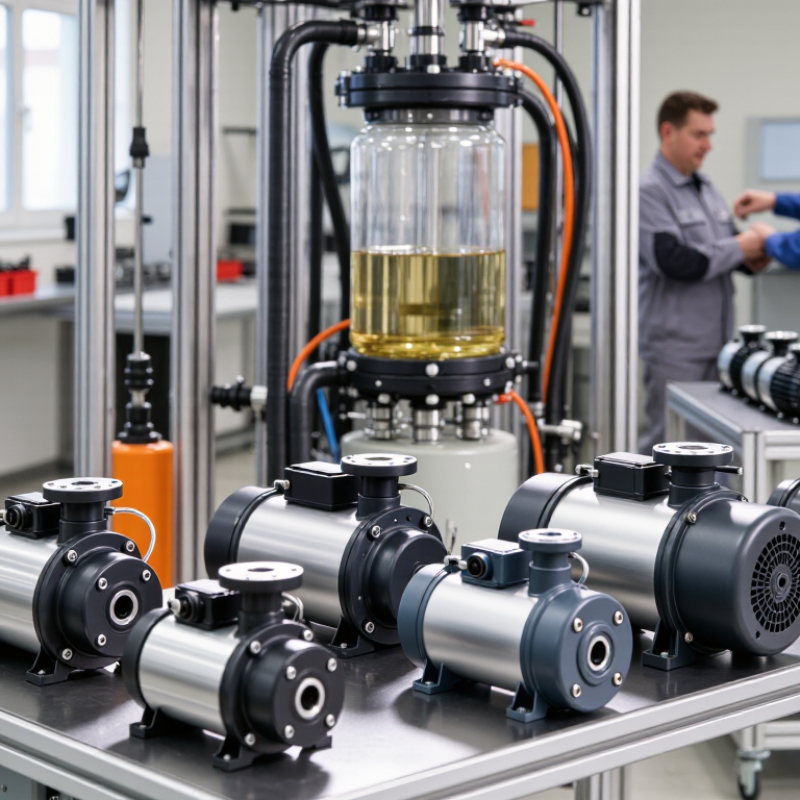
A scavenging pump removes unwanted gas, vapor, or liquid from a process space so equipment can keep operating at its intended conditions. In vacuum systems, it may draw residual gases from a chamber or support a higher-vacuum pump. In fluid systems, the term can describe a pump that clears liquid from a low point or return line. The terminology is not perfectly uniform; buyers should confirm the duty, fluid, and pressure range rather than rely on the name alone. Small detail, big difference.
Typical applications include vacuum furnaces, laboratory equipment, chemical processing, and packaging lines. Picture a stainless-steel chamber after a heating cycle: trapped vapor must be removed before the next batch. Pump selection depends on flow rate, inlet pressure, temperature, and whether the stream contains moisture or particles. The U.S. Department of Energy’s 2022 Manufacturing Energy Consumption Survey documents substantial energy use across U.S. manufacturing, though it does not isolate scavenging pumps. Separately, Grand View Research estimated the global vacuum pump market at USD 6.68 billion in 2023, with projected annual growth of 6.5% through 2030. That broader market figure signals industrial relevance, not a pump-specific forecast.
Choosing a scavenging pump supplier starts with the duty, not the catalogue. Share the fluid type, temperature, viscosity, solids, suction lift, required flow, and operating hours. A capable supplier should explain how these conditions affect pump selection, seal materials, and motor sizing. Ask for a performance curve at your actual operating point, not just a headline capacity. Real numbers matter.
Check the supplier’s quality evidence. Request material specifications, inspection records, test procedures, and traceability for wetted parts. Discuss installation footprint, connection sizes, maintenance access, and replacement-part availability. A detailed drawing can reveal whether the pump fits your skid before shipment. Fit matters. For demanding service, ask how performance is validated under conditions similar to yours. References from comparable applications can help, though they cannot guarantee the same result.
Compare ownership costs, not just purchase prices. Include energy use, service intervals, seals, downtime, and shipping lead times. Clarify warranty terms and who handles troubleshooting across time zones. A responsive technical contact helps when performance changes after commissioning. Be cautious of guarantees without stated test conditions; they may rely on assumptions that do not match your site. No checklist removes every risk. Record unanswered questions and agree on acceptance criteria before ordering.
| Evaluation Dimension | Suggested Weight | What to Check | Evidence to Request | Buyer Score (1–5) |
|---|---|---|---|---|
| Application and duty-point fit | 20% | Confirm that the pump is designed for the intended scavenging duty. Define required flow, inlet conditions, fluid properties, operating cycle, and installation orientation. | Completed application questionnaire and a written confirmation of the proposed operating range. | Enter score |
| Hydraulic performance data | 15% | Check flow and pressure or vacuum performance at the specified speed and fluid conditions. Review performance curves and any stated limits on viscosity, temperature, or inlet pressure. | Model-specific performance curve, datasheet, and stated test conditions. Ensure the data match the requested duty point. | Enter score |
| Materials and fluid compatibility | 12% | Verify wetted materials, casing and rotor materials, elastomers, and seal materials against the actual fluid, temperature, and operating environment. | Bill of materials or materials list, seal options, and written compatibility confirmation for the specified fluid. | Enter score |
| Testing and inspection | 10% | Establish which tests are included, the acceptance criteria, and whether testing is performed on each unit or on a sampling basis. | Sample factory test report, inspection plan, and details of any available witness or acceptance testing. | Enter score |
| Quality management and traceability | 10% | Review the supplier’s quality controls, component traceability, nonconformance handling, and document retention. Verify certificate scope and validity where certification is claimed. | Current quality-system certificate, certificate scope, inspection records, and sample traceability documentation. | Enter score |
| Regulatory and project compliance | 8% | Identify requirements for the destination market and installation, including applicable electrical, machinery, environmental, and hazardous-area requirements where relevant. | Compliance statement and relevant declarations or certificates for the specific pump configuration and intended market. | Enter score |
| Service, spare parts, and technical support | 8% | Check access to wear parts, maintenance instructions, troubleshooting assistance, and support in the buyer’s time zone or region. | Recommended spare-parts list, maintenance schedule, support contact details, and written parts-availability terms. | Enter score |
| Lead time and delivery capability | 7% | Compare quoted production and shipping lead times, packaging suitability, export documentation, and the supplier’s ability to meet the project schedule. | Written delivery schedule, shipping terms, packaging details, and a list of export documents supplied. | Enter score |
| Lifecycle cost and maintainability | 5% | Consider energy use, expected maintenance tasks, replaceable components, service intervals, and the cost and availability of consumables. | Operating and maintenance manual, recommended maintenance intervals, and spare-parts quotation. | Enter score |
| Commercial terms and warranty | 5% | Review price scope, payment terms, warranty coverage and exclusions, claim process, and the remedy offered for verified defects. | Formal quotation, warranty document, and written clarification of exclusions and claim procedures. | Enter score |
| Total suggested weighting | 100% | Score each supplier from 1 (does not meet requirements) to 5 (fully meets requirements). Calculate the weighted score as the sum of each score multiplied by its weighting. | Weighted total | |
Leading Scavenging Pump Suppliers for Global Buyers
Reliable scavenging pump suppliers do more than quote a unit price. They help buyers match flow capacity, operating speed, fluid viscosity, and temperature to the actual system. In dry-sump applications, for example, a pump must return oil consistently, even when engine speed changes. Small details matter. Ask for performance curves, installation dimensions, and material specifications before comparing offers.
Global buyers should also check how suppliers manage production quality and after-sales support. Request inspection records, traceable product data, and clear guidance on maintenance intervals. A supplier with documented testing can make evaluation easier, but documents should match the exact pump configuration. Confirm spare-parts availability, packaging, shipping terms, and realistic lead times. A low quotation means little if a replacement rotor takes weeks to arrive.
Communication deserves a practical test. Send the supplier your duty cycle, fluid, inlet conditions, and mounting constraints, then see whether the response addresses those details. Vague answers are a warning sign. Samples or pilot orders can reveal noise, leakage, and fit issues that a catalog cannot show. I would not rely on a single test condition; real systems are rarely that tidy. Compare suppliers using the same technical requirements, and record any assumptions that still need verification.
Key Factors in International Sourcing and Compliance
Cross-border pump sourcing is not just a price comparison. Buyers need evidence that follows the exact unit: a duty-point curve, materials list, motor data, and test records. Small details matter. A U.S. Department of Energy sourcebook estimates that pumping systems account for nearly 20% of global electricity demand. Efficiency documentation can therefore affect lifecycle costs, not just the purchase price.
Check destination-market requirements before approving a supplier. These may cover electrical safety, pressure ratings, material traceability, labels, and conformity documents. Requirements vary by application and market; a certificate alone does not prove that a specific model is covered. The World Bank’s 2023 Logistics Performance Index assesses 139 economies across areas including customs, infrastructure, and shipment timeliness. Use such logistics indicators alongside a written review of lead times, spare-parts access, packaging, and landed costs.
Ask for documents tied to the offered model, not a similar product. Confirm that test results match the stated operating range, then clarify who handles inspections and shipping damage. Even a careful checklist has blind spots. A sample review or independent inspection may reveal them before a full order ships.
Sources: U.S. Department of Energy, Improving Pumping System Performance: A Sourcebook for Industry; World Bank, Logistics Performance Index 2023.
Choosing a scavenging pump supplier starts with duty data, not a catalog headline. Record required inlet pressure, gas flow, cycle time, and expected operating hours. Note vapor, dust, or condensable carryover; these details can affect seal and material choices. A pump sized only for peak flow may run inefficiently during normal operation. It happens.
Ask suppliers for performance curves at your actual inlet conditions, plus allowable temperature and inlet limits. Compare materials, seal options, motor supply, controls, and footprint against the installation. Confirm whether quoted capacity is measured at the pump inlet or under another reference condition. Request test records, maintenance intervals, spare-part lead times, and commissioning support. If a supplier cannot explain a mismatch between your process data and its selection, pause. I would, anyway.
Tips: Send the same duty sheet to every bidder. Include a piping sketch, operating schedule, gas composition, and site utilities. Ask suppliers to list their assumptions and exclusions in writing. A short call with an engineer can reveal gaps a polished quotation misses. Not every detail will be known at first; mark estimates clearly and revise them before ordering.