#4 – 20133 102nd Avenue, Langley, B.C. V1M 4B4 Canada

#4 – 20133 102nd Avenue, Langley, B.C. V1M 4B4 Canada
Molding precision is a critical factor in the manufacturing process. It refers to the accuracy and consistency of shapes produced in molds. High molding precision ensures that products meet strict specifications. This can significantly affect product performance and quality.
In industries such as automotive and medical, molding precision is paramount. A small deviation can lead to defects and failures. Manufacturers must invest in advanced technologies and skilled labor to achieve desired precision. However, challenges remain. Not all processes guarantee the same level of accuracy.
The importance of molding precision cannot be overstated. It influences cost, efficiency, and competitiveness. With rising consumer demands, manufacturers must prioritize precision. They must reflect on their methods and identify areas for improvement. Failing to do so may result in lost opportunities and diminished reputation.
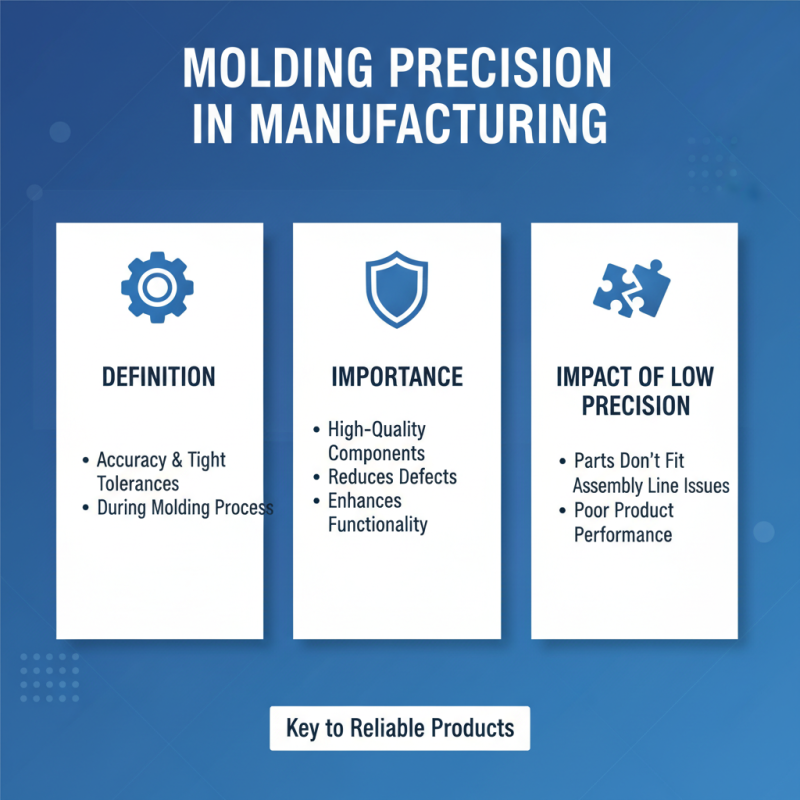
Molding precision in manufacturing refers to the accuracy and tight tolerances achieved during the molding process. This concept is essential for producing high-quality components. When precision is prioritized, it reduces defects and enhances product functionality. For example, a small variation in the mold can lead to parts not fitting together correctly. This issue can have significant implications for assembly lines and product performance.
Understanding molding precision involves knowing the various factors at play. Material selection, temperature control, and pressure settings all impact the outcome. Manufacturers often face challenges in maintaining these variables consistently. Even slight fluctuations can result in discrepancies. Adjustments may be necessary, but they can complicate the production timeline. Therefore, it is crucial to invest time and resources into monitoring these aspects effectively.
A focus on molding precision can yield superior results. However, not every process achieves perfect outcomes. Mistakes can occur, leading to delays and increased costs. This reality highlights the need for continuous improvement and learning within manufacturing operations. Embracing this mindset cultivates a culture of excellence and resilience. It's a journey, not a destination. Best practices evolve, and so should manufacturing strategies.
In the realm of manufacturing, molding precision is critical. Several factors directly influence this precision during production. Machine calibration is vital. Even a minor misalignment can lead to significant discrepancies in product quality. It's essential that manufacturers regularly inspect and adjust their equipment to maintain high standards.
Material selection plays a crucial role too. Different materials respond uniquely under pressure and heat. Using the wrong material can result in warping or uneven surfaces. Understanding the properties of each material is key for consistent results. Sometimes, manufacturers may overlook this aspect due to time constraints or cost-cutting measures.
Temperature control is another important factor. Inconsistent temperatures during the molding process can lead to defects. Monitoring temperature closely helps ensure uniformity. In some cases, manufacturers may not invest enough in this monitoring system, leading to variability. Each of these factors requires careful evaluation to enhance molding precision in production.
Molding precision plays a crucial role in manufacturing. Accurate molds directly impact product quality and performance. According to a study by the American Society of Mechanical Engineers, a mere 0.1 mm variance can significantly affect a part’s fit and function. Industries that rely on precise molds, like automotive and aerospace, often see defects leading to recalls. These recalls can cost companies millions.
A focus on molding precision enhances reliability. For instance, tightly controlled dimensions reduce the risk of malfunctions. This leads to improved customer satisfaction and reduced warranty claims. The Manufacturing Institute reports that 94% of manufacturers believe quality control is vital for operational success. Investing in high-quality molds can lead to significant returns over time.
Tips: Invest in technology such as advanced CAD software to increase design accuracy. Regularly train your staff on best practices in molding. Always review mold performance data to identify areas needing improvement. Precision should not be an afterthought; it’s a necessary component of a successful manufacturing strategy.
| Dimension/Aspect | Description | Impact on Quality | Impact on Performance |
|---|---|---|---|
| Dimensional Accuracy | The precision of the final dimensions of molded products. | Ensures that parts fit correctly and meet specifications. | Improves product functionality and reduces assembly issues. |
| Surface Finish | The quality of the surface texture of molded parts. | Affects aesthetics and can influence failure rates. | Improves performance in applications requiring low friction. |
| Consistency | Uniformity of production across all items. | Prevents variations that can lead to defects. | Consistent performance ensures reliable end-use results. |
| Material Integrity | The preservation of the properties of the raw material during molding. | Reduces the risk of material failure during use. | Enhances durability and life span of the product. |
| Cycle Time | The time taken to complete one production cycle. | Directly impacts production efficiency and cost. | Faster cycles can lead to improved market competitiveness. |
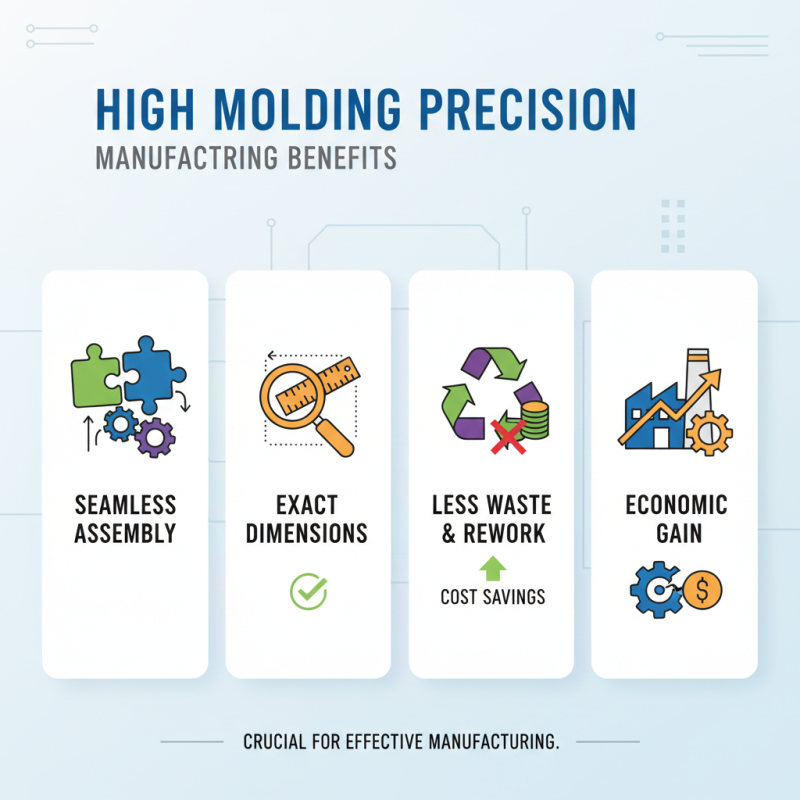
Achieving high molding precision is crucial for effective manufacturing. Precision ensures that parts fit together seamlessly. A slight deviation in dimensions can lead to significant issues in assembly and functionality. High precision reduces waste, as less rework and fewer defective parts are produced. Manufacturers benefit economically when precision is prioritized.
Techniques to enhance molding precision include improving tooling design and maintaining machines. Regular maintenance minimizes mechanical errors during the molding process. Using advanced simulation software can help in predicting potential issues before they arise. However, relying too heavily on technology can lead to overlooking human factors. Skilled operators are essential in monitoring the process and making necessary adjustments.
Material selection also plays a key role. Different materials respond uniquely to molding conditions. Understanding these properties can prevent distortions during cooling. Yet, even the best materials may not perform as expected. Continuous testing and quality checks are essential to ensure that precision is maintained throughout the production cycle. Encouraging open communication within teams can foster a culture of precision.
Molding precision significantly impacts cost efficiency and time management in manufacturing. According to recent industry reports, a mere 1% increase in molding accuracy can reduce waste by 10%. This showcases how essential precision is in optimizing resource use. Improved accuracy means fewer rejects and reworks, directly lowering production costs.
Production timelines are also affected by molding precision. Delays often arise from misaligned molds that require adjustments. Research indicates that efficient mold design can cut cycle times by up to 30%. Companies should focus on precision early in the design phase. These proactive measures can streamline the manufacturing process and enhance overall productivity.
Tip: Regularly review and update your molding processes. Analyze data from previous runs to identify patterns in defects and inefficiencies.
Check alignment frequently. Even minor misalignments can lead to significant production delays. Addressing these issues quickly creates a smoother workflow.
Ensuring molding precision is not just about immediate cost savings. It's about creating a resilient manufacturing framework that adapts to market demands. Balancing precision with flexibility can drive continual improvement.