#4 – 20133 102nd Avenue, Langley, B.C. V1M 4B4 Canada

#4 – 20133 102nd Avenue, Langley, B.C. V1M 4B4 Canada
In the competitive field of manufacturing, molding precision is paramount. According to recent industry reports, a staggering 70% of defects arise from poor molding practices. This statistic highlights the critical need for precision in every aspect of the molding process. Whether producing components for automotive or consumer electronics, achieving perfect results requires a thorough understanding of molding techniques.
Molding precision involves meticulous attention to detail. Factors such as temperature control, material choice, and mold design directly impact the final product. For example, a slight variance in temperature can lead to significant defects, with up to 15% of products potentially failing quality control. Even with advanced technology, manufacturers must stay vigilant and continuously refine their processes.
Yet, imperfections are still part of the equation. The challenge lies in identifying and addressing these issues. Many companies often overlook the importance of routine maintenance and staff training. A lack of commitment in these areas can lead to missed opportunities for improvement. Reflection and adaptation will ultimately foster a culture of precision in molding.
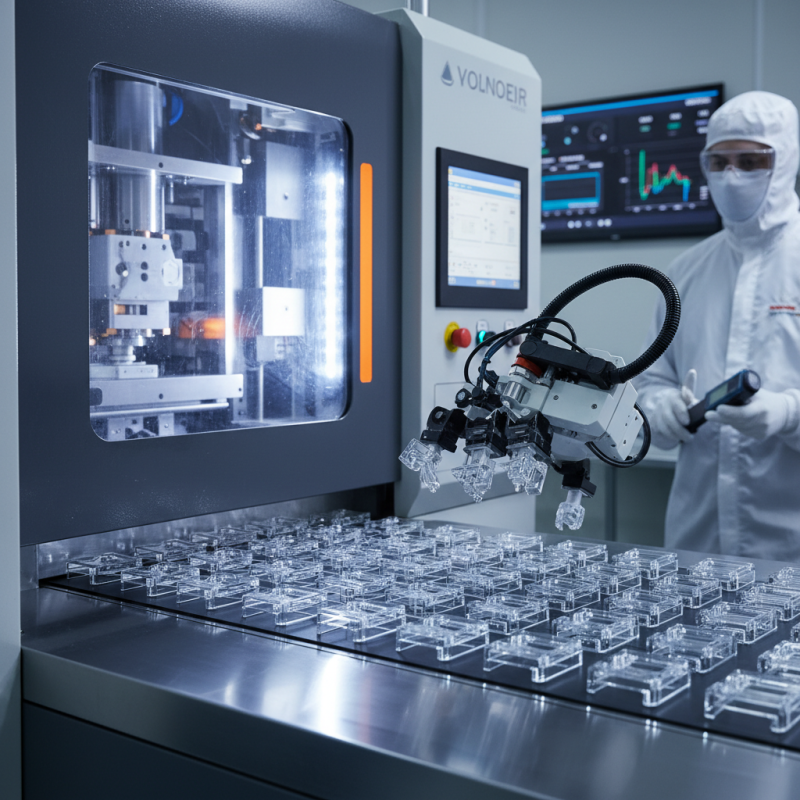
Molding precision is crucial for achieving high-quality results. Understanding the basic principles can significantly improve your outcomes. Precision involves accurate measurements, proper material selection, and a well-optimized process. Each element plays a vital role in the final product's quality.
One common mistake is overlooking material properties. Not every material behaves the same under pressure or temperature. Conduct tests to identify how your chosen material reacts in the molding process. Keep track of temperature variations. Even slight changes can lead to defects.
Another aspect often ignored is machine calibration. Regular checks and adjustments are necessary to maintain precision. A miscalibrated machine can produce uneven molds. This requires additional time and resources to correct. Reflecting on past projects helps you avoid repeating errors. Continuous learning is essential in the pursuit of molding perfection.
| Molding Parameter | Ideal Range | Impact on Quality |
|---|---|---|
| Temperature | 200 - 250 °C | Affects flow and solidification |
| Pressure | 800 - 2000 psi | Influences surface finish and density |
| Cooling Time | 5 - 30 seconds | Impacts cycle time and dimension control |
| Material Type | Thermoplastic vs Thermoset | Determines thermal and mechanical properties |
| Mold Design | Gate and runner systems | Affects flow behavior and part quality |
Achieving precision in molding processes can be a complex endeavor. Key factors influence the outcome significantly. Temperature control is crucial. If the mold is too hot or cold, the material may not flow correctly. This can lead to defects. It is important to monitor temperatures meticulously.
Material selection also plays a vital role. Different materials behave uniquely under pressure and heat. Some are prone to warping, while others may not fill the mold completely. This requires careful evaluation of all options. Incorrect choices can result in wasted time and resources.
Furthermore, mold design and maintenance are essential. A poorly designed mold can lead to uneven distribution of the material. Regular inspections can reveal imperfections that need correction. Sometimes, reality doesn’t align with plans. Reflection on past mistakes can lead to better decisions in future projects. Precision is not just about perfect conditions; it’s also about learning and adapting as challenges arise.
Achieving precision in molding requires careful attention to detail. Start by preparing your materials. Ensure they are clean and free from contaminants. This can greatly affect the final product’s quality. The mixing process also demands precision. Mix components thoroughly to avoid inconsistencies. Every step counts in creating flawless molds.
Pay attention to temperature control. Both the environment and materials must be at optimal temperatures for best results. This is often an overlooked detail. You might find that slight variations can lead to defects. It’s crucial to monitor temperatures consistently throughout the process.
Here are some tips for excellence. Always test a small batch before full production. This helps identify potential issues. Document your procedures and outcomes. Reference these notes when problems arise. Remember, no process is perfect. Continuous reflection will help improve your molding techniques over time. Seek feedback from peers regularly to enhance your skills.
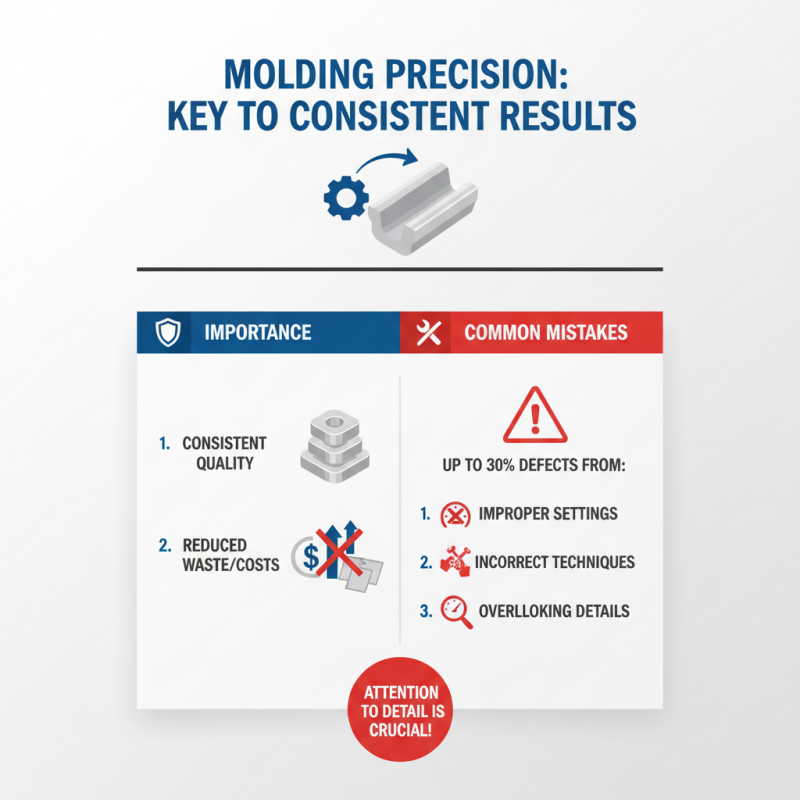
Molding precision is vital for achieving consistent results. However, many operators overlook common mistakes that lead to flaws. Reports indicate that up to 30% of molding defects are tied to improper settings and techniques. This highlights the need for attention to detail.
One frequent pitfall is inadequate temperature control. A report from the Injection Molding Association suggests that temperature fluctuations can cause dimensional variances. Maintaining a stable temperature is crucial for uniform material flow. Operators should regularly check and calibrate machines to avoid these issues.
Another common mistake is overlooking mold maintenance. Neglecting the cleaning and inspection of molds can lead to surface defects. A survey of molding professionals revealed that 40% experienced quality issues due to mold wear. Operators must prioritize routine mold care to ensure optimal performance. By addressing these oversights, the path to improved molding precision becomes clearer.
Maintaining precision equipment is essential for effective molding processes. Industry reports indicate that over 30% of production failures can be traced back to poorly maintained tools. Regular maintenance not only enhances performance but also extends tool lifespan. A clean workspace, where tools are systematically organized, promotes efficiency and minimizes downtime.
Here are some tips to keep in mind. Regular inspections are crucial. Check for wear and tear on molds often. Lubrication is key; it prevents frictions that could lead to defects. Consider investing in monitoring systems that track equipment performance. These systems can alert you to issues before they escalate.
Even with the best practices, challenges remain. Operators often overlook the calibration of machines. Small misalignments can cause significant defects in final products. Documenting maintenance actions can help identify recurring problems. Continually reflect on your processes to improve efficiency. These strategies contribute to achieving high-quality results consistently.