#4 – 20133 102nd Avenue, Langley, B.C. V1M 4B4 Canada

#4 – 20133 102nd Avenue, Langley, B.C. V1M 4B4 Canada
Buying carbon fiber sheets is less about choosing the highest strength number and more about matching the laminate to its job. A glossy panel may look identical to a structural sheet, yet differ in fiber direction, resin system, thickness, and tested performance. The U.S. Department of Energy reports that a 10% reduction in vehicle weight can improve fuel economy by about 6–8%. That figure helps explain carbon fiber’s appeal, but it does not tell you which sheet to buy. Real performance depends on the part, the load, and the test conditions.
Composite-materials expert Don Adams, author of Composite Materials: Design and Applications, offers a useful technical perspective: material properties need to be evaluated in the context of design and application. A practical buying rule follows: “Match the sheet’s tested properties to the load—not the boldest number on the listing.” Treat that as guidance, not a verified quotation from Adams. This distinction matters. A tensile-strength figure from one test method may not predict stiffness, impact resistance, or performance across the sheet.
The tips ahead focus on details you can check before ordering: fiber orientation, resin type, thickness tolerance, finish, and the manufacturer’s test data. Ask for a datasheet. Check whether its values apply to the finished laminate, not just the raw fiber. Look closely at the edges, too. Voids, uneven layers, and rough trimming can signal quality issues, though appearance alone cannot prove a sheet’s strength. No single spec tells the whole story. Choose carbon fiber sheets for your real conditions, and leave room for careful verification.
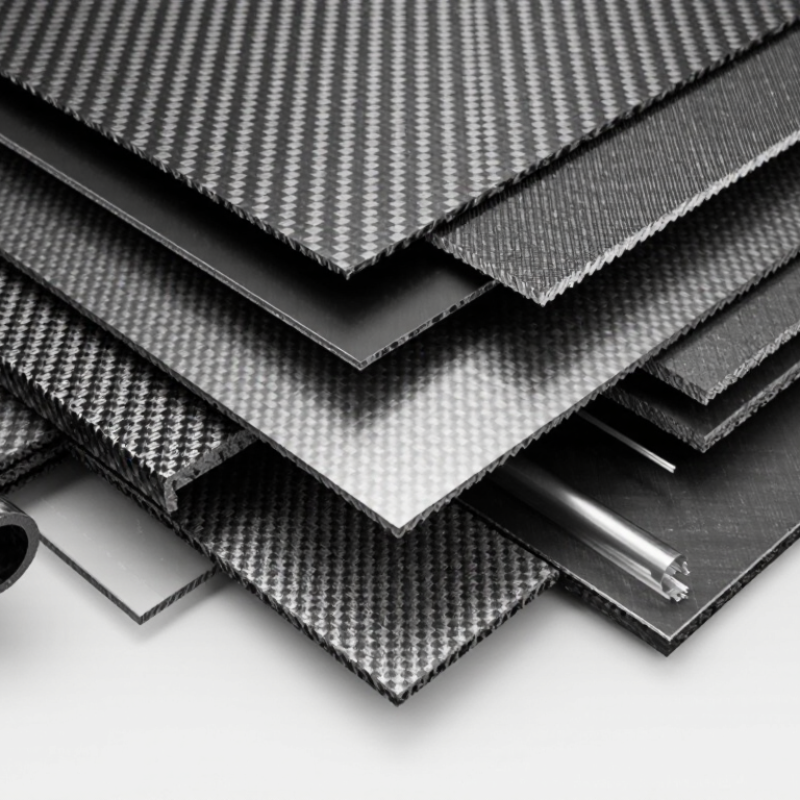
Carbon fiber sheets differ in more than appearance. Woven panels use crossing fibers, often in plain or twill patterns, and resist loads in multiple directions. Unidirectional laminates place most fibers along one axis, giving greater stiffness in that direction. Check the fiber orientation before choosing; a glossy surface cannot reveal the full layup. Some sheets use prepreg, with resin already infused, while others are laminated with wet resin. Manufacturing quality and cure conditions affect consistency. Details matter.
Compare thickness, fiber direction, resin system, and stated properties on the technical data sheet. A thin panel may feel rigid across its face but flex noticeably along an unsupported span. For a simple check, support a sample at both ends and apply gentle, even pressure; this is not a substitute for load testing. Look at cut edges for voids, uneven layers, or resin-rich areas. Surface weave can be cosmetic, so do not assume it predicts strength. I’ve seen that assumption trip up careful buyers. Ask how a quoted stiffness value was measured, and compare like with like. Temperature, moisture, and impact can also change performance, depending on the resin and construction. If the sheet will carry a critical load, get qualified engineering advice.
Before buying carbon fiber sheets, define what the part must do. Will it carry a steady load, resist vibration, or stay flat under heat? Note the expected force, support points, operating temperature, and exposure to water or chemicals. These details matter more than appearance. A sheet used as a lightweight cover has different needs from one supporting a bracket. Carbon fiber properties vary with fiber direction, resin system, thickness, and construction. A thicker sheet is not automatically stronger in every direction.
Tip: Sketch the part and mark where forces enter. Include holes, cutouts, and mounting points. They can change how stress travels through the sheet. Small details matter.
Set measurable targets before comparing options, such as maximum deflection, weight, and required stiffness. If the sheet must meet a specific load, ask for test data relevant to its construction, not just a general strength figure. Check whether the data describes the same fiber orientation and thickness you plan to buy. It is easy to overlook this difference. When requirements are still uncertain, make a simple prototype and test it under realistic conditions. That adds time, but it may prevent an expensive mismatch. I would also leave room for revision; early estimates are often imperfect.
Thickness is a starting point, not a shortcut to strength. A 1 mm sheet may suit a light cover, while a thicker panel can resist bending better. But the resin, fiber direction, and support spacing matter too. Check the supplier’s specifications, and match them to the load your part will carry. If the sheet will span a gap, test a sample under realistic conditions.
Look closely at the weave. Plain weave has a neat, balanced grid and tends to hold its shape during handling. Twill creates a diagonal pattern and can drape around curves more easily. Neither pattern guarantees better performance by itself. Ask how the fibers are oriented, especially if the part will face force from one direction. Appearance can mislead.
Finish changes both looks and preparation. A glossy surface shows scratches and dust readily; a matte surface can hide small marks. Confirm whether the sheet is coated, and whether that coating suits bonding, painting, or outdoor use. Manufacturing quality deserves equal attention. Inspect sample edges for fraying, pinholes, uneven resin, and trapped bubbles. Check that thickness stays consistent across the panel. Request test data when strength is critical, and clarify how measurements were taken. A clean face is reassuring, but it does not prove the inside is uniform. I would not choose from photographs alone.
Carbon-fiber sheets can look nearly identical on a product page, yet differ in thickness, fiber orientation, and resin system. Ask suppliers for a current technical data sheet that names these details. A useful document also lists tolerances, test methods, and recommended storage conditions. Check that the stated values apply to the sheet you are buying, not just a related product family.
Request a sample certificate of analysis or batch record before placing a larger order. It should connect the material to a batch number and show which properties were measured. Look for traceability from the sheet’s label to its paperwork. Small mismatch? Pause and ask for clarification. Also confirm what any certification actually covers, who issued it, and whether it remains valid. A certificate is not proof that every batch has identical performance.
Supplier responses matter, too. Ask how they handle damaged packaging, out-of-tolerance sheets, or missing records. Specific answers are more useful than broad promises. If a supplier cannot share confidential process details, they can still explain inspection procedures and provide relevant test results. Keep the documents with your purchase records; labels can fade, and memory is unreliable. No document answers everything. Comparing written specifications against a measured sample may take extra time, but it can reveal a mismatch before fabrication begins.
Supplier, certification, and product-documentation checks ranked on a suggested 0–5 buyer-priority scale.
Use this as a practical screening guide, not as market-survey data. Confirm that the datasheet identifies the material, construction, dimensions, tolerances, and test methods relevant to your application; request traceability and applicable certificates where required.
Before requesting a quote, write down the sheet’s length, width, thickness, finish, and intended use. Check whether you need a particular fiber orientation or laminate construction; “carbon fiber” alone does not describe every sheet’s performance. Ask the supplier to confirm dimensions and tolerances in writing. Measure twice. A small mismatch can waste a whole panel.
Set a budget that includes more than the sheet price. Add estimated shipping, cutting fees, protective equipment, and material for test cuts. It is easy to underestimate offcuts; even a tidy cut plan can be wrong. If you are comparing quotes, check that they cover the same thickness, finish, and dimensions. For a first project, ordering a small sample may prevent an expensive mistake.
Plan for safe handling before the package arrives. Support the sheet flat, and protect its edges from knocks. Cutting or sanding can release fine dust, so use effective local extraction, eye protection, and a suitable respirator selected for the task. Wear gloves when handling sharp edges, and follow the supplier’s safety information. Do not dry-sweep dust or blow it around with compressed air. Dust travels. Keep the work area clean, and store unused sheets where they cannot slide or bend.
| # | Planning area | What to check | Practical buying tip | Handling and safety note |
|---|---|---|---|---|
| 1 | Application and loads | Whether the sheet is for a cover, panel, fixture, or a load-bearing part; expected loads, support points, and service conditions. | Describe the intended use when requesting a quote. A flat sheet may not be suitable for every structural application; seek qualified engineering advice where failure could cause injury or damage. | Do not assume appearance or thickness alone establishes strength. Follow the supplier’s technical data and any design requirements. |
| 2 | Dimensions and usable area | Required length, width, thickness, and whether dimensions are nominal or finished. | Provide a dimensioned drawing and allow for cutting kerf, edge cleanup, and layout waste. Confirm whether the quoted size is the sheet size or the finished part size. | Plan cuts before handling large sheets; support the material to reduce the risk of dropping or damaging it. |
| 3 | Thickness and construction | Specified thickness, laminate construction, and any stated thickness tolerance. | Compare products using published specifications rather than relying only on a product description. Confirm the acceptable thickness range for the application. | Use suitable support and fixtures during machining so the sheet cannot shift or vibrate unexpectedly. |
| 4 | Fiber orientation and finish | Fiber or weave style, visible surface finish, and whether the sheet is intended for cosmetic or functional use. | Ask how the fiber is oriented and whether the surface appearance is consistent across the sheet. Request a sample or clear photographs if appearance matters. | Surface coatings and resin systems can differ. Consult the product documentation before applying cleaners, adhesives, or coatings. |
| 5 | Material compatibility | Temperature, moisture, chemicals, UV exposure, and joining method in the intended environment. | Check the supplier’s data for the specific laminate and resin system. Do not assume all carbon fiber sheets have the same environmental or temperature limits. | Use the safety and handling information supplied for the particular material, especially when cutting, bonding, or sanding. |
| 6 | Budget and total cost | Material price, cutting or setup charges, packaging, shipping, taxes, and any minimum order quantity. | Compare the full delivered cost, not just the unit price. Ask for an itemized quote and confirm whether offcuts or custom-cut pieces are included. | Budget for appropriate cutting tools, dust control, and protective equipment if the sheet will be machined in-house. |
| 7 | Cutting and order details | Cut-to-size options, edge condition, dimensional tolerances, and drawing or file requirements. | Confirm the final dimensions, quantity, tolerances, and edge finish in writing before placing the order. Check that the cutting method suits the required finish. | Machining can create fine composite dust. If cutting yourself, use effective local extraction and follow the material’s safety guidance. |
| 8 | Lead time and delivery | Stock status, production time, dispatch timing, packaging, and delivery access for large sheets. | Confirm the expected delivery window and how the sheet will be protected from bending, impact, and moisture during transit. Inspect the package on arrival. | Arrange enough help and a clear route for unloading and moving large or awkward sheets safely. |
| 9 | Inspection and acceptance | Visible damage, flatness, dimensions, thickness, surface condition, and the supplier’s process for reporting issues. | Check the sheet against the order and keep packaging until the inspection is complete. Photograph damage and contact the supplier promptly if specifications are not met. | Handle edges carefully; cut composite edges may be sharp or splintered. Use suitable gloves for manual handling. |
| 10 | Safe machining and storage | Workshop controls, tools, personal protective equipment, and storage conditions. | Review the applicable safety data and machining guidance before work begins. Store sheets flat, supported, and protected from impacts and contamination. | Carbon fiber dust can irritate skin, eyes, and lungs, and is electrically conductive. Use eye protection, suitable respiratory protection, protective clothing, and effective dust extraction; keep conductive dust away from electrical equipment. Avoid loose gloves near rotating machinery. |