#4 – 20133 102nd Avenue, Langley, B.C. V1M 4B4 Canada

#4 – 20133 102nd Avenue, Langley, B.C. V1M 4B4 Canada
Air circuit breakers protect low-voltage systems from overloads and short circuits. They are often installed in distribution panels, factories, commercial buildings, and utility facilities. Selecting a supplier involves more than comparing a product photo or a quoted price. Buyers should check rated current, breaking capacity, operating mechanism, communication options, and compatibility with the intended installation.
This guide to China’s top 10 Acb Electrical manufacturers introduces companies for closer evaluation. It focuses on practical questions: What product ranges do they offer? Can they provide technical documents, customization, and responsive support? Do their stated certifications and test reports match the exact model under consideration? A well-organized datasheet and clear answers can be more useful than a polished brochure. Details matter.
Manufacturer capabilities and product specifications may change, and a company’s reputation alone cannot confirm suitability for a particular project. Verify current documentation directly, and consult a qualified electrical professional when assessing protection settings or system requirements. This list is a starting point, not a verdict. Rankings can reflect different criteria, so readers should compare evidence rather than treat any order as universal. One limitation remains: public product information does not always reveal how consistently a supplier handles after-sales support. That deserves a direct question before procurement.
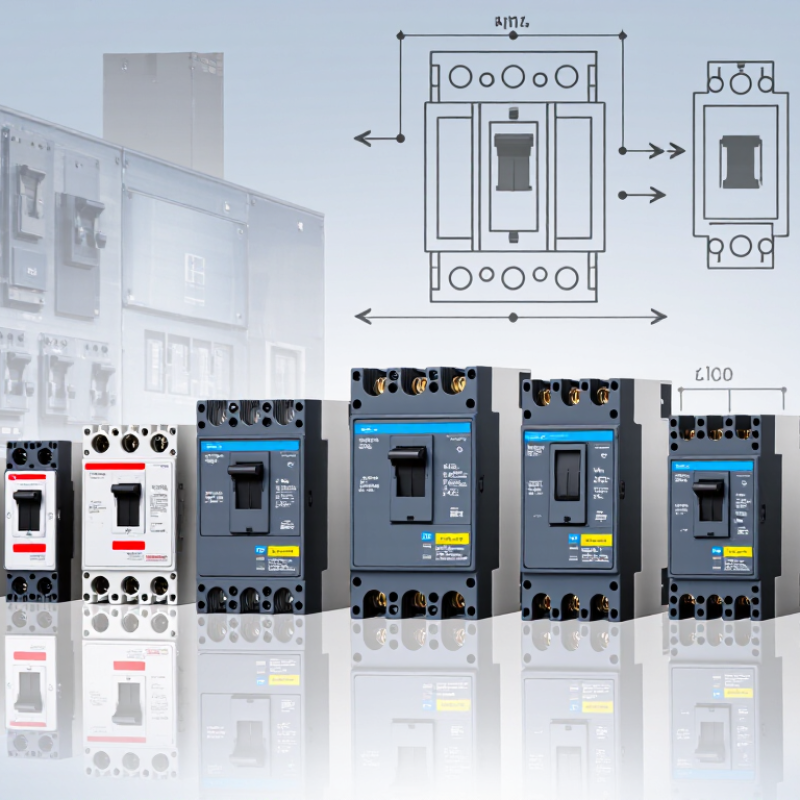
An air circuit breaker (ACB) protects low-voltage power systems by interrupting excessive current. In a switchboard, sensors monitor the current flowing through the breaker. If an overload or short circuit exceeds its set limits, a trip unit releases the operating mechanism. The contacts separate, and an arc forms between them. This is where the air-based design matters: arc chutes divide, cool, and extinguish the arc. The interruption happens quickly, but the breaker must still be selected for the system’s expected fault level.
ACBs are commonly used as main incoming breakers, bus couplers, or feeder protection in factories, commercial buildings, and large electrical rooms. Their accessible construction can support inspection and testing, which is useful in facilities where downtime is costly. Settings should coordinate with downstream devices, so a smaller fault does not unnecessarily shut down an entire panel. Heat leaves clues. Discoloration, unusual odors, or loose connections deserve attention, though none alone proves a specific fault. Regular checks should follow the equipment instructions and site procedures. An ACB is not a substitute for careful system design; even a correctly rated unit can perform poorly when settings, maintenance, or installation conditions are overlooked.
China Top 10 ACB Electrical Manufacturers
Criteria for Evaluating ACB Manufacturers in China
Choosing an air circuit breaker manufacturer takes more than comparing prices or catalog ratings. Check rated current, breaking capacity, insulation voltage, and operating life against your project requirements. Ask for test reports that match the exact model, not just a similar product family. Review how the factory controls materials, assembly, and routine testing. A brief factory audit can reveal whether inspection records are consistent. Details matter.
Tips: Request sample test documents and clarify what each test covers. Confirm lead times, spare-part availability, and technical support before placing an order. Ask how the supplier handles product changes; small design revisions can affect compatibility.
Also assess communication and documentation quality. Clear drawings, wiring diagrams, and installation instructions help reduce errors during commissioning. Verify that stated certifications and test results are current and independently traceable where applicable. Compare several suppliers using the same criteria, then record the evidence behind each score. No checklist is perfect. A low price may still be reasonable, but unexplained gaps in testing or service deserve closer review. Revisit your assumptions before making a final shortlist.
Profiles of 10 Chinese ACB Electrical Manufacturers
A useful profile compares engineering evidence, not just catalog breadth. The International Energy Agency’s Electricity 2024 report estimated global electricity demand grew by 4.3% in 2024. That growth adds pressure to distribution systems, but it does not prove every ACB supplier is equally prepared. For each of ten Chinese manufacturers, check rated current, breaking capacity, pole options, and fixed or withdrawable construction. Ask for test reports tied to the exact model, not a similar product family. Small detail. A trip unit’s settings and event records can matter as much as the breaker’s frame.
The profiles should also show practical differences: some manufacturers emphasize compact panels, while others offer broader current ranges or customization. Verify whether stated ratings match the intended voltage and installation conditions. Look for temperature-rise, endurance, and short-circuit test evidence, plus clear service instructions. Factory audits can reveal whether assembly checks are documented and repeatable. A polished brochure is not field proof. For a fair comparison, record delivery support, spare-part availability, and response times alongside technical data. One weakness in many public profiles is limited independent performance evidence; buyers should treat unverified claims cautiously and request traceable documentation before selection.
China’s leading ACB electrical manufacturers differ in product range, certification coverage, and market focus. Some offer fixed, draw-out, and intelligent air circuit breakers across several current ratings. Others concentrate on fewer models but provide more configuration options. Compare rated current, breaking capacity, pole count, and control accessories against your project specifications. A broad catalogue is useful only when the required model is available and supported.
Certifications can help assess quality systems and product suitability, but check the exact model and certificate scope. A certificate for one series may not cover every frame size or accessory. Ask for test reports, technical data sheets, and clear warranty terms. Market strength also varies: some manufacturers have established export support, while others focus on domestic projects or custom orders. Response time and spare-part availability matter. A polished catalogue alone proves little.
Tips: Compare the same ratings and test conditions across suppliers. Request a sample datasheet and confirm lead times in writing. One detail is easy to miss: installation space can affect which breaker fits.
China Top 10 ACB Electrical Manufacturers
How to Choose an ACB Manufacturer for Your Project
When comparing ACB manufacturers in China, begin with your project’s electrical data, not a catalogue price. Confirm rated current, voltage, number of poles, and short-circuit breaking capacity against the panel design. Ask whether the trip unit supports the protection functions required by your coordination study. A rating that looks close may not suit the actual duty. Check enclosure dimensions, busbar connections, and operating temperature too; these details affect installation and heat performance.
Tips: Request routine test records, type-test evidence, and a clear product data sheet. Confirm the test standard and document revision. Ask how spare parts, technical questions, and warranty claims are handled. Get response times in writing. If possible, inspect a sample or observe a production test. Small details matter.
Not price alone. Compare lead time, traceability, change control, and after-sales support alongside cost. Check that the drawings match the delivered breaker and that settings can be verified during commissioning. A terminal mismatch can delay a project—easy to overlook, but avoidable. Even a good checklist cannot replace an engineer’s review of the final protection scheme. Revisit your shortlist after checking actual documents, not just polished sales pages.
Selection guide: This table presents ten practical evaluation criteria, not a ranked list of manufacturers. Compare suppliers using project-specific datasheets, certificates, and test records.
| No. | Evaluation Dimension | What to Verify | Typical Data or Evidence | Why It Matters |
|---|---|---|---|---|
| 1 | Rated Current and Frame Size | Confirm that the breaker’s rated current and frame size suit the calculated load, ambient conditions, and required future capacity. | Commercial ACB ranges commonly include ratings from about 630 A to 6,300 A; available values depend on the product series. | A suitable rating supports reliable operation without unnecessary oversizing or inadequate capacity. |
| 2 | Rated Operational Voltage | Check the rated operational voltage (Ue), system frequency, number of poles, and earthing arrangement against the project’s electrical system. | Low-voltage ACBs are commonly specified for systems such as 400 V or 690 V AC; always confirm the exact product rating. | Voltage and system configuration affect safe application and compatibility with the installation. |
| 3 | Breaking Capacity | Compare the breaker’s rated ultimate short-circuit breaking capacity (Icu) and rated service short-circuit breaking capacity (Ics) with the prospective fault current. | Request the manufacturer’s ratings at the actual operating voltage; breaking-capacity values vary by model and voltage. | The selected breaker must be able to interrupt the fault current available at its point of installation. |
| 4 | Short-Time Withstand and Selectivity | Verify rated short-time withstand current (Icw), its stated duration, and coordination settings with upstream and downstream protective devices. | Check the time-current curves and coordination study; do not infer selectivity from current rating alone. | Proper coordination can help isolate a fault while maintaining supply to unaffected parts of the system. |
| 5 | Trip Unit and Protection Functions | Review long-time, short-time, instantaneous, and ground-fault protection functions where required, along with adjustment ranges and measurement features. | Request the trip-unit datasheet, protection-setting ranges, and relevant test or configuration instructions. | Protection settings must match the system design and applicable coordination requirements. |
| 6 | Installation Type and Enclosure Compatibility | Determine whether a fixed or draw-out construction is required, and verify dimensions, terminal arrangement, clearances, and interlocking needs. | Obtain dimensional drawings and verify compatibility with the switchboard design before ordering. | Physical fit, maintainability, and safe isolation depend on the chosen construction and panel layout. |
| 7 | Standards and Certification | Check that the offered model is designed and tested to the applicable low-voltage circuit-breaker standards and project requirements. | Ask for the relevant IEC 60947-2 and applicable GB/T 14048.2 documentation, plus certificates and test reports for the offered model. | Documentation helps demonstrate that the product has been evaluated against recognized technical requirements. |
| 8 | Accessories and Control Compatibility | Confirm required shunt releases, undervoltage releases, motor operators, auxiliary contacts, communication options, and control-voltage ratings. | Request an accessory schedule and wiring diagrams that identify the exact compatible components. | Accessory availability and compatibility affect remote operation, monitoring, and integration with the control system. |
| 9 | Quality Control and Traceability | Review production quality controls, serial-number traceability, routine inspection records, and the factory acceptance test process. | Request a sample inspection record, test checklist, and details of how the supplied unit is identified and documented. | Traceable records support incoming inspection, commissioning, and future maintenance. |
| 10 | Delivery, Warranty, and After-Sales Support | Clarify lead time, warranty terms, spare-parts availability, technical support, commissioning assistance, and response procedures. | Obtain written commercial terms, a parts list, and service contact arrangements for the project location. | Reliable support can reduce commissioning delays and help maintain equipment throughout its service life. |
Ratings and configurations are product-specific. Confirm all values against the exact model’s nameplate, technical datasheet, applicable standards, and project fault and coordination studies before purchase.