#4 – 20133 102nd Avenue, Langley, B.C. V1M 4B4 Canada

#4 – 20133 102nd Avenue, Langley, B.C. V1M 4B4 Canada
Choosing the right Ultrapure Water Equipment is a technical decision, not merely a purchasing exercise. Laboratories, semiconductor plants, hospitals, and pharmaceutical facilities require water with tightly controlled resistivity, conductivity, organic carbon, particles, and microbial levels. A system that performs well in a research laboratory may fail under continuous industrial demand. Capacity matters. So does maintenance.
Global buyers often compare reverse osmosis systems, electrodeionization units, ultrafiltration modules, UV sterilizers, polishing cartridges, and complete ultrapure water dispensers. Each type addresses a different stage of purification. For example, reverse osmosis may reduce dissolved salts and particles, while a final polishing unit can produce water suitable for sensitive analytical instruments. A visible display is useful, but verified performance data matters more.
This guide examines ten common equipment types and explains where each one fits. It considers feed-water quality, daily volume, installation space, consumables, validation records, and after-sales support. These details affect the total cost long after delivery. Buyers should also review recognized testing methods and request recent certificates from suppliers. Marketing language can sound impressive. It is not always enough.
Real facilities are less tidy than brochures suggest. Filters clog earlier than expected. Operators make mistakes. A reliable design includes alarms, clear replacement instructions, and service access. No single machine suits every site. Careful selection begins with measurable water requirements and honest conversations with qualified manufacturers. That approach supports safer operation, consistent results, and more defensible purchasing decisions across international markets.
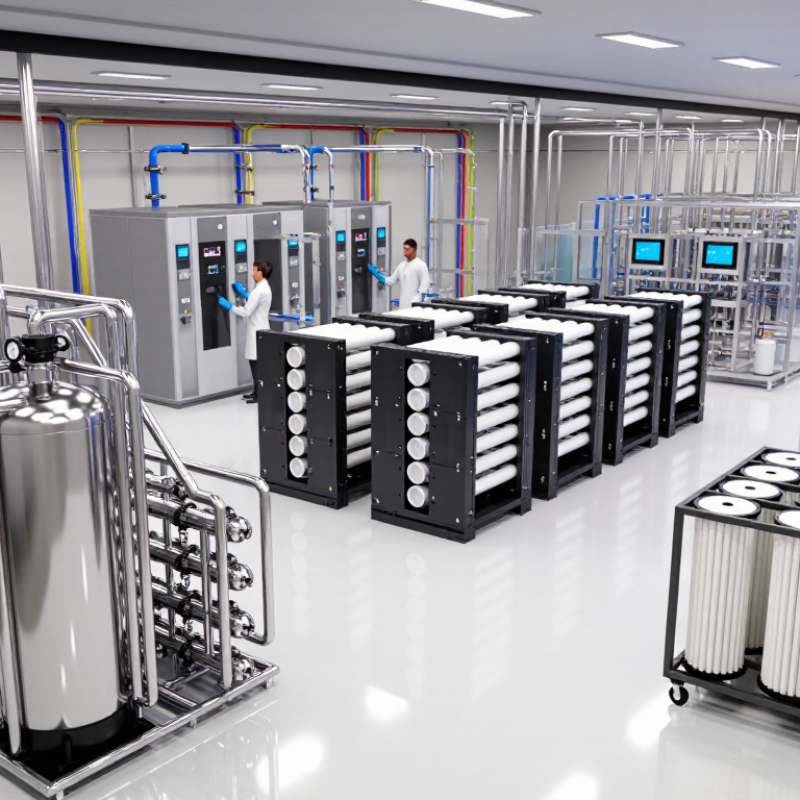
Ultrapure water equipment is defined by water quality, process control, and verified performance. It is not simply a large filter with a polished appearance. In many laboratories, ultrapure water reaches 18.2 megohm-centimeters at 25°C. However, resistivity alone does not prove suitability. Total organic carbon, particles, bacteria, and endotoxins may also require control.
Global buyers should examine the complete treatment path. Pretreatment protects membranes from sediment, hardness, and chlorine. Reverse osmosis reduces dissolved contaminants. Deionization, ultraviolet treatment, ultrafiltration, and final polishing address different risks. Each stage needs documented specifications, realistic flow rates, and compatible materials. A stainless-steel loop may support distribution, while point-of-use filters protect sensitive applications.
The intended use defines the equipment. Cell culture, chromatography, semiconductor cleaning, and analytical testing demand different quality controls. Reliable systems include calibrated sensors, alarm records, sampling points, and maintenance instructions. They should also explain how performance changes with feed-water temperature and seasonal quality. Local technicians matter, especially when replacement parts cross borders.
A perfect specification can still fail in daily operation. I have seen systems perform well during commissioning but drift after neglected filter changes. Buyers should request validation data, service intervals, and contamination-control procedures. They should question unclear claims. Lower purchase cost may bring higher operating risk, particularly where water quality varies sharply. Good equipment makes quality measurable, repeatable, and practical for the people using it.
Ultrapure water production depends on several connected technologies, not one powerful filter. Pretreatment equipment removes sand, rust, and suspended solids before sensitive membranes operate. Activated carbon reduces chlorine and organic compounds. Water softeners control hardness and protect downstream surfaces.
Reverse osmosis usually provides the main separation stage. It removes dissolved salts, microorganisms, and many trace contaminants through a semi-permeable membrane. Ultrafiltration can capture colloids and larger biological particles. Electrodeionization then reduces ionic impurities without frequent chemical regeneration. Mixed-bed ion exchange remains useful for final polishing, although its resin requires careful monitoring. Degasification equipment removes carbon dioxide that can increase conductivity.
Ultraviolet systems help control microorganisms and break down residual organic matter. Final membrane filters provide a physical barrier near the point of use. Hygienic storage tanks and recirculating distribution loops protect water after treatment. Online sensors track resistivity, conductivity, temperature, total organic carbon, and microbial trends. Control is continuous. Small details matter.
In practical installations, dead legs, poor sampling points, and warm pipe sections can undermine excellent equipment. I have seen stable readings hide contamination in neglected outlets. That experience makes routine sanitization and documented maintenance essential. No system is perfect. Designers must balance flow rate, recovery, energy use, and laboratory requirements. Even a well-designed plant needs review when feedwater quality changes.
Core technologies used in ultrapure water production and their representative treatment performance. Actual results depend on feed-water quality, system design, operating conditions, and validation methods.
The percentages represent typical removal or inactivation levels for the primary contaminant targeted by each technology; they are not directly comparable across different contaminant categories.
Global buyers should match equipment with water quality targets, feed-water conditions, and daily demand. The ten main types include reverse osmosis systems, distillation units, electrodeionization modules, mixed-bed ion exchange polishers, and ultraviolet oxidation units. Each removes different impurities. Reverse osmosis reduces dissolved salts, while distillation uses heat to separate many contaminants. Electrodeionization continuously removes ions with electricity and resin.
Ultrafiltration units control particles, colloids, and some biological materials. Microfiltration systems provide a finer physical barrier, often near the final distribution point. Activated carbon filters reduce chlorine and organic compounds before sensitive membranes. Membrane degassing equipment removes dissolved carbon dioxide, which can affect resistivity readings. Storage and distribution systems protect treated water after production. Their design may include smooth tubing, recirculation, and hygienic fittings.
I have seen buyers focus on the purifier and overlook the loop. That is a costly mistake. Dead legs can hold stagnant water, even when the main unit performs well. A practical specification should define resistivity, total organic carbon, microbial limits, and required flow. Many laboratory systems target 18.2 MΩ·cm, but that number alone proves little. Sensors need calibration, filters require planned replacement, and sanitization records must be complete. Some designs still need revision after commissioning. Real operating data often reveals pressure changes, seasonal feed-water variation, or cleaning habits that initial documents miss.
Top 10 Types of Ultrapure Water Equipment for Global Buyers
Ultrapure water systems differ mainly in separation method, operating cost, and contamination control. Reverse osmosis removes salts, particles, and many organic compounds through a pressure-driven membrane. It suits high-volume pretreatment but still needs polishing. Ultrafiltration targets colloids, bacteria, and endotoxins, while microfiltration mainly removes larger particles. Nanofiltration sits between them, reducing hardness and selected organic contaminants with moderate pressure.
Deionization systems use ion-exchange resin to capture dissolved ions. They can produce low-conductivity water, but exhausted resin requires careful replacement and monitoring. Electrodeionization combines electrical separation with ion-exchange media. It offers continuous polishing and avoids frequent chemical regeneration. Distillation uses boiling and condensation, delivering strong microbial control and stable purity. However, it consumes considerable energy. Ultraviolet equipment reduces microorganisms and breaks down trace organics. Performance depends on lamp intensity, exposure time, and water clarity.
Ultrapure polishing units often combine mixed-bed deionization, final filtration, and ultraviolet treatment. They are common at laboratory points of use, where small changes in resistivity matter. Degasification equipment removes dissolved carbon dioxide and other gases, helping stabilize conductivity. Storage tanks and recirculation loops protect treated water after production. Their design affects stagnation, temperature, and biofilm risk. Point-of-use filters provide final particle or microbial control directly beside the instrument. That sounds simple. In practice, filter loading and poor maintenance can reduce performance quickly. No single equipment type wins every test; feedwater, flow rate, target quality, and operator discipline decide the result.
| No. | Equipment Type | Operating Principle | Typical Feed Water | Typical Product Quality | Typical Flow Range | Main Contaminants Removed | Best-Fit Applications | Key Performance Advantage | Main Limitation |
|---|---|---|---|---|---|---|---|---|---|
| 1 | Reverse Osmosis System | Pressure-driven membrane separation through a semipermeable membrane. | Municipal water, softened water, or prefiltered water. | Typically 95–99% salt rejection; conductivity commonly reduced to approximately 5–50 µS/cm, depending on feed quality and design. | 0.1–100 m³/h | Dissolved salts, hardness, heavy metals, microorganisms, particles, and many organic compounds. | Primary purification for laboratories, electronics plants, hospitals, and industrial water systems. | High contaminant removal with relatively low energy consumption compared with thermal processes. | Requires pretreatment and produces a reject-water stream; it normally does not achieve ultrapure quality alone. |
| 2 | Electrodeionization Unit | Uses ion-exchange resins, selective membranes, and an electric field to continuously remove ions. | RO permeate with low hardness, low carbon dioxide, and low particulate loading. | Often up to 10–18 MΩ·cm at 25°C when correctly integrated and operated. | 0.05–20 m³/h | Ionic contaminants, including cations, anions, and weakly ionized species to a limited extent. | Continuous production of Type II or high-quality process water after RO. | No routine chemical regeneration and stable continuous operation. | Sensitive to feed-water quality, carbon dioxide, silica, hardness, and oxidizing contaminants. |
| 3 | Deionization Cartridge System | Ion-exchange resins exchange hydrogen and hydroxide ions for dissolved cations and anions. | RO water or relatively low-conductivity pretreated water. | Can produce up to 18.2 MΩ·cm water when used as a final polishing stage. | 0.5–500 L/min | Dissolved ionic contaminants, including salts, acids, bases, and some metal ions. | Point-of-use polishing, laboratory water dispensers, and low-to-medium flow applications. | Compact design and very high ionic removal capability. | Resin capacity is finite; exhausted cartridges must be replaced or regenerated, and organics may pass through. |
| 4 | Ultraviolet Disinfection System | Ultraviolet radiation, commonly near 254 nm, damages the DNA of microorganisms and prevents reproduction. | Filtered, low-turbidity purified water. | Provides microbial inactivation; it does not significantly reduce conductivity or dissolved solids. | 0.1–100 m³/h | Bacteria, viruses, and other microorganisms; performance depends on UV dose and water transmittance. | Microbial control in storage tanks, distribution loops, and purified-water systems. | Rapid, chemical-free disinfection with no residual disinfectant added to the water. | Offers no lasting residual protection and requires lamp monitoring, cleaning, and periodic replacement. |
| 5 | UV Photo-Oxidation Unit | High-energy UV radiation, often around 185/254 nm, breaks down organic compounds and supports oxidation to carbon dioxide and water. | Deionized or RO-treated water requiring low total organic carbon. | TOC can commonly be reduced to below 5–10 ppb in a properly designed ultrapure-water loop. | 1–100 L/min | Trace organic compounds and microorganisms; some systems also reduce residual oxidizable contaminants. | Semiconductor, pharmaceutical, analytical, and molecular biology applications. | Effective control of organic contamination that ion-exchange alone may not remove. | Performance depends on UV intensity, lamp age, water quality, and adequate downstream polishing. |
| 6 | Ultrafiltration System | Pressure-driven membrane separation using membranes with pores typically in the nanometer range. | RO or deionized water, usually after particulate and organic pretreatment. | Strong reduction of particles, colloids, bacteria, endotoxins, and macromolecules; dissolved ions generally remain. | 0.05–50 m³/h | Suspended solids, colloids, microorganisms, endotoxins, proteins, and other high-molecular-weight substances. | Biotechnology, pharmaceutical water systems, laboratory polishing, and final particle control. | Excellent removal of microorganisms and large organic molecules without changing ionic balance substantially. | Does not remove most dissolved salts and requires control of membrane fouling and cleaning. |
| 7 | Submicron Final Filtration System | Mechanical depth or membrane filtration captures particles by size exclusion and, in some media, adsorption. | Purified or deionized water from a storage and distribution system. | Common ratings include 0.1, 0.2, or 0.45 µm nominal or absolute filtration, depending on the filter design. | 0.1–500 L/min | Particles, filterable bacteria, and some colloidal material. | Point-of-use protection for laboratory instruments, wet benches, and critical dispensing points. | Simple installation and effective control of particulate contamination close to the user. | Does not remove dissolved ions or most low-molecular-weight organics; filters require periodic replacement. |
| 8 | Ultrapure Water Recirculation Loop | Continuously circulates purified water through treatment, storage, monitoring, and distribution components. | RO/EDI water or previously polished ultrapure water. | Can maintain approximately 18.2 MΩ·cm, low TOC, and controlled microbial levels when properly designed. | 0.2–20 m³/h loop circulation | Controls recontamination, particles, ions, and microorganisms introduced during storage and distribution. | Multi-user laboratories, pharmaceutical facilities, hospitals, and electronics manufacturing. | Maintains quality at multiple outlets and reduces stagnant-water zones. | Higher installation cost and complexity; dead legs, unsuitable materials, and low flow can quickly degrade quality. |
| 9 | Water Distillation System | Evaporates water and condenses the vapor, separating many nonvolatile contaminants from the product stream. | Potable or pretreated water. | Typically produces distilled water with low dissolved solids; final resistivity is generally below that of fully polished ultrapure water unless followed by deionization. | 1–500 L/h | Many salts, heavy metals, microorganisms, particles, and nonvolatile contaminants. | Laboratories, pharmaceutical production, and applications requiring a robust thermal purification step. | Strong microbial control and broad removal of nonvolatile contaminants. | High energy demand, slower production, and possible carryover of volatile compounds without additional treatment. |
| 10 | Integrated Ultrapure Water System | Combines pretreatment, RO, deionization or EDI, UV, filtration, storage, monitoring, and point-of-use polishing. | Municipal, softened, or other validated feed water. | Designed to meet application-specific Type I, Type II, or Type III water requirements; Type I systems may reach 18.2 MΩ·cm at 25°C. | 0.02–20 m³/h product flow | Particles, dissolved ions, organics, microorganisms, endotoxins, and other contaminants through staged treatment. | Research laboratories, clinical testing, pharmaceutical manufacturing, and high-purity industrial processes. | Provides the most complete control of water quality through coordinated treatment stages and online monitoring. | Highest capital and maintenance requirements; performance depends on correct system configuration and operating discipline. |
International buyers should evaluate ultrapure water equipment by application, not by product ranking alone. Start with the feed water. Municipal water, groundwater, and pretreated process water create different loads for reverse osmosis, ultrafiltration, electrodeionization, ultraviolet treatment, and final polishing systems.
Define the required quality in measurable terms. Resistivity, conductivity, total organic carbon, microbial control, silica, and particle levels should match the laboratory or production process. Ask for test methods, sampling conditions, and calibration records. A quoted resistivity value means little without temperature compensation details. It is easy to overlook this point.
Capacity must reflect real operating conditions. A system rated at 1,000 liters per hour may perform differently at low inlet pressure or high water temperature. Request flow curves, recovery rates, rejection data, and expected consumable life. Examine the storage tank, circulation loop, sensors, alarms, and drain requirements, not only the main treatment cabinet.
International purchasing also requires practical support. Confirm electrical standards, language options, spare-part availability, remote diagnostics, installation training, and response times. Documentation should include piping diagrams, maintenance schedules, safety information, and factory test results. Local service matters more than impressive specifications.
Suppliers should explain validation boundaries. No system remains stable without routine sanitization, filter replacement, and water-quality monitoring. Buyers should budget for these activities from the beginning. My own purchasing reviews have shown that the cheapest quotation can become expensive after freight, customs, installation changes, and delayed spare parts. Warranty terms deserve careful reading. Some assumptions may be wrong. Recheck them with site data.