#4 – 20133 102nd Avenue, Langley, B.C. V1M 4B4 Canada

#4 – 20133 102nd Avenue, Langley, B.C. V1M 4B4 Canada
Cement Batch Plants play a crucial role in the global construction industry. According to a report by Grand View Research, the concrete batching market is expected to reach USD 6.6 billion by 2025. This growth reflects the increasing demand for efficient and reliable solutions in concrete production. In this context, Cement Batch Plants are essential for buyers worldwide looking to optimize their operations.
These plants offer numerous advantages, including enhanced productivity and cost-effectiveness. For example, they allow for precise control over the mix, ensuring consistent quality. Furthermore, advanced technology in Cement Batch Plants enables automation, reducing the likelihood of human error. However, it is essential to analyze the long-term benefits against initial costs.
Buyers must also consider the environmental impact. Cement Batch Plants can be designed to reduce waste and emissions. Yet, some systems may not meet current standards in sustainability. Thus, a deep understanding of the technology and its implications is vital for making informed decisions. The advantages of Cement Batch Plants are undeniable, but responsible choices must guide their adoption.
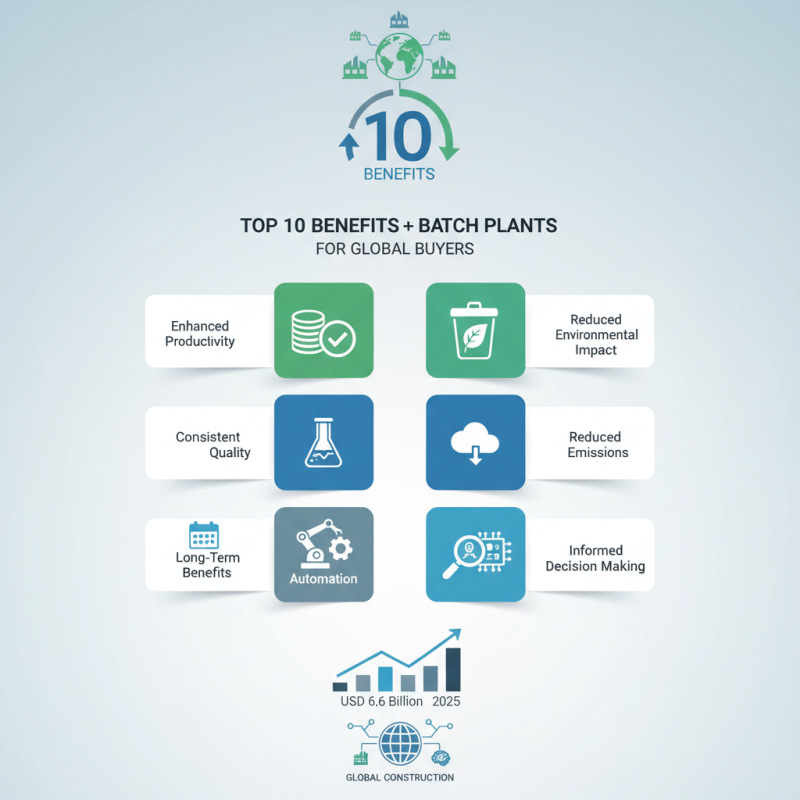
Cement batch plants offer significant advantages for global buyers. These facilities play a crucial role in the construction industry, ensuring consistent quality and efficiency. According to the Global Cement Report, around 4 billion tons of cement are produced annually, with batch plants contributing to quality control. Buyers benefit from uniform concrete mixes, crucial for structural integrity.
Cost efficiency is another key advantage. Batch plants reduce material waste and lower transportation costs. A report by Research and Markets highlights that implementing modern batch plants can decrease operational costs by up to 30%. However, the initial investment is considerable. Buyers must evaluate long-term savings versus upfront costs.
Customization capabilities are vital for diverse projects. Batch plants can adjust mix designs based on specific requirements. This flexibility can enhance project outcomes. Yet, ensuring proper training for operators is essential. Inadequately trained staff may lead to inconsistencies, negating the benefits. Continuous improvement is necessary to maintain operational and product quality.
Cement batch plants play a crucial role in enhancing production efficiency for global construction projects. These facilities enable precise mixing of materials, resulting in high-quality concrete. This accuracy leads to reduced waste, which is vital for sustainable project management. By optimizing material use, projects can stay within budget.
Onsite production is another significant benefit. Transporting materials can be time-consuming and costly. Batch plants allow construction teams to mix concrete as needed. This flexibility ensures that projects can adapt to changing demands. However, this approach requires careful planning and management to avoid potential delays.
Training staff on the equipment is essential. Users must be aware of operational protocols and safety measures. Without proper training, the risk of accidents or production errors increases. Furthermore, routine maintenance of the equipment is necessary to prevent downtimes. Investing time in staff development and equipment upkeep is crucial for maintaining efficiency.
Cement batch plants offer significant cost-effectiveness for global buyers. A recent report indicates that these plants can reduce production costs by up to 30%. This is due to their ability to minimize raw material waste and optimize resource allocation. The efficiency of automation technology in modern batch plants enhances output while lowering operational expenses.
Additionally, transportation costs are a critical factor. Cement is heavy, and shipping can impact the bottom line. Batch plants located closer to the construction sites can cut these costs significantly. Industry data shows that proximity can reduce transportation costs by nearly 20%. However, not all buyers consider these savings upfront, leading to overlooked potential.
Investing in a cement batch plant also supports more sustainable practices. With precise mixing, the waste generated is minimized, benefiting both the environment and the economy. Still, maintaining a balance between initial investment and long-term savings can be challenging. Buyers must analyze their specific needs to truly capitalize on these benefits.
Cement batch plants offer a variety of customization options suitable for diverse market needs. Buyers can choose from different capacities, configurations, and technology integrations. This adaptability allows businesses to tailor their operations. For example, a small construction company may require a compact, mobile batch plant, while a large infrastructure project needs a more robust, stationary setup.
Customization extends beyond physical characteristics. Software solutions can enhance efficiency. Real-time monitoring tools enable remote control and diagnostics. However, not all customization options are equally effective for every buyer. Some features may become underutilized, leading to unnecessary complexity.
Choosing the right features requires careful deliberation. It’s easy to get overwhelmed by the options. An informed decision involves assessing specific project needs and future growth plans. Reflecting on these aspects ensures that the chosen plant provides long-term value. Ultimately, understanding customization is crucial for maximizing the benefits of cement batch plants.
Modern cement batch plants are transforming the construction industry. They offer significant environmental benefits, essential for global buyers. A report from the International Cement Association highlights that these plants can reduce carbon emissions by up to 30%. This reduction is crucial in combating climate change and promoting sustainability.
Cement batch plants incorporate advanced technologies. These systems utilize recycled materials, minimizing waste. According to the Global Cement Report, the use of alternative fuels in these plants can cut emissions significantly. Additionally, efficient mixing reduces the chances of overproduction, which is a common issue. This efficiency not only saves resources but also lowers costs for buyers.
However, challenges remain. Not all cement batch plants are equally efficient in their operations. Some still rely on outdated machinery, increasing their carbon footprint. Continuous evaluation and upgrades are necessary for the industry to meet stricter environmental regulations. Stakeholders must prioritize investments in newer technologies to maximize benefits.