#4 – 20133 102nd Avenue, Langley, B.C. V1M 4B4 Canada

#4 – 20133 102nd Avenue, Langley, B.C. V1M 4B4 Canada
Choosing a Safety Contactor manufacturer is not just a brand comparison. It is a decision about how reliably a machine stops when a hazardous condition appears. Safety researcher James Reason captured the wider principle: “We cannot change the human condition, but we can change the conditions under which humans work.” His words are not about contactors specifically, but they explain why dependable safety design matters.
This overview compares manufacturers through practical details: product range, documented ratings, diagnostic features, certification information, and support for selection and maintenance. A compact contactor may suit a small control cabinet, while a demanding machine application may require monitored contacts, coordinated components, and clear replacement guidance. Details matter. A catalogue claim alone cannot show how a device will perform in a particular circuit.
The strongest choice depends on the application, not a universal ranking. Buyers should check the required safety performance, switching duty, environmental conditions, and compatibility with the control system. They should also confirm current documentation with the manufacturer. Availability and product lines can change, so any comparison has limits. This guide offers a starting point, not a substitute for engineering review. It also leaves room for a less tidy reality: a respected brand can still be the wrong fit when support, lead time, or integration falls short.
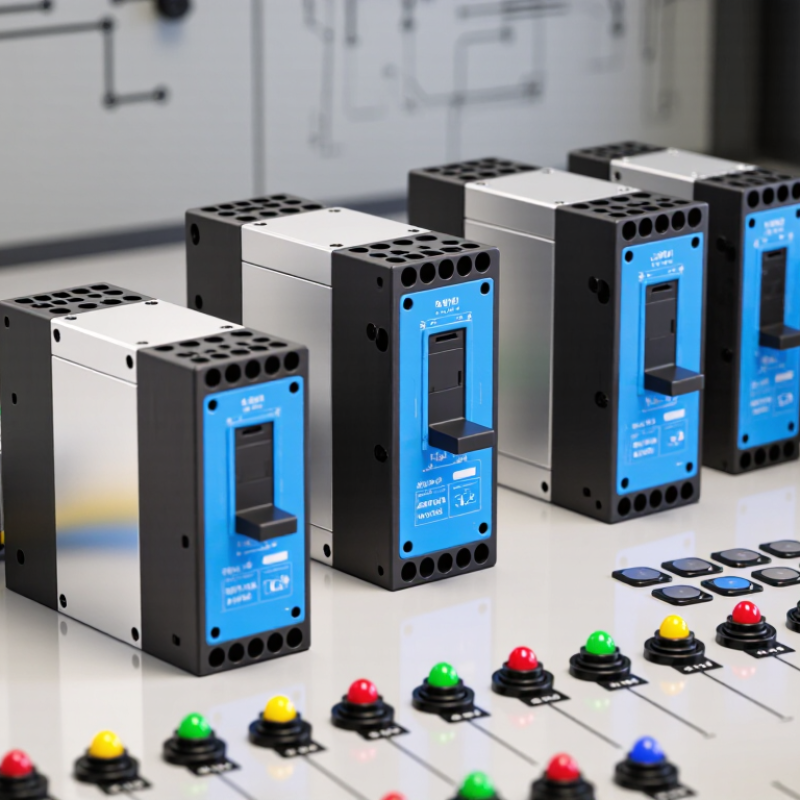
A safety contactor is an electrically controlled switch used to disconnect power from equipment when a safety circuit detects a hazardous condition. For example, opening a machine guard can signal a safety relay to de-energize contactors supplying a motor. The motor then stops receiving power. That distinction matters: a contactor acts on a safety command; it does not detect danger by itself.
In many systems, two contactors are used together, with feedback contacts that let the controller check whether the main contacts have opened. If a contact welds shut, monitoring can help prevent a restart.
Not a complete safeguard. Contactors must be selected for the load, switching frequency, coil voltage, and expected fault conditions. A motor starting repeatedly may place very different demands on contacts than a heater circuit. Installation details matter, too: wiring, protective devices, and routine inspection all affect reliable operation. It is tempting to treat a safety-rated component as a guarantee, but the whole control system must be designed and tested as a system.
Choosing a safety contactor manufacturer starts with the machine’s risk assessment, not a catalog headline. Check whether the rated current, utilization category, coil voltage, and switching frequency match the actual load. For a motor panel, compare the specified duty with starting current and expected operating cycles. Small mismatches matter.
Review evidence, not broad assurances. Request current certificates, applicable test reports, product datasheets, and clear identification of the exact model and revision. Confirm how mirror contacts are specified and monitored in the intended circuit. Check electrical and mechanical endurance data, terminal temperature limits, short-circuit coordination guidance, and environmental ratings. Paperwork should match the delivered unit.
Manufacturing consistency deserves equal attention. Ask about lot traceability, inspection stages, component-change control, and how defects are investigated. A capable supplier should explain installation, maintenance, and replacement support without vague promises. Check technical assistance and realistic lead times. Proof matters. One uncomfortable point: even strong documentation cannot compensate for incorrect circuit design, so have a qualified engineer validate the complete safety function.
Leading safety contactor manufacturers distinguish themselves through reliable switching, clear diagnostics, and products suited to different machine designs. A strong product range may include compact units for crowded control cabinets and higher-current models for demanding motor circuits. Look for mechanically linked or mirror contacts that help a control system detect welded main contacts. Useful details matter. Terminal markings should remain readable after installation, and wiring instructions should show how the device works with a safety relay or controller. These features support safer system design, but the contactor alone does not make a machine safe.
Manufacturers also differ in endurance testing, accessory options, and technical support. Some offer auxiliary contacts, surge suppression, and mounting accessories that simplify panel assembly. Others provide detailed switching-life data and application guidance for frequent starts or harsh operating conditions. Check whether published ratings match the actual load, duty cycle, and ambient temperature. A rating on paper can be misleading if the application differs. Installation quality matters, too. A slightly awkward terminal layout can slow maintenance, even when the electrical specifications look excellent. Compare certifications, compatibility information, and replacement availability before choosing a supplier; documentation is often less glamorous than product design, yet it can prevent costly selection errors.
What Are the Top Safety Contactor Manufacturers?
How Major Manufacturers Differ in Features and Applications
Safety contactor manufacturers differ in more than rated current. Their designs may prioritize compact mounting, diagnostic feedback, coil-energy efficiency, or resistance to frequent switching. In a control cabinet, those choices affect wiring space, heat, and fault finding. Small details matter. Check rated operational current against the actual motor load, not just its nameplate category.
Application drives the comparison. A packaging line with frequent stops needs components suited to repeated switching; a pump panel may place greater value on clear status feedback and straightforward maintenance. The U.S. Department of Energy’s 2014 Improving Motor and Drive System Performance report estimates motor-driven systems consume about 68% of U.S. manufacturing electricity. That figure highlights the scale of motor applications, though it does not determine which contactor is safest. Fit matters more than a headline specification.
For machinery, review contactor ratings alongside the safety architecture, overload protection, and short-circuit coordination. IEC 60947-4-1 covers contactors and motor-starters, while ISO 13849-1 addresses safety-related control-system performance. Neither standard makes a product suitable for every installation. Compare documented switching endurance, mirror-contact feedback where required, and compatibility with the control voltage. One practical caveat: catalog data rarely reflects cabinet temperature or real switching cycles. Verify those conditions before selecting a device.
| Manufacturer Profile | Typical Product Approach | Safety and Monitoring Features | Common Applications | Selection Considerations |
|---|---|---|---|---|
| Broad-line industrial supplier | Offers safety contactors alongside a wide range of control and automation components. Product families may cover multiple coil voltages, pole configurations, and motor-load ratings. | Depending on the model, may provide positively guided or mirror contacts for status monitoring and integration with a safety relay or safety controller. | General machinery, factory automation, packaging equipment, and control panels. | Check the exact utilization category, rated operational current, coil voltage, auxiliary-contact arrangement, and compatibility with the control system. |
| Safety-system specialist | Emphasizes components designed to work as part of a coordinated safety circuit, with documentation and product guidance for system integration. | May offer feedback contacts and clear wiring information for monitoring contactor switching. The required safety performance depends on the complete circuit, not the contactor alone. | Machine guarding, emergency-stop circuits, interlocked access, and safety-related motor isolation. | Confirm the contactor’s applicable approvals and ratings, and assess the complete safety function using the relevant risk assessment and design standards. |
| Compact-control equipment supplier | Focuses on space-efficient devices for control cabinets and smaller machines, with attention to mounting and wiring convenience. | Available feedback and auxiliary-contact options vary by product. Compact dimensions do not replace the need for correctly rated safety monitoring. | Compact machinery, small production lines, panel building, and equipment with limited cabinet space. | Compare device width, heat dissipation, terminal access, required accessories, and electrical ratings under the actual operating conditions. |
| Heavy-duty switching supplier | Provides contactors intended for demanding switching duties or higher-current applications; the available range and ratings differ by product family. | Safety-related feedback options are model-specific. Switching frequency, electrical endurance, and suitable protection must be checked against the application. | Larger motors, industrial process equipment, material handling, and other higher-duty installations. | Verify motor-load ratings, short-circuit coordination, switching duty, ambient-temperature limits, and the required protective devices. |
| Application-focused machine-control supplier | Provides product options aimed at particular machine types or control architectures, sometimes with application-specific accessories or documentation. | Feature availability depends on the selected model and system design. A contactor by itself does not establish a safety integrity level or performance level for a machine. | Purpose-built machinery, automated work cells, and systems with defined control-panel or safety-controller requirements. | Check whether the device integrates with the specified safety relay or controller, and validate wiring, diagnostics, and system-level safety calculations. |
What Are the Top Safety Contactor Manufacturers?
Choosing a safety contactor manufacturer starts with your machine, not a catalogue ranking. Define the control voltage, motor load, switching frequency, available space, and operating conditions. A contactor near a hot, dusty enclosure door may need different environmental ratings from one inside a climate-controlled cabinet. Check that the manufacturer provides clear technical data, traceable test documentation, and support for selecting correctly rated devices. Look for mechanically linked or mirror-contact features where your safety circuit requires feedback monitoring. A contactor is only one part of a protective system; it cannot replace a risk assessment or validated circuit design.
Independent evidence helps put the choice in context. The U.S. Bureau of Labor Statistics reported 2.6 million nonfatal workplace injury and illness cases in private industry for 2023. That figure is not specific to contactors, but it reinforces why safety components deserve careful evaluation. Ask manufacturers how they verify switching endurance, fault behavior, and performance under your actual load. Review applicable standards, such as IEC 60947-4-1, and confirm that the product’s certifications match your intended use. Request references for comparable applications, too. Paperwork can look reassuring; real operating conditions are less tidy.
Tips: Compare more than price. Ask for lifecycle data, replacement availability, and practical engineering support. If answers are vague, pause. A pilot installation may expose a mismatch before it affects a full production line.