#4 – 20133 102nd Avenue, Langley, B.C. V1M 4B4 Canada

#4 – 20133 102nd Avenue, Langley, B.C. V1M 4B4 Canada
Global buyers are reassessing Welded Metal sourcing as infrastructure, energy, and manufacturing projects expand across regions. The World Steel Association reported 1,888.2 million tonnes of crude steel production in 2023. This scale shows the market’s depth, but it also reveals its complexity. Large output does not automatically mean consistent welding quality.
Reliable supplier selection requires more than comparing quoted prices. Buyers should examine welding procedures, material certificates, traceability records, inspection capacity, and delivery performance. ISO 3834 provides an internationally recognized quality framework for fusion welding. AWS D1.1 remains widely referenced for structural steel welding in many engineering projects. These standards help create a common technical language between factories, inspectors, and purchasing teams.
Details matter.
A qualified Welded Metal supplier should explain its welding processes clearly. Look for documented WPS and PQR records, trained welders, calibrated equipment, and non-destructive testing options. Visual inspection alone may miss internal defects. Ultrasonic or radiographic testing can provide stronger evidence when project risks justify the added cost.
The OECD’s latest steel outlooks continue to highlight global capacity pressure and uneven market conditions. Buyers therefore need to assess financial stability, production flexibility, and regional logistics together. A factory with modern machines may still struggle during peak demand. This is easy to overlook.
This guide identifies leading Welded Metal suppliers for global buyers by comparing manufacturing experience, certifications, product range, quality controls, customization capability, and export reliability. The ranking cannot fit every project. A supplier suitable for bridge components may not suit thin industrial enclosures. Careful technical review remains essential.
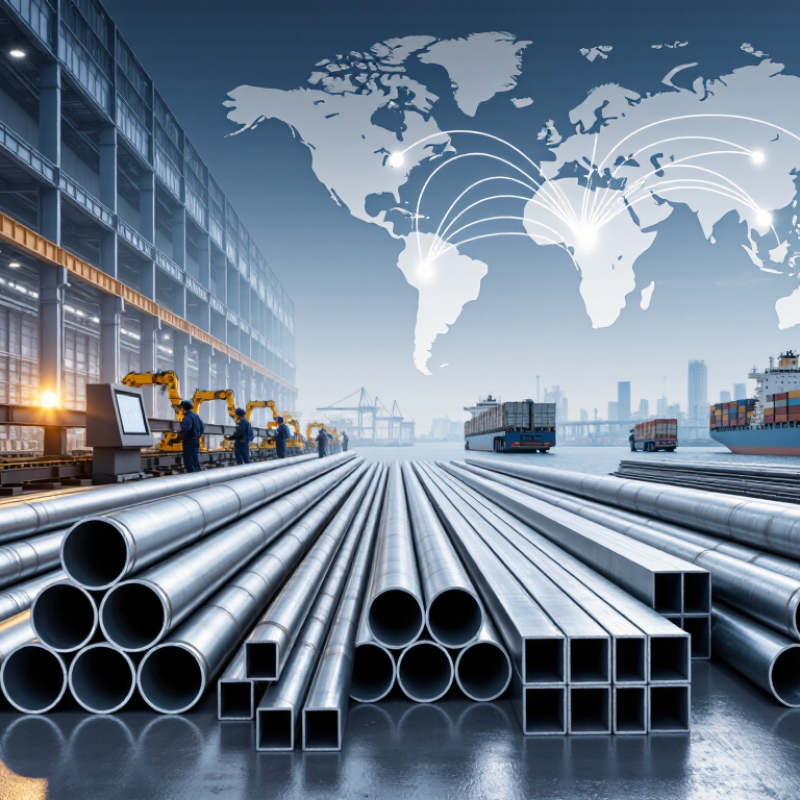
A top welded metal supplier is defined by controlled performance, not polished marketing. Experienced buyers inspect how a supplier handles drawings, material grades, joint design, and changing production demands. A capable team asks practical questions before welding begins. What load will the joint carry? How will distortion be measured? Which surfaces require protection? These questions reveal engineering judgment. Site visits can add useful evidence. Look for clean work areas, calibrated equipment, qualified welders, and documented inspection points. Still, a tidy workshop proves little without consistent records.
Reliable suppliers provide material certificates, weld procedure qualifications, welder records, and inspection reports when requested. They explain whether visual inspection, dimensional checks, dye penetrant testing, ultrasonic testing, or radiography suits the part. The method should match the risk. Traceability matters after shipment. Heat numbers, batch records, and repair logs help buyers investigate problems without guesswork. A strong supplier also manages subcontractors openly, especially for cutting, coating, or stress relief. Hidden handoffs create avoidable uncertainty.
Delivery performance depends on more than machine capacity. Suppliers should show realistic lead times, packing methods, production samples, and corrective-action practices. Ask for evidence from similar projects, not perfect promises. No workshop is flawless. Even skilled teams can miss a small distortion or misread a revision. What matters is honest reporting, root-cause analysis, and verified correction. In production reviews, regular technical communication often prevents more defects than final inspection alone. That belief should remain open to challenge. Their limits should be visible before your shipment leaves the floor.
Global buyers usually need more than a low unit price. They need dependable welded metal products, including frames, brackets, tanks, platforms, pipes, and custom assemblies. The World Steel Association forecast global steel demand at about 1.75 billion tonnes in 2024. This scale increases pressure on suppliers to control material quality, lead times, and production consistency.
Strong suppliers should offer MIG, TIG, laser, and robotic welding capabilities. Each process suits different thicknesses, materials, and appearance requirements. Robotic welding can improve repeatability for large production runs. The International Federation of Robotics reported over 541,000 industrial robots installed worldwide in 2023.
However, automation cannot replace skilled supervision. Welders still inspect fit-up, heat distortion, penetration, and difficult joints.
Quality systems aligned with ISO 3834 can support documented welding procedures, welder qualifications, and traceability. Useful inspections may include visual testing, dimensional checks, dye penetrant testing, ultrasonic testing, and radiographic testing. Not every project needs every method. Choosing poorly can increase cost without improving safety.
Tips: Ask for material certificates, welding procedure specifications, inspection records, and sample photographs. Confirm tolerances before production begins. Review coating preparation and packaging details for overseas transport. A supplier should explain limitations clearly, not promise everything. This honesty matters. Buyers should also check whether production capacity matches the order schedule. Small trial orders can expose overlooked issues, although they may not represent full-scale performance.
Reference: World Steel Association, Short Range Outlook 2024; International Federation of Robotics, World Robotics 2024; ISO 3834.
For global buyers, welded metal quality begins with controlled production, not attractive samples. The ISO Survey 2023 recorded more than 1.26 million ISO 9001 certificates worldwide. This figure shows broad adoption, but certification alone cannot prove weld integrity. Buyers should request valid certificates, audit scopes, expiry dates, and facility addresses. The certificate must cover the actual welding site and production process.
Reliable suppliers usually combine ISO 9001 with ISO 3834 welding-quality controls. They may also follow structural fabrication requirements, qualified welding procedures, and certified welding personnel. Ask for welding procedure qualification records, welder approvals, material certificates, and inspection reports. EN 10204 type 3.1 documents can connect steel chemistry and mechanical results to a specific batch. Independent non-destructive testing adds confidence, especially for pressure, lifting, or safety-critical parts. Methods may include visual testing, ultrasonic testing, radiography, or magnetic particle inspection.
Tips: Compare a supplier’s quality records with real production evidence. Request a sample traceability package before signing. Check how defects are recorded and corrected. Shortcuts appear there. A useful warning sign is vague language about “international standards” without clause numbers or inspection records. I have seen technically impressive factories lose control during peak orders. Capacity claims should therefore be tested with recent delivery data, weld maps, and corrective-action reports. The ISO Survey is helpful context, but each project still needs its own risk-based verification.
Selecting welded metal suppliers requires more than comparing unit prices. The World Steel Association reported 1,888.2 million tonnes of crude steel production in 2023. That scale creates wide differences in material sourcing, process control, and delivery discipline.
Ask for mill certificates, heat numbers, welding procedure specifications, and welder qualification records. Then verify whether those documents match the actual production route. ISO’s Survey 2022 recorded 1,265,216 ISO 9001 certificates worldwide, but certification alone does not prove weld quality. Inspect recent inspection reports, non-destructive testing results, dimensional records, and corrective-action logs. Samples matter. A factory visit can reveal crowded workstations, poor storage, or unstable fit-up conditions that photographs hide.
Evaluate capacity with evidence, not confident promises. Compare monthly output, machine availability, overtime practices, and backup plans for critical materials. Check packaging details too: edge protection, moisture control, labeling, and container loading photographs reduce avoidable damage. Delivery terms, payment controls, and quality-claim procedures deserve equal attention. OECD steel-market analysis has repeatedly highlighted persistent global overcapacity, so low pricing may reflect pressure rather than efficiency. Numbers can mislead. I would also test a small pilot order before approving large volumes. It may cost more initially, yet it exposes communication gaps, tolerance problems, and documentation weaknesses while the risk remains manageable.
| Evaluation Dimension | Recommended Benchmark | Evidence to Request | Buyer Verification Method | Suggested Weight |
|---|---|---|---|---|
| Material Traceability | Every heat, coil, sheet, tube, or bar should be traceable from purchase through welding and shipment. | Material test certificates, heat numbers, receiving records, and internal traceability procedure. | Match certificate heat numbers with production records and finished-part markings. | 15% |
| Welding Procedure Control | Documented welding procedures should define base metal, filler metal, joint design, preheat, heat input, and post-weld requirements. | Welding procedure specifications, procedure qualification records, and welder qualification records. | Review whether procedures cover the exact materials, thicknesses, positions, and welding processes in the order. | 15% |
| Welder Qualification | Operators should hold qualifications applicable to the process, material group, thickness range, and welding position required. | Current qualification records, continuity logs, training records, and operator identification controls. | Check validity dates, continuity, and the match between qualified ranges and production requirements. | 10% |
| Inspection and Testing | Inspection planning should cover fit-up, dimensions, visual weld quality, and non-destructive testing where specified. | Inspection and test plans, dimensional reports, visual inspection records, and NDT reports. | Confirm acceptance criteria, inspector competence, equipment calibration, and sampling frequency. | 15% |
| Dimensional Capability | The supplier should demonstrate repeatable control of critical dimensions, tolerances, flatness, squareness, and assembly interfaces. | First-article inspection reports, capability studies, calibrated measurement records, and corrective-action history. | Audit measurement methods and compare sample parts with approved drawings and tolerance requirements. | 10% |
| Surface Treatment | Surface preparation, coating thickness, adhesion, curing, and corrosion protection should be controlled against the project specification. | Surface-preparation records, coating data sheets, dry-film-thickness reports, and environmental monitoring logs. | Review preparation grades, coating-system compatibility, thickness readings, and repair procedures. | 8% |
| Production Capacity | Available capacity should cover the forecasted volume without compromising inspection, delivery, or subcontractor control. | Capacity statement, equipment list, production schedule, bottleneck analysis, and subcontracting plan. | Compare required monthly output with demonstrated throughput and peak-load capacity. | 8% |
| Quality Management | A documented quality system should control nonconformities, root-cause analysis, corrective action, and document retention. | Quality manual, process maps, audit results, nonconformance log, and corrective-action examples. | Evaluate whether corrective actions address root causes and are verified for effectiveness. | 8% |
| Delivery Reliability | The supplier should provide realistic lead times, milestone visibility, packaging controls, and shipment documentation. | Historical on-time delivery data, production milestones, export documents, and packaging specifications. | Review delivery performance for comparable orders and test reporting discipline during a pilot order. | 6% |
| Commercial Transparency | Quotation should clearly separate material, fabrication, testing, finishing, tooling, packaging, freight assumptions, and payment terms. | Itemized quotation, validity period, change-order policy, Incoterms® rule, and warranty terms. | Compare total landed cost rather than unit price alone and document all exclusions before award. | 5% |
| Total Evaluation Weight | 100% | |||
Top Welded Metal Suppliers for Global Buyers
Logistics, Pricing, and International Support
Reliable welded metal suppliers make shipping details visible before production begins. Experienced buyers should request lead times, loading ports, packaging methods, and delivery terms in writing. A practical quote separates material cost, welding, surface treatment, packing, freight, insurance, and local charges. This prevents a low factory price from becoming an expensive landed cost.
Crates should protect welded joints from vibration, moisture, and forklift damage. For long sea routes, corrosion-resistant wrapping and clear package marks matter. Suppliers should provide commercial invoices, packing lists, certificates of origin, and inspection records. Material certificates can confirm grade, thickness, and test results. Customs requirements vary, so buyers must verify tariff codes with local professionals. Small errors can delay a container.
International support is more than speaking English. It includes prompt drawing reviews, time-zone coverage, shipment tracking, and practical solutions when dimensions change. A supplier should explain tolerances instead of promising perfection. No forecast is perfect. In my experience, early samples reveal problems that polished quotations hide. Pricing may also shift with steel markets, currency rates, energy costs, or unusual packaging. Fixed-price periods should be stated clearly. A dependable partner documents revisions, reports delays early, and keeps one accountable contact throughout the order.
This chart presents practical planning benchmarks for international welded-metal purchasing. Typical timelines include fabrication, inland transport, export handling, ocean freight, and destination customs clearance. Actual lead times and pricing depend on material grade, order volume, port pair, Incoterms, fabrication complexity, and inspection requirements.