#4 – 20133 102nd Avenue, Langley, B.C. V1M 4B4 Canada

#4 – 20133 102nd Avenue, Langley, B.C. V1M 4B4 Canada
Steel Castings remain essential where strength, heat resistance, and complex geometry matter. They appear in pumps, valves, mining equipment, power plants, and heavy transport systems. Unlike fabricated parts, castings can form thick hubs, internal passages, and unusual shapes in one pour. The choice is not merely about price. It depends on load, temperature, corrosion, wear, production volume, and inspection requirements.
John Campbell, a respected authority on metal casting, states, “The most important thing in casting is to avoid turbulence.” This principle explains why casting quality begins before the furnace is charged. Pattern design, gating, risers, melt cleanliness, and solidification control all influence the final component. Carbon steel castings often suit general structural duties. Alloy steel castings offer improved toughness or wear resistance. Stainless steel castings perform well in corrosive environments, while heat-resistant grades serve demanding thermal applications. The list sounds simple. It is not.
This guide examines the top types of Steel Castings and the conditions that make each suitable. It considers practical details, including wall thickness, dimensional stability, weld repair limits, heat treatment, and nondestructive testing. Experienced engineers also review relevant material specifications before approving a grade. A material labeled “strong” may still fail in chloride exposure or repeated impact. That uncomfortable detail deserves attention. No casting type wins every application. Even experienced teams can choose poorly when operating conditions are incomplete, or when a clean laboratory result is mistaken for field performance.
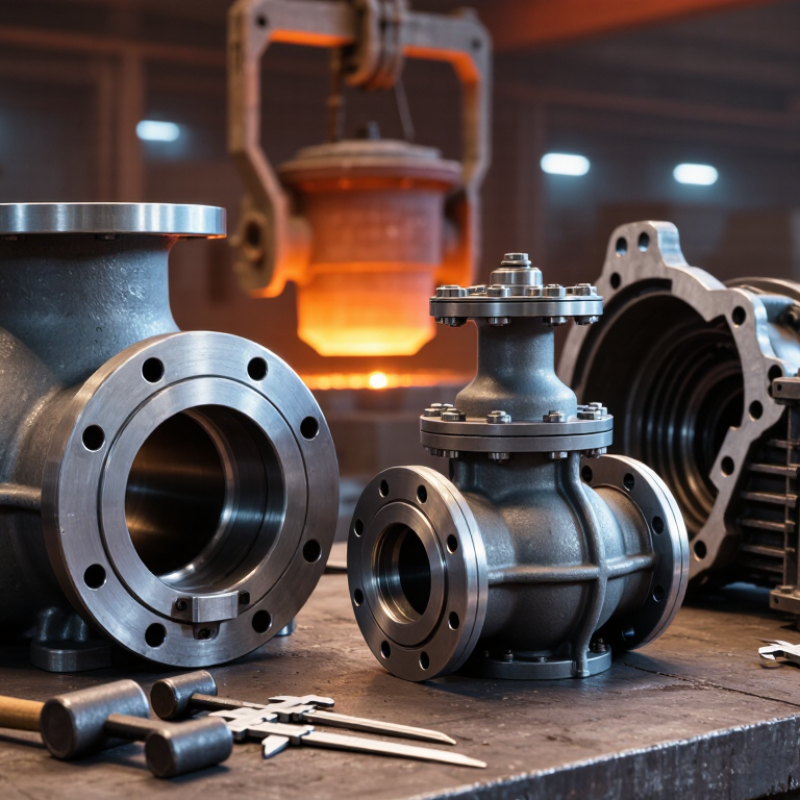
A steel casting is a metal component formed by pouring molten steel into a prepared mold. It solidifies into the mold’s internal shape. Unlike wrought steel, it does not begin as rolled plate, bar, or forged stock. This process supports complex geometries, thick sections, and integrated features that machining alone may struggle to produce.
Steel castings are defined by their chemistry, solidification behavior, and final performance. Carbon steel castings generally balance strength and cost. Low-alloy grades add elements such as chromium, nickel, or molybdenum for improved toughness, wear resistance, or heat performance. Stainless steel castings rely on chromium-rich compositions and controlled processing for corrosion resistance. The boundary is not always neat. Some grades serve several roles.
The World Steel Association reported approximately 1.89 billion tonnes of crude steel production worldwide in 2024. That figure covers steelmaking, not castings specifically, but it shows the scale of the material system behind foundry production. The 2023 World Casting Census reported global casting output of about 109 million metric tonnes in 2022, highlighting casting’s continuing industrial importance.
Quality depends on more than alloy selection. Mold design, pouring temperature, feeding, heat treatment, and inspection all matter. A small shrinkage cavity can weaken a large-looking part. Even experienced teams must question assumptions, because a casting that appears sound may still require radiographic, ultrasonic, or magnetic-particle examination.
Carbon steel castings contain iron and carbon, with limited alloying elements. Their strength and machinability make them useful for demanding industrial components. Common grades support different levels of hardness, toughness, and weldability.
These castings often appear in valve bodies, pump housings, pipe fittings, gears, and structural supports. They also serve in mining equipment, power-generation systems, transportation machinery, and heavy construction. A properly selected carbon steel casting can handle impact, pressure, and repeated loading. However, material selection should match the working environment. A strong grade may still perform poorly under severe corrosion or sudden temperature changes.
Manufacturers usually inspect castings through visual checks, dimensional testing, and non-destructive examination. Heat treatment can improve internal structure and reduce unwanted stress. In practical foundry work, small pores or uneven cooling may affect service life. The design can look correct on paper, yet fail during operation. That possibility deserves attention.
Tips: Confirm the grade, wall thickness, and expected load before production. Ask for chemical analysis and mechanical test results. Check critical surfaces for cracks, shrinkage, and rough finishing. Do not treat every carbon steel casting as interchangeable. A casting designed for a pump may not suit a high-impact support. Cost matters, but repair risk matters more.
Steel castings come in several forms, including carbon, stainless, and alloy steel grades. Alloy steel castings deserve close attention when equipment faces impact, pressure, or heat. Chromium, nickel, molybdenum, and manganese can improve performance in carefully controlled amounts. The result is often higher tensile strength, improved wear resistance, and longer service life. Small chemistry changes matter.
From practical inspections, a pump housing can show the difference clearly. A properly heat-treated alloy casting resists deformation around its flanges and internal passages. This stability supports mining pumps, power equipment, valve bodies, and heavy transport components. Engineers select grades according to load cycles, temperature, corrosion exposure, and machining needs. Strength alone is not enough. Poor pouring practice can create porosity, inclusions, or uneven sections. Those defects may remain hidden until repeated loading begins.
Reliable production uses charge control, mold design, temperature monitoring, and non-destructive testing. Visual inspection catches surface cracks, while ultrasonic testing can reveal internal discontinuities. Hardness and tensile tests help confirm whether heat treatment achieved the specified condition. Still, test results represent sampled parts, not every casting. That limitation deserves honest consideration. Clear drawings, traceable records, and qualified inspectors improve confidence before installation. Alloy steel castings perform best when material selection and process control work together.
What Are the Top Types of Steel Castings?
Stainless steel castings are widely selected when corrosion resistance matters. They suit pumps, valves, food-processing equipment, and marine components. Their chromium content forms a thin protective oxide layer on the surface. This layer can repair itself when oxygen is available.
However, stainless steel is not corrosion-proof. Poor drainage, salt deposits, and contaminated tools may create rust spots. Different grades also perform differently. Austenitic stainless steel handles many wet environments, while duplex grades offer higher strength and better resistance to chloride attack. The casting design matters too. Sharp corners can trap moisture, and rough surfaces may hold process residue. A polished surface can mislead.
Tips: Check the working fluid, temperature, chloride level, and cleaning method before choosing a grade. Ask for chemical analysis, tensile results, and inspection records. Keep stainless parts away from carbon-steel grinding dust. That small detail is often missed. During practical inspection, examine weld repairs and internal passages carefully. Hidden cavities can corrode before the outside shows damage. If the environment changes, review the material choice again. A grade that performs well in clean water may struggle near seawater. Testing remains valuable, because real service conditions are rarely perfect.
Approximate Pitting Resistance Equivalent Number (PREN) of common stainless steel casting grades and material families
Higher PREN values generally indicate better resistance to localized pitting corrosion in chloride-containing environments. Austenitic grades such as 304 and 316 are widely used for general corrosion resistance, while duplex and super duplex stainless steels provide higher resistance for more demanding applications. Actual performance also depends on chemical exposure, temperature, fabrication quality, and surface condition.
Choosing the right steel casting begins with service conditions, not the foundry process. The World Steel Association reported 1,888.2 million tonnes of crude steel production in 2023. That scale shows steel’s importance, but it does not make every grade suitable.
Carbon steel castings fit many general structural applications. Low-alloy steel improves strength, toughness, or wear resistance. Stainless steel is preferable when corrosion threatens the component. Sand casting suits large housings and complex shapes. Investment casting produces finer details and tighter dimensions. Centrifugal casting works well for cylindrical parts, such as sleeves and rings. ASTM specifications, including A216, A217, A352, and A703, can help verify chemistry, testing, and quality requirements.
Tips: Define the load, temperature, corrosion exposure, and wall thickness first. Then compare grade, process, heat treatment, and inspection cost. A casting that looks cheaper may require more machining or repairs.
Do not select by tensile strength alone. Impact toughness and weld repair limits may matter more in cold or cyclic service. I have seen designs fail because engineers copied a familiar grade without checking section thickness. That shortcut feels efficient. It is not always reliable. Review drawings with the foundry before release. Ask for radiography, magnetic-particle testing, or ultrasonic testing when internal defects could create serious risk. The final choice should reflect the actual duty, applicable ASTM requirements, and documented inspection results.
| Steel Casting Type | Typical Composition or Grade Family | Key Properties | Common Applications | Best Selection Conditions | Important Limitations |
|---|---|---|---|---|---|
| Carbon Steel Castings | Iron-based alloys in which carbon is the principal alloying element, generally with limited alloy additions. | Good strength, toughness, weldability, machinability, and cost efficiency. Mechanical performance can be adjusted through heat treatment. | Valve bodies, pump components, structural parts, pressure-containing equipment, and general industrial machinery. | Choose when the component needs a practical balance of strength, impact resistance, manufacturability, and moderate-temperature service. | Lower corrosion and high-temperature resistance than stainless or specialized alloy steels. |
| Low-Alloy Steel Castings | Carbon steel with controlled additions such as chromium, nickel, molybdenum, manganese, or silicon. | Higher hardenability, strength, wear resistance, and toughness than many plain carbon steels. | Mining equipment, gears, heavy-duty machinery, power-generation parts, and transportation components. | Select when loads, impact, section thickness, or wear conditions exceed the practical capability of carbon steel. | Heat treatment and welding procedures require tighter control; some grades may have increased hardening or cracking risk. |
| Stainless Steel Castings | Chromium-containing steels, commonly including austenitic, ferritic, martensitic, and duplex families. | Strong resistance to corrosion and oxidation; properties vary significantly by metallurgical family and heat treatment. | Chemical-processing equipment, food-processing components, marine hardware, pumps, valves, and architectural parts. | Choose when exposure to moisture, chemicals, salts, hygiene requirements, or elevated oxidation resistance is important. | Usually costs more than carbon steel; corrosion performance depends on the exact environment, surface condition, and grade. |
| Martensitic Steel Castings | Heat-treatable chromium steels with carbon levels suitable for forming a martensitic structure. | High hardness, strength, and wear resistance, with moderate corrosion resistance depending on composition and treatment. | Pump impellers, turbine components, cutlery-related parts, wear plates, and industrial blades. | Select when hardness, edge retention, and wear resistance are more important than maximum corrosion resistance or weldability. | Lower ductility and weldability than many austenitic stainless steels; improper heat treatment can cause brittleness or distortion. |
| Austenitic Stainless Steel Castings | Chromium-nickel or chromium-nickel-molybdenum stainless steel families with an austenitic structure. | Excellent general corrosion resistance, high ductility, good toughness, and good performance at low temperatures. | Piping components, chemical equipment, food and pharmaceutical machinery, heat exchangers, and marine parts. | Choose for corrosive service, hygienic applications, cryogenic toughness, or complex castings requiring good ductility. | Generally lower hardness and wear resistance than martensitic grades; certain environments may cause localized corrosion. |
| Heat-Resistant Alloy Steel Castings | Alloy steels with chromium, nickel, molybdenum, silicon, or other additions designed for elevated-temperature service. | Improved oxidation resistance, creep strength, thermal-fatigue resistance, and dimensional stability at high temperatures. | Furnace hardware, heat-treatment fixtures, combustion-system parts, industrial burners, and power-generation equipment. | Select after defining continuous temperature, peak temperature, thermal cycling, atmosphere, and expected service life. | Material performance is highly temperature- and environment-dependent; specialized grades can be difficult and expensive to process. |
| Wear-Resistant Manganese Steel Castings | High-manganese austenitic steel, commonly selected for work-hardening behavior. | High impact toughness and the ability to harden at the surface under repeated impact or compressive loading. | Crusher liners, railroad components, excavator parts, impact plates, and heavy-duty material-handling equipment. | Choose for severe impact, crushing, or gouging wear where the surface can work-harden during service. | May wear relatively quickly under low-impact sliding abrasion; machining can be difficult after work hardening. |
| Tool Steel Castings | High-carbon alloy steels designed for hardness, toughness, hot hardness, or wear resistance. | High hardness and wear resistance; selected grades retain useful strength at elevated temperatures. | Industrial tooling, dies, shear components, forming equipment, and specialized wear parts. | Use when dimensional stability, repeated contact, cutting action, or extreme wear resistance is required. | Typically more difficult to cast, machine, weld, and heat-treat; may have reduced toughness compared with structural steels. |