#4 – 20133 102nd Avenue, Langley, B.C. V1M 4B4 Canada

#4 – 20133 102nd Avenue, Langley, B.C. V1M 4B4 Canada
Choosing a material for an industrial component is rarely about one property. Operators weigh corrosion, temperature, fabrication needs, service life, and total cost. tantalum sheet stands out when severe chemical exposure makes ordinary metals unreliable. Its stable oxide layer helps it resist many acids, including hydrochloric and sulfuric acid, under suitable conditions. That qualification matters. Concentration, temperature, impurities, and weld quality can change performance substantially. Tantalum also tolerates very high temperatures, though oxidation and the surrounding atmosphere must be considered.
Sheet form offers practical flexibility: it can be cut, formed, and fabricated into linings, vessels, heat-exchanger parts, and other components. A thin liner may suit a different duty than a thick plate, and joining methods need careful control. Inspection for surface damage matters; small flaws can become costly in demanding service. These details are easy to overlook. Tantalum is dense and typically more costly than common alloys, so engineers should confirm whether its performance justifies the material and fabrication expense. Supplier data sheets, material traceability, and application-specific corrosion testing provide a stronger basis than broad claims. The right selection starts with documented operating conditions, not a material name alone. This guide examines where Tantalum Sheet earns its place, which specifications matter, and what limits deserve attention before procurement. No material is perfect, and a careful review may show that another alloy is a better fit.
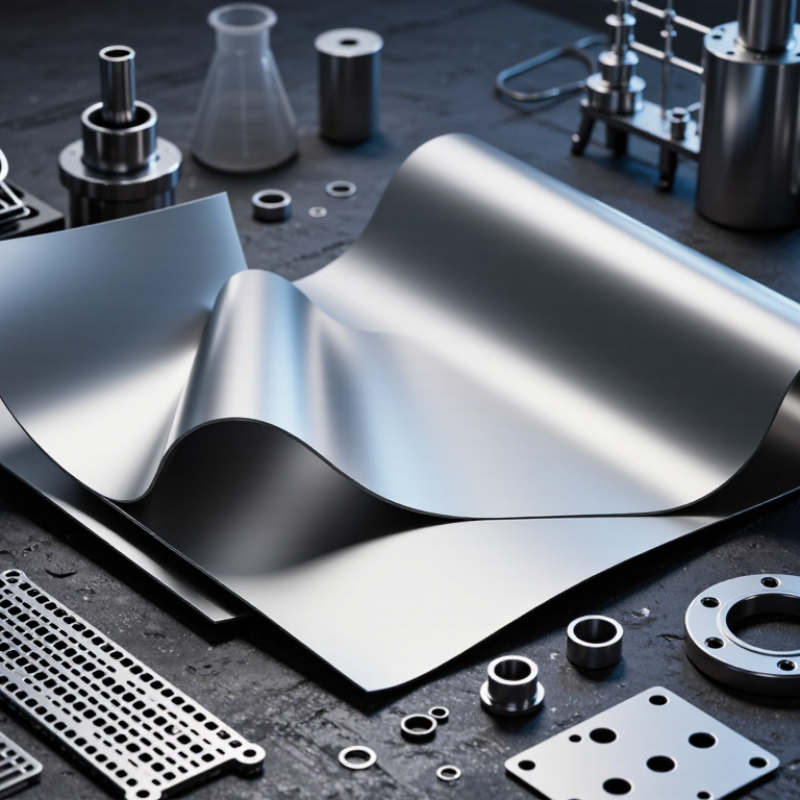
Tantalum sheet is flat-rolled tantalum supplied in specified thicknesses, widths, and lengths. ASTM B708 covers tantalum and tantalum-alloy plate, sheet, and strip. Commonly specified grades include R05200, commercially pure tantalum, and R05252 or R05255, tungsten-bearing alloys. Grade selection depends on the required strength, forming behavior, and operating environment. Check the applicable standard edition and material documentation; a grade name alone is not enough.
The form affects how material fits a job. Sheet is typically ordered to thickness and cut dimensions, while strip is narrower and may be supplied in longer lengths or coils, depending on thickness and availability. Plate is generally thicker. Surface condition, flatness, dimensional tolerances, and edge quality should be agreed before ordering. Small details matter. A sheet that looks uniform under warehouse lighting may still show handling marks or slight variation that matters during close fitting.
Supply requirements are best stated clearly: grade, dimensions, quantity, condition, and inspection documents. Certificates help confirm chemistry and traceability, but they do not replace checking the delivered dimensions. There is a catch. Not every requested size or finish is immediately available, and custom cutting can affect lead time. For critical components, confirm tolerances and forming needs with the material supplier and fabricator before release. I would not assume that “tantalum sheet” alone defines a usable specification.
Tantalum sheet is valued where heat and chemical exposure challenge ordinary metals. Its melting point is about 3,017°C, a striking figure, but it does not mean a component can operate safely near that temperature. Strength, atmosphere, thickness, and joining method all affect service limits. Hot tantalum can react with oxygen, so protective conditions matter. High melting point is only one part of the decision.
Density matters, too. At 16.69 g/cm³, tantalum is heavy for a thin sheet. A small panel can feel surprisingly substantial in the hand, and assemblies may need stronger supports. That weight can be useful when a stable, compact component is required, but it may be a disadvantage in moving equipment. Corrosion resistance in many aggressive environments adds another reason to consider it. Still, compatibility should be checked against the actual chemicals, temperature, and exposure time. Not every process is the same. In practice, engineers should review material certificates, forming history, and weld quality before specifying sheet. The numbers are impressive, yet the application details can be easy to underestimate.
Tantalum sheet resists many acidic environments because oxygen quickly forms a thin, adherent tantalum pentoxide film on its surface. If the film is scratched, it can reform when oxygen is present. The Tantalum-Niobium International Study Center’s corrosion-resistance data report rates below 0.1 mm per year in many mineral-acid conditions. That figure is not universal; concentration and temperature matter. The film is not magic.
Hydrofluoric acid and fluoride-bearing solutions can attack the oxide, while hot, concentrated sulfuric acid also requires careful evaluation. In a plant, a cool acid stream may behave differently from a hot pocket near a heater or weld. Surface contamination, crevices, and poor fabrication can complicate performance, too. Specify the acid concentration, temperature, impurities, and exposure time before selecting sheet. Pilot testing may be worthwhile. Even published rates leave uncertainty when actual process conditions fluctuate.
Tantalum’s naturally forming tantalum pentoxide (Ta₂O₅) surface film helps protect it from corrosion in many acid environments. The film is vulnerable to hydrofluoric acid and fluoride-containing solutions.
Note: This is a qualitative comparison, not measured corrosion-rate data. Actual performance depends on acid concentration, temperature, and operating conditions.
Tantalum sheet earns its place in chemical processing through corrosion resistance, not appearance. It can line vessels, protect valve internals, and form heat-exchanger parts exposed to aggressive acids. The USGS Mineral Commodity Summaries 2024 reports approximately 2,100 metric tons of world tantalum mine production in 2023, underscoring the material’s limited supply. That makes careful thickness selection and clean welding important. A pinhole can defeat an otherwise sound lining. Not always obvious.
In electronics, tantalum sheet is used for sputtering targets and precision components; capacitors, however, typically use tantalum powder or wire. Aerospace applications include selected high-temperature parts and protective structures, where low weight is not the only priority. Tantalum melts at about 3,017°C, according to the Royal Society of Chemistry, but that figure does not guarantee performance in hot air. Oxidation and coating condition matter. A practical design review should check the actual temperature, atmosphere, joining method, and inspection plan. This detail is easy to overlook.
For industrial service, specifying tantalum sheet starts with the actual operating conditions: temperature, chemical exposure, and forming requirements. ASTM B708 covers tantalum and tantalum-alloy plate, sheet, and strip, but naming the standard alone may leave important details unclear. Identify the required grade, product form, dimensions, and applicable edition. Ask for material test documentation and traceability if these matter to your inspection process. Small details matter.
State nominal thickness and acceptable tolerance, along with sheet width, length, and surface condition. A component formed from a thin sheet may need tighter dimensional control than a flat liner. Check the drawing against the supplier’s available sizes before finalizing it; otherwise, excess trimming can create costly scrap. It is easy to over-specify. Review which tolerances affect fit or performance, and which merely look reassuring on paper.
Fabrication requirements also belong in the specification. Describe bends, welds, and any restrictions on surface marks or contamination. Tantalum can react with gases at elevated temperatures, so qualified procedures and suitable shielding are important during hot work. Ask how the material will be packaged and handled. Cost depends on grade, thickness, sheet size, processing, testing, and yield. A thinner sheet may reduce material cost, yet prove harder to form consistently. Compare quotes using the same specification, not just price per kilogram.
| Specification dimension | Engineering data or guidance | What to include in the purchase specification |
|---|---|---|
| Why choose tantalum | Tantalum is valued for corrosion resistance in many severe chemical environments, high melting point, and formability. Its protective oxide film supports corrosion resistance, but performance depends on the specific chemical, concentration, temperature, and contaminants. | Identify the process fluid, concentration, operating and upset temperatures, and contaminants. Confirm compatibility using application-specific corrosion data or testing rather than relying on a general “corrosion-resistant” claim. |
| Applicable standard | ASTM B708 covers tantalum and tantalum alloy plate, sheet, and strip. Requirements depend on the applicable edition, material grade, product form, and ordered condition. | State “ASTM B708” with the required edition, grade, product form, and condition. Confirm that the selected grade and dimensions are covered by the specified edition. |
| Grade and chemistry | Commercially pure tantalum and tantalum alloys have different chemistry and property requirements. Interstitial elements such as oxygen, nitrogen, hydrogen, and carbon can influence mechanical behavior. | Specify the exact ASTM grade and require a material test report showing chemical analysis and conformance to the ordered standard and grade. |
| Thickness and dimensions | Sheet thickness, width, length, flatness, and permitted dimensional variation should be agreed against the applicable standard and order requirements. Tolerances can depend on product dimensions and manufacturing route. | Give nominal thickness, width, length, quantity, and any tighter project tolerances. Define measurement locations and inspection requirements where dimensions are critical; do not assume a tolerance without checking the governing specification. |
| Physical properties | Tantalum has a density of approximately 16.6 g/cm³ and a melting point of approximately 3,017 °C. These are reference values; design properties should be checked for the selected grade, condition, and temperature. | Account for high mass when sizing supports and handling equipment. Use grade- and temperature-appropriate property data for structural or thermal calculations. |
| Fabrication and forming | Tantalum sheet can be formed, but forming limits depend on thickness, temper, grain condition, tooling, and bend geometry. Plan bends and forming trials around the supplied condition and the finished-part requirements. | Specify the delivery condition and finished-part geometry. Agree on forming, machining, joining, and inspection procedures with the fabricator before production, especially for tight bends or thin sections. |
| Cleanliness and joining | Contamination during handling or fabrication can impair performance. Welding and other high-temperature operations require suitable process control and protection from atmospheric contamination; the procedure should be qualified for the application. | Define cleanliness, packaging, surface condition, and traceability requirements. Specify qualified joining procedures and appropriate shielding or vacuum protection where required by the process. |
| Corrosion limitations | Tantalum is not universally corrosion-proof. Certain environments, including hydrofluoric acid and some hot, concentrated acidic conditions, can attack it; compatibility varies with service conditions. | Review the full chemical-service envelope, including cleaning chemicals, start-up, shutdown, and accidental exposure. Obtain specialist review or testing for uncertain or high-consequence service. |
| Inspection and documentation | Verification should match the applicable ASTM requirements and project risks. Material identification and traceability help maintain the link between supplied sheet and its certification. | Specify required certificates, heat or lot traceability, dimensional checks, surface inspection, and any additional tests. Clearly distinguish standard requirements from project-specific additions. |
| Cost and procurement | Tantalum sheet generally has a high material cost. Price and lead time are influenced by grade, thickness, size, order quantity, availability, processing, testing, and yield; they can vary over time. | Request a current quotation against a complete specification. Compare total installed and lifecycle cost, including fabrication, inspection, material utilization, maintenance, and the consequences of corrosion-related failure. |
Note: Confirm the current ASTM edition and applicable requirements before purchase. Values shown as approximate physical-property references are not substitutes for certified, grade-specific design data.