#4 – 20133 102nd Avenue, Langley, B.C. V1M 4B4 Canada

#4 – 20133 102nd Avenue, Langley, B.C. V1M 4B4 Canada
Mechanical Components rarely attract attention until a machine stops. A bearing runs hot. A fastener loosens. A seal begins to leak. Each part may be small, but its condition can affect safety, uptime, energy use, and repair costs. In a pump, a correctly selected shaft coupling transfers torque while accommodating limited misalignment. On a production line, suitable gears help keep motion steady and repeatable. Details matter.
Theodore von Kármán, a pioneering aerospace engineer, is often credited with saying, “Scientists study the world as it is; engineers create the world that has never been.” Mechanical Components put that engineering ambition into practice. They connect, support, guide, seal, and move machines through real operating conditions. Material, tolerance, lubrication, and load capacity all influence performance. A part that works well in a drawing may behave differently under vibration, heat, dust, or repeated use. Testing and maintenance reveal those differences.
Still, choosing a component is not a magic fix. A premium bearing cannot compensate for poor alignment, and a strong gear may fail if lubrication is neglected. Engineers and buyers need to consider the full system, not just a catalogue specification. They should check operating loads, expected service life, installation needs, and replacement access. That work takes attention. It can also prevent avoidable downtime. Mechanical Components matter because reliable machines depend on many small decisions working together. The connection is easy to underestimate.
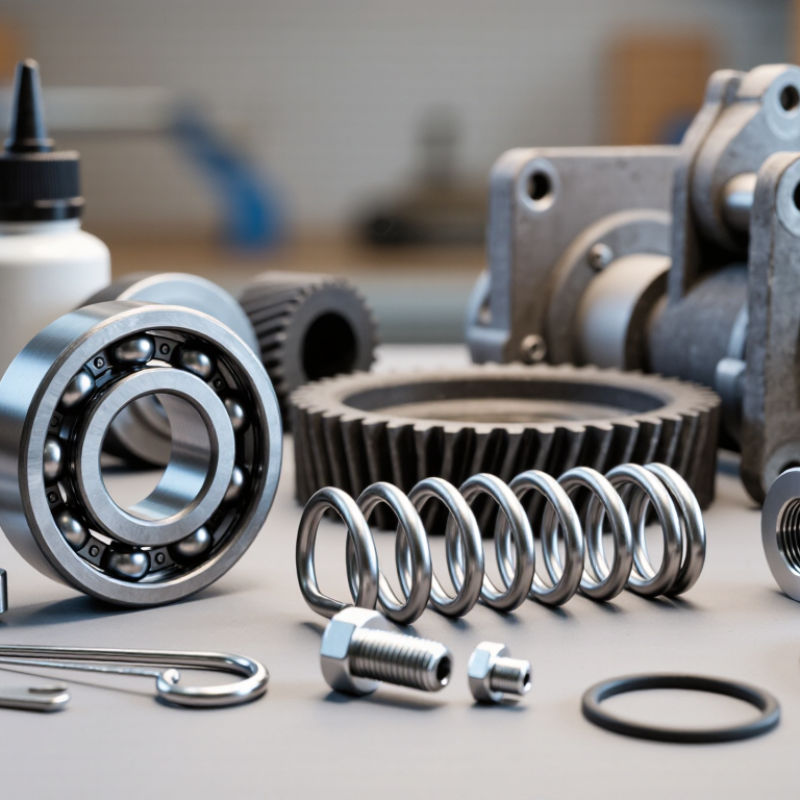
Mechanical components are the physical parts that carry, guide, join, or control motion and force in a machine. A shaft transfers rotation; gears change speed or torque; bearings support moving shafts; seals keep lubricant in and dust out. Fasteners hold assemblies together, while springs, couplings, and linkages manage movement. Small parts matter.
Some components are passive, such as washers, while others move, such as cams and actuators. In a workshop, a worn bearing may produce heat and a rough hum; a loose fastener can cause vibration. Fit is not cosmetic. Dimensions, materials, loads, lubrication, and operating temperatures all affect how reliably parts work together.
Mechanical components also form part of larger electromechanical systems. The U.S. Department of Energy’s 2014 report, Improving Motor and Drive System Performance, estimates that motor-driven systems use about 68% of the electricity consumed by U.S. manufacturing. That figure describes complete systems, not individual components, but it highlights how component selection and alignment can affect efficiency. The boundaries can be fuzzy: a pump combines mechanical parts with electrical controls, so its classification depends on the task.
A machine works because its components share loads and timing. A motor turns a shaft; a coupling transfers rotation; gears adjust speed and torque. Bearings keep the shaft aligned while reducing friction. In a conveyor, a loose coupling can make the belt track unevenly, even when the motor runs normally. Small errors travel. Heat, noise, and vibration often reveal trouble before a part visibly fails. Yet those signs are easy to overlook during a rushed inspection.
The U.S. Department of Energy’s 2014 motor-systems sourcebook estimates that motor-driven systems use roughly 70% of the electricity consumed by U.S. industry. That figure shows why component coordination affects both output and energy use. A misaligned shaft can increase bearing friction, forcing the motor to work harder. The International Energy Agency’s 2011 report on electric motor systems likewise identifies these systems as a major share of global electricity demand. Maintenance teams can check lubrication, alignment, and vibration together rather than treating each part in isolation. The inspection is not perfect; a sensor may miss a problem that appears only under a heavy load. A warm bearing housing deserves attention. So does an unexpected change in sound.
Mechanical components turn a design into controlled movement. Shafts transmit torque, bearings reduce friction, and gears change speed or direction. Seals keep lubricant in and dust out. Each part carries a specific load, often repeatedly, while nearby parts move at different rates. Small parts matter. A worn bearing can raise vibration, heat, and energy use before a machine stops. The U.S. Department of Energy reports that motor-driven systems account for about 54% of electricity use in U.S. manufacturing. That figure shows why efficient transmission and alignment matter beyond the machine itself.
Components also preserve accuracy and protect operators. A guide rail keeps a cutting head on its path; a coupling absorbs small alignment errors between connected shafts. Sensors can reveal rising vibration, but they cannot fix poor installation. McKinsey’s 2018 analysis of predictive maintenance estimated potential maintenance-cost reductions of 10–40% and downtime reductions of up to 50%. Those are projected outcomes, not guarantees for every plant. Still, they show the value of monitoring component condition before failure. In practice, inspection records can miss early wear, especially when readings vary between technicians. That weakness deserves attention. Clear tolerances, suitable materials, lubrication, and regular checks help components perform their essential functions under real operating conditions.
Why Are Mechanical Components Important?
A machine is only as dependable as the parts carrying its loads. A cracked washer, worn gear tooth, or loose bearing can shift force where it was never intended to go. Small faults matter. A slipping belt may stop a conveyor, while a damaged fastener can let a guard vibrate free. These failures often begin quietly, with a new rattle, extra heat, or a change in alignment.
Safety depends on choosing components that match the actual load, speed, temperature, and operating environment. A shaft that turns smoothly by hand may still fail under repeated stress. Regular inspection helps catch wear: look for metal flakes near a bearing, rust around a joint, or uneven contact marks on a gear. Measurements matter too. Guessing a bolt’s tightness can leave it loose or damage the threads.
Reliability also depends on installation and maintenance, not just part quality. Even careful checks miss things. It is tempting to replace a noisy component and move on, but the noise may come from poor alignment or insufficient lubrication. That distinction deserves attention. A simple maintenance record can reveal whether the same bearing fails every few months, especially when operators note temperature, vibration, and operating hours.
Safety factor is calculated as rated capacity divided by design load. In this illustrative example, the shaft, bolt, bearing, and gear have factors of 2.0, 2.0, 2.0, and 1.5, respectively. These are example calculations, not industry averages; actual safety depends on materials, operating conditions, wear, and sound design and maintenance.
Mechanical components appear wherever force must be transferred, controlled, or resisted. In factories, shafts turn pumps, bearings support rotating equipment, and gears reduce speed while increasing torque. On a production line, a worn coupling can cause vibration that travels through a machine frame. Small parts matter. In buildings, valves regulate water flow, hinges carry repeated loads, and ventilation fans depend on balanced rotors. These parts are easy to overlook until noise, heat, or leakage shows up.
Their role is also visible in transport and energy systems. The International Energy Agency reported that nearly 14 million electric cars were sold in 2023, about 18% of global car sales. Motors, brake assemblies, steering parts, and thermal-management hardware all rely on carefully matched components. Wind turbines offer another example: the IEA’s Renewables 2024 report recorded 507 gigawatts of renewable capacity additions in 2023. Turbines use bearings, shafts, pitch mechanisms, and structural fasteners under changing loads. Numbers like these describe expanding systems, not the performance of any single part. That distinction matters.
A component may meet its specification yet wear quickly if alignment, lubrication, or installation is poor. Design matters. So does maintenance. Mechanical components are used in everyday equipment, heavy industry, vehicles, and power generation, often where failure has immediate practical consequences.